Emergency Plumbing in Tacoma & Pierce County 24/7 Human Support Free Second Opinion Quality Plumbing Services
Emergency Plumbing in Tacoma & Pierce County 24/7 Human Support Free Second Opinion Quality Plumbing Services
Emergency Plumbing in Tacoma & Pierce County 24/7 Human Support Free Second Opinion Quality Plumbing Services
Emergency Plumbing in Tacoma & Pierce County 24/7 Human Support Free Second Opinion Quality Plumbing Services

Text Us: 253-231-7015
Text Us: 253-231-7015
Call Us: 253-231-7015
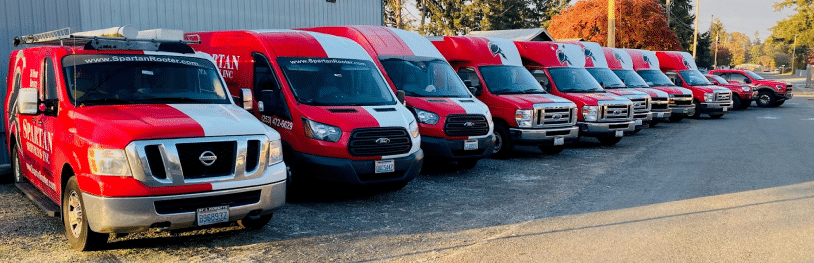

Once a commercial sewer lateral has failed structurally, clearing it stops being the answer. The question becomes which method restores the line, and how much of the parking lot has to come up to do it. At Spartan Plumbing Inc., we have served Pierce County since 1958, and we line and replace commercial sewer lines across it.
We work with cured-in-place lining, pipe bursting, and open-trench replacement, and we choose between them on the condition of the pipe rather than the size of the job. Our crews are licensed and insured, pricing is written first, and 24/7 emergency response covers a line that has already given up.
Our team shows you the camera footage behind the recommendation, so you can see why lining is appropriate or why it is not. That is the difference between a decision and a quote.
The Colonial Center opened in 1937 as one of the first suburban shopping centers in the country and expanded through the 1950s, and buildings from that generation are still in commercial use. Their laterals have been in the ground since the mid-century.
Pipe of that age reaches the point where clearing stops working and structural repair becomes the only honest recommendation.
Older jointed pipe gives roots repeated entry, and each clearing removes the mass without closing the opening. Over years the intrusion widens the joint rather than merely obstructing it.
That is the most common path from a line that needs clearing to a line that needs replacing, and it is entirely preventable if the entry point is addressed early.
Sections shift out of alignment over time, and waste catches at the step where one length no longer meets the next. A camera shows it immediately and a cable does not.
An offset gets worse rather than better, because every solid that catches makes the next one more likely to catch.
A run that has settled below grade holds water permanently, and no amount of clearing changes the grade. The line reads as flowing because water passes over the top of what is sitting in the dip.
A belly is one of the two findings that rules lining out, because restoring the inside of a pipe does not restore its fall.
Commercial laterals run under parking, loading areas, and drive lanes that carry weight a residential line never sees. A section under sustained load can deform or lose structural capacity.
That is the other finding that rules lining out, because a liner needs a host pipe capable of holding its shape.
When the interval between backups shortens, the line is telling you the cause is progressing rather than recurring. That trend line is more informative than any single incident.
At that point, continuing to clear is more expensive over two years than restoring the line once.
Every job runs the same way. We look at the system, tell you plainly what we found, put the estimate in writing before we start, and finish to code. Here is the rest of what we cover for commercial properties.
Pressurized water cuts grease, scale, and debris out of commercial drain lines, and a paired high-definition camera run shows the inside of the pipe before and after, so the result is on record rather than guessed at.
Cured-in-place lining rebuilds a failed or cracked sewer line through small access points, sparing parking lots, landscaping, and flooring. Where the line is too far gone, we replace it outright with as little disruption as the site allows.
Commercial tankless installation and repair for operations that need hot water on tap all day. On-demand units drop the standby energy a tank wastes and remove the recovery wait between draws.
Full commercial repiping for buildings running corroded, undersized, or out-of-spec supply lines. We pull the failing system and put in modern materials rated to carry the building’s demand for decades.
Tenant-improvement plumbing, fixture and appliance hookups, supply-line repairs, and full system upgrades. New space or existing, we take it from first cut to final connection.
Repair and replacement of broken downspouts that carry water off your foundation, plus sump pump fixes and primary or backup pump installs that keep below-grade space dry through a storm.
Diagnosis, repair, and full replacement for commercial tank heaters across every major brand and size, getting the hot water back on quickly so the operation keeps moving.
Scheduled and emergency work on pinholes, burst lines, and freeze damage anywhere in the building. We pin the source down first so the wall or floor only opens where it has to.
Motorized cabling and hydro jetting on floor drains, floor sinks, mop sinks, kitchen lines, and main sewers. We clear the full length of the line rather than punching a single hole through the clog and leaving the rest in place.
Full support across tank, tankless, and heat pump units, including scheduled maintenance plans that stretch equipment life and head off the surprise failures.
Complete plumbing for commercial kitchens, restroom renovations, tenant improvements, and whole-facility remodels, coordinated with your contractor or property manager to hold the schedule and the budget.
Heat pump water heater installation and repair for operations chasing lower utility costs, since these units draw far less power than standard resistance heating and can pay back well in this climate.
Scheduled and emergency cleaning for every commercial drain type, from grease traps to floor drains to the main building sewer, stopping the backups and floods that shut a business down before they start.
Video inspection of commercial sewer lines to locate root intrusion, collapse, offset joints, and blockages, giving you a clear read on the system before you commit to any repair or replacement.
The everyday commercial list handled by one licensed team: valves, fixtures, backflow devices, supply lines, and the small repairs that sit on a punch list until they turn into an after-hours call.
A predictable failure is a structural failure. Something in the pipe is causing it, and clearing only resets the clock.
The useful question is no longer how to clear it but what the camera shows when it goes in.
Once a defect is visible and located, the decision moves from whether to act to which method fits. A break, a crack, or a step at a joint each point somewhere different.
That is a good position to be in, because the scope is known before anyone quotes.
Wastewater appearing at grade means the line has lost containment, and that is a health exposure as well as a plumbing failure. It also rarely improves on its own.
This one moves to the front of the queue regardless of what else is on the maintenance list.
When a third party has already put the line in writing, the timeline stops being yours. Acting before the deadline keeps the choice of method open.
Waiting usually narrows it to whatever can be done fastest, which is rarely the cheapest.
A build-out that adds fixtures or a food operation puts more through the lateral than it currently carries. If the line is already marginal, the new use will find that out.
Scoping before the fit-out starts is far cheaper than discovering it after the floor has gone down.
When a cleared line fails within a week, the remaining capacity is close to nothing. That is the point where clearing has stopped being maintenance and started being deferral.
Restoring the line converts a recurring cost into a fixed one.
Lining, pipe bursting, and open-trench replacement each suit a different condition. We recommend the one the camera footage supports, so you do not replace a line that only needed lining or line a line that needed replacing.
Cured-in-place lining and pipe bursting work through small access pits rather than a continuous trench. On a commercial property that means parking, drive lanes, and landscaping mostly stay where they are, and the business keeps operating.
A properly lined or replaced lateral is not a repair you revisit. It removes the recurring clearing, the intermittent backups, and the risk of a failure surfacing on the property, for a very long time.
Sewer service in Lakewood is provided by the Pierce County Sewer Division under a franchise agreement with the city, and building work is permitted by the City of Lakewood. We work to those requirements and leave documentation that follows the property.
Lakewood business owners and property managers choose us for licensed professionals, upfront pricing with no hidden fees, code-compliant work that passes inspection, and repairs built to last.
Spartan Plumbing is licensed and certified to work on your Lakewood property.
Upfront estimates before work begins. No hidden fees or surprise charges after the fact.
We know the permit path, the inspection points, and the commercial code that applies in Lakewood.
Commercial-grade materials, pressure-tested connections, and documented work on every project.
We work around your operating hours where we can and keep the space clean while we work.
The honest way to handle a failing lateral is to see the problem before anyone discusses method or price. A camera run turns a large, vague expense into a specific decision with evidence behind it.
At Spartan Plumbing Inc., we have served Pierce County businesses, Lakewood included, since 1958, and we would rather show you the pipe than sell you a trench you may not need. Call us today at 253-231-7015 to schedule an inspection.
Lining cures a resin liner against the inside of the existing pipe, which suits a line that is cracked or leaking but still structurally sound. Replacement installs new pipe, either by bursting through the old path or by open trench, and is the right call when the line is collapsed, severely bellied, or crushed.
When the line qualifies for it, yes. Cured-in-place lining carries a service life measured in decades, comparable to new pipe, and it avoids the cost of excavating and restoring a commercial site. We only recommend it when the pipe condition supports it.
Trenchless methods are designed to avoid that. Lining and pipe bursting work through small access pits rather than a continuous trench, so most of the surface stays intact. Open trench is reserved for lines that cannot be restored any other way.
From the camera footage. A line with cracks and root entry but intact structure can usually be lined. A line that is collapsed, badly offset, or holding water in a settled section cannot be restored from the inside and needs replacing.
Many lining jobs finish in a single day once the line has been cleaned and prepped. Pipe bursting typically runs one to two days, and open-trench replacement depends on length, depth, and site access. We give a realistic timeline after the inspection rather than before it.
Usually yes, provided the pipe still has structural integrity. The roots are cut out and the line cleaned first, then the liner seals the joints they were entering through, which is what stops the intrusion returning. That is exactly the case lining suits best.
In most cases yes, particularly with trenchless methods, since the working area is limited to the access pits. We plan the access points and the sequence around your operating pattern and tell you upfront where that is not possible.
Sewer service is provided by the Pierce County Sewer Division, and under Pierce County Code the side sewer serving a property is maintained by the property owner. That covers clearing, repair, and replacement from the building to the point of connection.
Building work in Lakewood is permitted by the City of Lakewood, while the sewer service itself is provided by the Pierce County Sewer Division. Knowing which body governs which part is half the job, and we handle the permitting and leave you the documentation.
A structurally failing lateral does not stabilise. The interval between backups shortens, the risk of sewage surfacing rises, and the eventual repair becomes more invasive as the pipe deteriorates further. Acting earlier keeps the least disruptive methods available.
It can. Buyers and their inspectors often request a sewer condition report on commercial property, and a documented restoration is a considerably better answer than a line nobody has looked at.
It depends on the method, the length and depth of the line, site access, and what the camera finds. Spot repairs sit at one end of the range and full replacement at the other. You get a written estimate after the inspection, before any work begins.
 Book Now!
 Book Online