Emergency Plumbing in Tacoma & Pierce County 24/7 Human Support Free Second Opinion Quality Plumbing Services
Emergency Plumbing in Tacoma & Pierce County 24/7 Human Support Free Second Opinion Quality Plumbing Services
Emergency Plumbing in Tacoma & Pierce County 24/7 Human Support Free Second Opinion Quality Plumbing Services
Emergency Plumbing in Tacoma & Pierce County 24/7 Human Support Free Second Opinion Quality Plumbing Services

Text Us: 253-231-7015
Text Us: 253-231-7015
Call Us: 253-231-7015
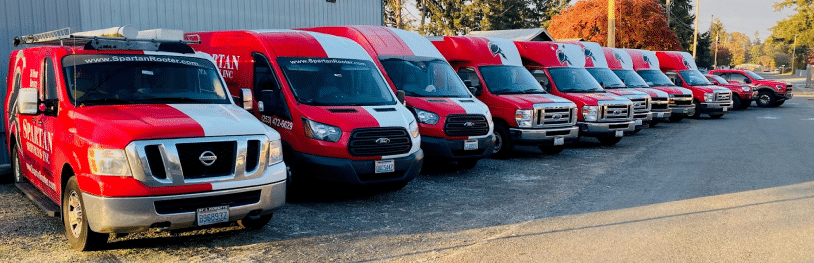

Commercial drain cleaning in South Hill is a maintenance decision that most properties end up making as an emergency instead. A run that has been narrowing quietly for weeks finally gives out mid-service, and the cost gets paid in customers and trading hours rather than on a scheduled invoice. At Spartan Plumbing Inc., we have cleaned commercial drains across Pierce County since 1958.
Cleaning means taking the full bore back rather than opening a channel and calling it finished, and the technique gets matched to whatever is actually coating the pipe. Pricing is agreed in writing beforehand, crews are licensed and insured, 24/7 emergency response covers the visits nobody planned for, and a second opinion on a drain proposal you are already holding costs nothing.
Our team builds the interval around what your building genuinely puts down the pipe, whether that is a kitchen tenant or a restroom block open all day. The point of the exercise is that the work lands on a date you chose rather than one the drain chose for you.
Where a property carries food service, the kitchen run dictates the interval for the entire building. Cooking fats leave a fixture as liquid and stop being liquid within a few feet of the connection, laying down another skin every service period.
None of that is dramatic while it happens. It simply continues, and the usable bore keeps shrinking until an ordinary lunch is more than the remainder can carry.
Floor drains, mop sinks, and janitorial basins collect sand, food debris, paper, and cleaning chemicals that nothing at the fixture is built to intercept. All of it migrates toward the flattest parts of the run and settles there.
Across a long trading week the volume is larger than anyone would guess, and those flat stretches are precisely where a cable does the least useful work of its whole pass.
A restroom block on a retail corridor handles a duty cycle nothing in an office building comes close to, and the branch serving it was specified against a far gentler assumption. Wipes, hygiene products, and pure throughput all land on the same pipe.
The drainage has not failed anywhere. It is carrying more than it was designed around, on every day the doors are open.
Root pressure here starts as a soil story. Much of the plateau carries dense till with a hardpan roughly two to three feet down, so growth that cannot descend travels outward instead, right at the depth commercial sewers were laid in.
Landscaping put in when these centers were built has had decades to reach that far. A mat sitting inside a joint then works as a filter, holding back material that would otherwise have gone straight past.
Some runs never fully drain down. A length that has lost a little of its fall keeps a shallow pool in it permanently, and everything the building sends past that pool leaves a share of itself behind.
Cleaning restores the bore on either side but cannot restore the fall, so a stretch like that reloads faster than the rest of the system and quietly sets the interval for everything else.
Most properties clean a drain at the moment it stops, which means failure is setting the schedule instead of use. Nobody has ever measured how quickly this particular building coats a pipe.
Without that figure every visit is a response to something. The timing belongs to the drain rather than to the operator, and the bill reliably arrives on a trading day.
Every job runs the same way. We look at the system, tell you plainly what we found, put the estimate in writing before we start, and finish to code.
Pressurized water cuts grease, scale, and debris out of commercial drain lines, and a paired high-definition camera run shows the inside of the pipe before and after, so the result is on record rather than guessed at.
Cured-in-place lining rebuilds a failed or cracked sewer line through small access points, sparing parking lots, landscaping, and flooring. Where the line is too far gone, we replace it outright with as little disruption as the site allows.
Commercial tankless installation and repair for operations that need hot water on tap all day. On-demand units drop the standby energy a tank wastes and remove the recovery wait between draws.
Full commercial repiping for buildings running corroded, undersized, or out-of-spec supply lines. We pull the failing system and put in modern materials rated to carry the building’s demand for decades.
Tenant-improvement plumbing, fixture and appliance hookups, supply-line repairs, and full system upgrades. New space or existing, we take it from first cut to final connection.
Repair and replacement of broken downspouts that carry water off your foundation, plus sump pump fixes and primary or backup pump installs that keep below-grade space dry through a storm.
Diagnosis, repair, and full replacement for commercial tank heaters across every major brand and size, getting the hot water back on quickly so the operation keeps moving.
Scheduled and emergency work on pinholes, burst lines, and freeze damage anywhere in the building. We pin the source down first so the wall or floor only opens where it has to.
Motorized cabling and hydro-jetting on floor drains, floor sinks, mop sinks, kitchen lines, and main sewers. We clear the full length of the line rather than punching a single hole through the clog and leaving the rest in place.
Full support across tank, tankless, and heat pump units, including scheduled maintenance plans that stretch equipment life and head off the surprise failures.
Complete plumbing for commercial kitchens, restroom renovations, tenant improvements, and whole-facility remodels, coordinated with your contractor or property manager to hold the schedule and the budget.
Heat pump water heater installation and repair for operations chasing lower utility costs, since these units draw far less power than standard resistance heating, which is where the savings come from.
Scheduled and emergency cleaning for every commercial drain type, from grease traps to floor drains to the main building sewer, stopping the backups and floods that shut a business down before they start.
Video inspection of commercial sewer lines to locate root intrusion, collapse, offset joints, and blockages, giving you a clear read on the system before you commit to any repair or replacement.
The everyday commercial list handled by one licensed team: valves, fixtures, backflow devices, supply lines, and the small repairs that sit on a punch list until they turn into an after-hours call.
This is the cheapest hour the problem will ever cost you. A slow run is simply a restriction that has not finished assembling itself.
Booked now, it is a routine appointment. Left alone, it becomes identical work carried out with customers standing in the room.
A run that fails again inside a week was never actually cleaned. Either material is still bonded to the wall or the pipe itself has a condition sitting behind it.
That pattern says cabling has reached the end of what it can usefully do, and the run needs full-bore work plus a look at whatever remains.
Grease production never pauses, so a kitchen line with no maintained interceptor and no known cleaning cycle is running on time it has borrowed from somewhere.
Scheduled work costs a fraction of what a mid-service failure costs, and the gap between the two is not a close call.
An interceptor only works while something is emptying it on a cycle, and one specified for a smaller operation stops working long before anybody notices it has.
Everything it fails to catch loads the run below it, which makes bringing the interceptor back onto a schedule the cheapest single change most food-service properties can make.
A unit that used to be retail and now serves food has changed the drainage load without one inch of pipework being altered. The old interval no longer describes the building at all.
Resetting the cycle during the fit-out is far easier than discovering the new number partway through the tenant’s first busy month.
Plenty of commercial properties change hands without a single drain record travelling with them. An unknown interval is really an interval set by whatever happens first.
A first visit establishes both the current condition and a realistic cycle, and every visit after that gets measured against it.
Most buildings arrive at this the same way, and it is worth naming plainly rather than pretending every call starts from scratch.
Cabling makes an opening through an obstruction and leaves the material responsible for it sitting on the wall, so the run reloads on exactly the schedule it did before. Cleaning takes the pipe back to its diameter, which is the reason the interval afterward behaves like a real interval.
Hardened fat, a root mat, a foreign object, and a length that will not drain each call for a different response, and guessing between them is how a drain ends up on a monthly cycle indefinitely. We establish what is on the wall before deciding how to take it off.
A property with a busy kitchen tenant loads pipe at nothing like the rate of one without. We set your cycle from what the building measurably produces instead of quoting a frequency that suits an average nobody actually is.
Planned cleaning has one enormous advantage over emergency clearing, which is that you pick the hour. Crews go in while the space is shut, and that timing is the entire reason for arranging the work in advance rather than waiting.
Every visit leaves a note of what came out of the run and how much of it there was. Two or three of those in sequence show whether the building is loading faster, holding steady, or telling you something about the pipe that no amount of cleaning will fix.
South Hill business owners and property managers choose us for licensed professionals, upfront pricing with no hidden fees, code-compliant work that passes inspection, and repairs built to last.
Spartan Plumbing is licensed and certified to work on your South Hill property.
Upfront estimates before work begins. No hidden fees or surprise charges after the fact.
We know the permit path, the inspection points, and the commercial code that applies in South Hill.
Commercial-grade materials, pressure-tested connections, and documented work on every project.
We work around your operating hours where we can and keep the space clean while we work.
A drain that is only slow is the least expensive version of this problem your building will ever be offered. Once it closes, the identical run still has to be dealt with, except the work now happens in front of customers and at whatever hour the pipe picked.
At Spartan Plumbing Inc., we have kept Pierce County commercial drains running since 1958, and a South Hill property that would rather schedule than react can start with a single visit. Call us today at 253-231-7015 to set your cleaning cycle.
It depends entirely on what the building sends down them. A property with a kitchen tenant usually needs that run on a cycle measured in months, while a retail building with no food service can go considerably longer. If drains slow between visits, the current interval is wrong for your building.
Clearing gets flow moving through an obstruction that has already formed. Cleaning strips the buildup off the wall before it can become one. The first is a reaction and the second is a plan, and a building that only ever reacts pays for that on a shrinking cycle.
Nearly always. The advantage of planned work is that you choose the hour, so cleaning normally happens while the space is shut and nobody is working around a crew. Only the access points occasionally force a different arrangement, and we say so before booking anything.
No, and they create problems of their own. They generate heat and react without any regard for the difference between the deposit and the pipe containing it. They also leave the film that caused the narrowing largely untouched, so the run simply carries on loading.
It separates fats and oils out of wastewater ahead of the sewer, and food-service operations are generally required to run one. An interceptor sized for a smaller kitchen, or one nobody empties on a cycle, quietly stops separating anything, and the run below it absorbs the difference.
Because what got removed was the obstruction rather than the cause. Opening a channel leaves the surrounding deposit exactly where it was, so it closes the gap again at the same rate. Repeat loading usually points to grease on the wall, roots at a joint, or a length that will not drain.
On a run that keeps loading faster than it should, yes. Footage separates a deposit problem from a pipe problem such as a break, an offset, or a flat length. Cleaning a run that genuinely needs repair spends money on the symptom instead of on the thing causing it.
Your building owns it. The main out in the street is a Pierce County asset because South Hill sits outside city limits, and Title 13 leaves the side sewer stub, the whole way out to that main, with the private owner.
Under Pierce County Code Title 13, buildings in separate ownership that drain into one private collector line are required to carry a recorded mutual maintenance agreement. Start with that document and your lease, then use an inspection that fixes the deposit to a branch to settle the remainder.
Yes. 24/7 human support runs for commercial emergencies right across the county, so a run that closes overnight still gets worked that night. Planned cleaning exists to make that call unnecessary, and a building on a sensible cycle rarely has to place it.
The run being cleaned, its length and diameter, how workable the access is, how heavily loaded the pipe has become, and whether the deposit calls for jetting rather than cabling. Pricing is confirmed in writing before a crew starts anything.
Yes. What sets the interval is what the tenants put into the pipe, not the age of it. A kitchen operating in a brand-new unit lays a film down at precisely the rate an old one does, and a shared collector loads new pipe just as fast.
 Book Now!
 Book Online