Emergency Plumbing in Tacoma & Pierce County 24/7 Human Support Free Second Opinion Quality Plumbing Services
Emergency Plumbing in Tacoma & Pierce County 24/7 Human Support Free Second Opinion Quality Plumbing Services
Emergency Plumbing in Tacoma & Pierce County 24/7 Human Support Free Second Opinion Quality Plumbing Services
Emergency Plumbing in Tacoma & Pierce County 24/7 Human Support Free Second Opinion Quality Plumbing Services

Text Us: 253-231-7015
Call Us: 253-231-7015
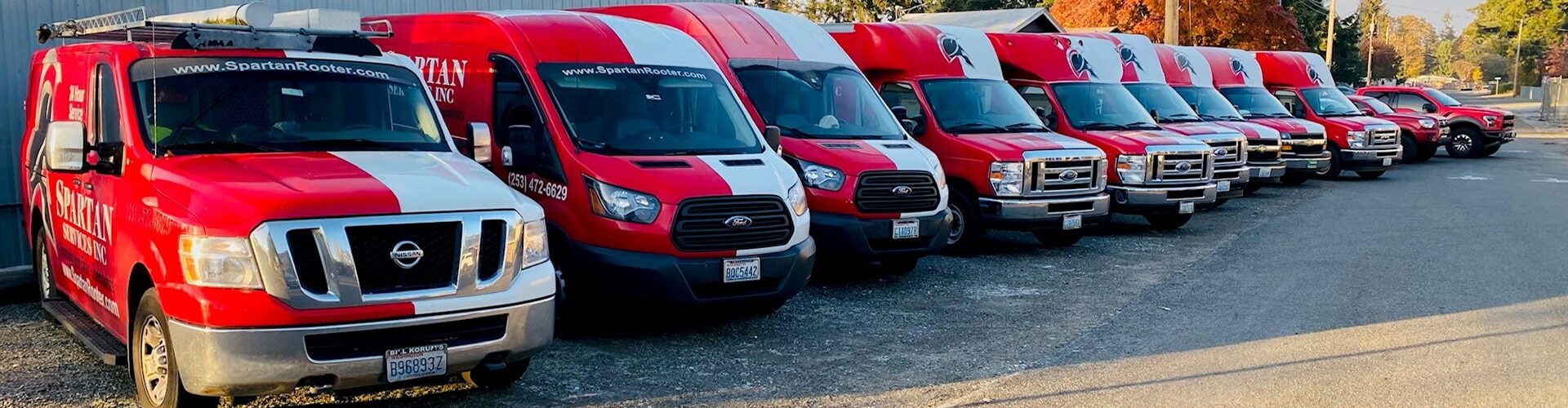

Commercial sump pump repair in South Hill runs into a problem that plenty of properties elsewhere never meet, and it sits a couple of feet below the parking lot. Much of the plateau is glacial till with a dense hardpan roughly two to three feet down that often blocks water from moving downward, so it perches above that layer instead and, on a parcel that is mostly roof and asphalt, has nowhere to go but sideways. At Spartan Plumbing Inc., we have handled commercial drainage across Pierce County since 1958.
We treat the downspouts, the area drains, the basin, the pump, and the discharge run as one system rather than swapping a pump and calling it solved. Every job comes with an upfront written estimate, licensed and insured crews, 24/7 emergency response, and a free second opinion on any drainage quote you already hold.
Our team tests the whole assembly under load, tells you plainly whether the pump is undersized or simply worn out, and gets the work scheduled before the wet season rather than during it.
The hardpan under much of the plateau is dense enough that infiltrating water often cannot pass through it, so it collects above that layer and stays. Sites on that ground often drain poorly, and soil surveys record that perched water at times from December through April. Where the ground falls away the water can move downslope along the till instead, which is why flat parcels feel this far more than sloping ones.
Add roughly forty to forty-five inches of annual rain and a commercial parcel that is largely roof and asphalt, and you have a property generating far more surface water than its ground will absorb.
A pump specified for occasional inflow behaves very differently when the inflow is continuous through a wet season. Commercial pumps on this ground wear out faster than their rated life suggests simply because they run more hours.
Float switches stick after thousands of extra cycles, and the failure usually presents during the storm that caused the load rather than politely beforehand.
A buried discharge run that has clogged, crushed, or frozen sends water straight back to the basin. The pump then runs continuously without ever clearing the basin, and from inside the building everything looks like it is working.
Almost nobody checks the far end of the discharge line, which is why this failure hides so well.
A cracked, separated, or undersized downspout puts roof water directly at the foundation instead of carrying it away. On ground that cannot absorb it, that water has nowhere to go but into the below-grade space.
On a large commercial roof the volume involved is substantial, and a single failed downspout can undo an otherwise sound system.
Many commercial parcels were drained when they were smaller, then expanded with more building, more asphalt, and less permeable ground.
The drainage was never revisited, so it now handles a fraction of what the site produces. That shows up as standing water after ordinary rain rather than only in storms.
The weather that fills a basin is the weather that takes the power out. A property with a single primary pump and no backup loses its drainage at exactly the moment the inflow peaks.
For a commercial building with stock, equipment, or tenant space below grade, that is the difference between an inconvenient night and a claim.
Every job runs the same way. We look at the system, tell you plainly what we found, put the estimate in writing before we start, and finish to code.
Pressurized water cuts grease, scale, and debris out of commercial drain lines, and a paired high-definition camera run shows the inside of the pipe before and after, so the result is on record rather than guessed at.
Cured-in-place lining rebuilds a failed or cracked sewer line through small access points, sparing parking lots, landscaping, and flooring. Where the line is too far gone, we replace it outright with as little disruption as the site allows.
Commercial tankless installation and repair for operations that need hot water on tap all day. On-demand units drop the standby energy a tank wastes and remove the recovery wait between draws.
Full commercial repiping for buildings running corroded, undersized, or out-of-spec supply lines. We pull the failing system and put in modern materials rated to carry the building’s demand for decades.
Tenant-improvement plumbing, fixture and appliance hookups, supply-line repairs, and full system upgrades. New space or existing, we take it from first cut to final connection.
Repair and replacement of broken downspouts that carry water off your foundation, plus sump pump fixes and primary or backup pump installs that keep below-grade space dry through a storm.
Diagnosis, repair, and full replacement for commercial tank heaters across every major brand and size, getting the hot water back on quickly so the operation keeps moving.
Scheduled and emergency work on pinholes, burst lines, and freeze damage anywhere in the building. We pin the source down first so the wall or floor only opens where it has to.
Motorized cabling and hydro-jetting on floor drains, floor sinks, mop sinks, kitchen lines, and main sewers. We clear the full length of the line rather than punching a single hole through the clog and leaving the rest in place.
Full support across tank, tankless, and heat pump units, including scheduled maintenance plans that stretch equipment life and head off the surprise failures.
Complete plumbing for commercial kitchens, restroom renovations, tenant improvements, and whole-facility remodels, coordinated with your contractor or property manager to hold the schedule and the budget.
Heat pump water heater installation and repair for operations chasing lower utility costs, since these units draw far less power than standard resistance heating, which is where the savings come from.
Scheduled and emergency cleaning for every commercial drain type, from grease traps to floor drains to the main building sewer, stopping the backups and floods that shut a business down before they start.
Video inspection of commercial sewer lines to locate root intrusion, collapse, offset joints, and blockages, giving you a clear read on the system before you commit to any repair or replacement.
The everyday commercial list handled by one licensed team: valves, fixtures, backflow devices, supply lines, and the small repairs that sit on a punch list until they turn into an after-hours call.
Either the inflow is genuinely constant, which is common on this ground through the wet season, or the water it discharges is coming back.
Both are worth diagnosing rather than tolerating, because a pump running nonstop is a pump on a shortened clock.
Standing water after routine rainfall, rather than only after a storm, means the site drainage is no longer matched to what the property produces.
On a customer-facing property it is also a liability question before it is a plumbing one.
A pump that runs without clearing the basin is either failing or fighting a blocked discharge.
From inside the building both look identical, which is why this needs someone to check the far end of the run.
A failed downspout redirects a large volume of roof water straight to the foundation.
On ground that cannot absorb it, that water finds the below-grade space, and the repair is trivial compared to what it prevents.
Moisture on lower-level walls or floors with no obvious source usually means the drainage system is no longer keeping ahead of the ground.
That is worth investigating before it becomes a stock or equipment loss.
Drainage is one of the few systems with an obvious right time to service it. Late summer and early fall beat a February emergency in both cost and disruption.
A property that has not tested its pumps before November is relying on luck.
Most buildings arrive at this the same way, and it is worth naming plainly rather than pretending every call starts from scratch.
A new pump on a blocked discharge line solves nothing. We check the downspouts, area drains, basin, inlet, float, check valve, and the full discharge run, because any one of them leaves you with a working pump and a wet floor.
A pump sized for average conditions is frequently undersized on this ground. Where water perches above the hardpan it means sustained inflow through the wet season rather than occasional spikes, and equipment has to be specified for that duty.
The storm that fills the basin is the storm that cuts the power. A battery backup or a secondary pump on a separate circuit is worth deciding on in September, not discovering the need for in January.
We confirm the water is actually leaving the property and going somewhere it will not simply return from. On poorly draining ground, where the discharge terminates matters as much as the pump that gets it there.
South Hill business owners and property managers choose us for licensed professionals, upfront pricing with no hidden fees, code-compliant work that passes inspection, and repairs built to last.
Spartan Plumbing is licensed and certified to work on your South Hill property.
Upfront estimates before work begins. No hidden fees or surprise charges after the fact.
We know the permit path, the inspection points, and the commercial code that applies in South Hill.
Commercial-grade materials, pressure-tested connections, and documented work on every project.
We work around your operating hours where we can and keep the space clean while we work.
The drainage system gets tested either in September on your schedule or in January on the weather’s. One of those involves a technician and a written estimate, the other involves a wet-vac and a loss report.
At Spartan Plumbing Inc., we have served Pierce County businesses since 1958, and South Hill properties get 24/7 human support for the failure that will not wait. Call us today at 253-231-7015 to schedule drainage service.
Much of the plateau sits on glacial till with a dense hardpan roughly two to three feet down that often blocks water from infiltrating, so it perches above that layer instead. On a commercial parcel that is largely roof and asphalt, the site produces far more surface water than the ground will accept.
Seven to ten years is typical, but that assumes average duty. Pumps on this ground frequently run far more hours per season than that average, because the perched water above the hardpan delivers continuous inflow rather than occasional spikes. Many reach the end of their useful life several years early.
On this ground it is worth serious consideration. The storms that saturate the site are the same storms that cause power outages, so the primary pump is most likely to be unavailable at the precise moment inflow peaks. A backup on a separate circuit covers that window.
Either it is receiving continuous inflow, which is normal on poorly draining ground through the wet season, or the water it discharges is returning. A clogged, crushed, or frozen discharge line sends water straight back to the basin and the pump cycles endlessly.
Twice a year at minimum, and always before the wet season begins. Fill the basin until the float lifts, confirm the pump starts, moves water, and shuts off cleanly, then verify the water is actually exiting at the discharge point outside the building.
Far enough from the building that the water does not simply work its way back to the basin, and at a point that will not clog or freeze. On ground that drains poorly that distance matters more than usual, because water released too close has nowhere to go but back.
It depends on the failure: a separated joint or a pulled bracket is a repair. A cracked or crushed section, or a downspout undersized for the roof area it serves, is better replaced. We look at the whole run rather than the visible damage.
Unusual noise, running without moving water, short-cycling, visible corrosion, or a basin that stays full while the pump runs. Age alone is a signal too. If it is past eight years and has worked several wet seasons hard, plan the replacement rather than waiting.
Repairing or replacing existing pumps and downspouts generally does not. Work that alters the site drainage or connects to a public system generally does, and South Hill is unincorporated, so that routes through Pierce County. We tell you which applies before starting.
Usually. Most pump, basin, and downspout work happens outside the tenant space or in a mechanical area, and we schedule around operating hours wherever access allows. Site drainage work on the lot is staged so parking stays usable for customers.
Cost tracks how many pumps and downspouts are involved, the capacity required, whether the discharge run has to be excavated or rerouted, whether a backup system is added, and whether the job triggers a Pierce County permit. You get a written estimate after we see the site.
Yes, because the driver here is the ground rather than the building. A property built five years ago sits on the same ground as one built thirty years ago, and a newer parcel is often more heavily built out, meaning more roof and more asphalt producing runoff the ground still will not absorb.
 Book Now!
 Book Online