Emergency Plumbing in Tacoma & Pierce County 24/7 Human Support Free Second Opinion Quality Plumbing Services
Emergency Plumbing in Tacoma & Pierce County 24/7 Human Support Free Second Opinion Quality Plumbing Services
Emergency Plumbing in Tacoma & Pierce County 24/7 Human Support Free Second Opinion Quality Plumbing Services
Emergency Plumbing in Tacoma & Pierce County 24/7 Human Support Free Second Opinion Quality Plumbing Services

Text Us: 253-231-7015
Call Us: 253-231-7015
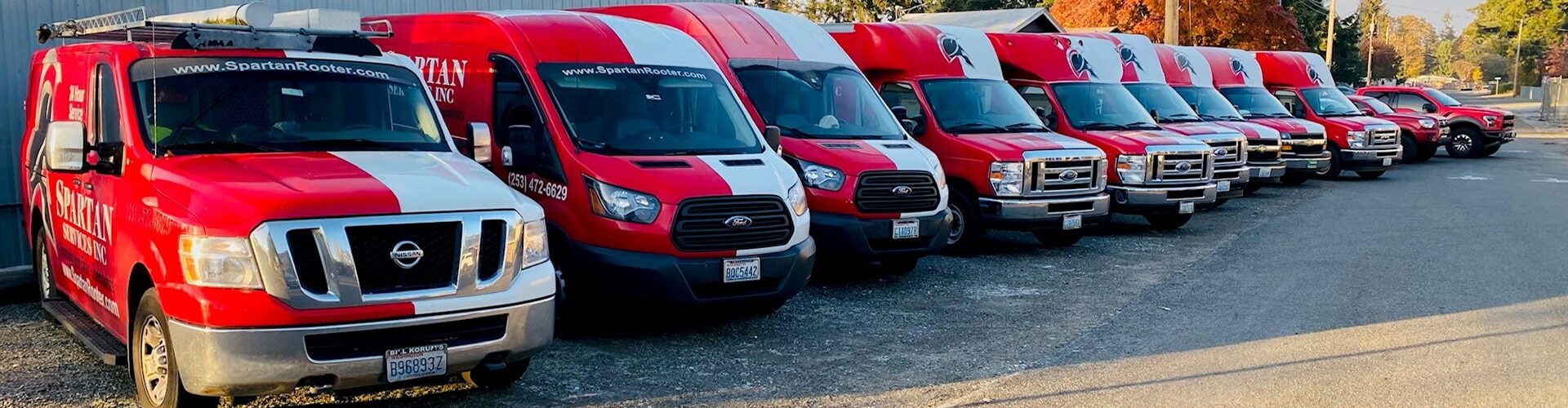

Equipment arrives on a delivery date. Connections happen on a schedule somebody has to actually think about, and on a corridor where suites change hands regularly the building rarely arrives ready for what the new tenant plans to run in it. At Spartan Plumbing Inc., a Pierce County plumbing company since 1958, we take commercial plumbing work from first cut to final connection.
This covers tenant-improvement plumbing, fixture and appliance hookups, supply-line repairs, isolation valve work and full system upgrades, in occupied buildings as well as empty ones. You get a written scope and the permit position before anything is cut, plus 24/7 emergency response when a connection lets go outside business hours.
Our team works to the manufacturer’s requirements and the code that applies here, not to whichever fitting happens to be on the van. We tell your contractor or property manager what we found, what it needs, and what that changes about the schedule.
A suite built for retail and taken over by a kitchen, a clinic or a salon inherits drainage, supply and hot water sized for the previous business. Nothing about the space announces the mismatch until the equipment is in and running. The cheapest moment to find out is during the survey, and the most expensive is after the fit-out is finished.
Pierce County requires a sewer service permit not only for a new connection but for modification, repair, disconnection, inspection or addition to an existing building sewer, and for the discharge of additional wastewater. Adding fixtures is adding wastewater. Work that gets treated as a simple hookup can sit inside a permit requirement nobody raised at the planning stage.
Carbonators, coffee brewers, dish machines, chemical dispensers, boilers and irrigation all connect potable water to something that is not potable water. Spanaway Water Company runs a cross-connection control program that prioritizes by the degree of hazard, and new equipment can move a building up that list without anyone filing anything. The protection has to be specified when the equipment goes in, not after a survey finds it.
Pressure and flow are shared across everything in the building, so a new dish machine or a second restroom draws against what is already there. A supply that was comfortable for an office suite can leave a kitchen washing up at a trickle when the hand sinks run. This is measurable before the equipment is ordered.
Appliance manufacturers publish installation requirements, and code sets requirements of its own. Where the two differ, the connection has to satisfy both, and a hookup made to whichever instruction sheet was in the box is the sort of thing that surfaces at an inspection or during a warranty claim.
In a multi-tenant building, being unable to shut off one suite means shutting off all of them. Valves seize, get painted over, or were never fitted where the building is now divided, and the discovery always happens during an emergency rather than during a survey. Fixing it is straightforward work that nobody budgets until the day it costs a whole building an afternoon.
Every job runs the same way. We look at the system, tell you plainly what we found, put the estimate in writing before we start, and finish to code. Our commercial plumbing team handles every service below, and our plumbing services in Spanaway page also covers our residential work.
Pressurized water cuts grease, scale, and debris out of commercial drain lines, and a paired high-definition camera run shows the inside of the pipe before and after, so the result is on record rather than guessed at.
Cured-in-place lining rebuilds a failed or cracked sewer line through small access points, sparing parking lots, landscaping, and flooring. Where the line is too far gone, we replace it outright.
Commercial tankless installation and repair for operations that need hot water on tap all day. On-demand units drop the standby energy a tank wastes and remove the recovery wait between draws.
Full commercial repiping for buildings running corroded, undersized, or out-of-spec supply lines. We pull the failing system and put in modern materials rated to carry the building’s demand for decades.
Tenant-improvement plumbing, fixture and appliance hookups, supply-line repairs, and full system upgrades. New space or existing, we take it from first cut to final connection.
Repair and replacement of broken downspouts that carry water off your foundation, plus sump pump fixes and primary or backup pump installs that keep below-grade space dry through a storm.
Diagnosis, repair, and full replacement for commercial tank heaters across every major brand and size, getting the hot water back on quickly so the operation keeps moving.
Scheduled and emergency work on pinholes, burst lines, and freeze damage anywhere in the building. We pin the source down first so the wall or floor only opens where it has to.
Motorized cabling and hydro jetting on floor drains, floor sinks, mop sinks, kitchen lines, and main sewers. We clear the full length of the line rather than punching a single hole through the clog.
Full support across tank, tankless, and heat pump units, including scheduled maintenance plans that stretch equipment life and head off the surprise failures.
Complete plumbing for commercial kitchens, restroom renovations, tenant improvements, and whole-facility remodels, coordinated with your contractor or property manager.
Heat pump water heater installation and repair for operations chasing lower utility costs, since these units draw far less power than standard resistance heating and pay back well in this climate.
Scheduled and emergency cleaning for every commercial drain type, from grease traps to floor drains to the main building sewer, stopping the backups and floods that shut a business down.
Video inspection of commercial sewer lines to locate root intrusion, collapse, offset joints, and blockages, giving you a clear read on the system before you commit to any repair.
The everyday commercial list handled by one licensed team: valves, fixtures, backflow devices, supply lines, and the small repairs that sit on a punch list until they turn into an after-hours call.
If the only isolation point is at the meter, every repair in the building becomes everybody’s problem. That turns a one-suite fix into a negotiation with every other tenant in the row.
Equipment waiting on a connection is capital doing nothing, and the reason for the delay is usually a requirement nobody has priced yet. Finding out what it is now beats finding out at the end of the month.
A visible drop when a dish machine or a boiler fills means the supply is close to its limit. Adding anything else to that system will make it a daily problem instead of an occasional one.
Unpermitted work does not disappear; it surfaces at a sale, a refinance, an insurance claim or the next inspection. It is far easier to resolve while the work is recent and the person who did it can still be identified.
A hose bib feeding a chemical mix, or one hanging into a mop sink, is the sort of cross-connection a hazard survey is looking for. The fitting that solves it costs very little compared with the conversation that follows a survey.
A repair that keeps failing at one point is not a repair problem. It is usually a material, support, movement or pressure problem, and repeating the fix guarantees repeating the failure.
Most of the cost in commercial installation work is decided before anything is cut, in the survey and the permit conversation.
We establish what the County requires for the actual scope, not for a version of it, and we say so before the work is booked. Discovering a permit requirement mid-job costs schedule as well as money.
Equipment warranties turn on how the unit was installed, and inspections turn on what the code requires. Meeting both is not optional, and it is much cheaper to do once than to correct after a failure.
Splitting a fit-out across trades who each finish at a different point is how buildings end up with a gap nobody owns. Running the plumbing scope as one package removes the handoff and the second trip charge that comes with it.
Where we open a system, we look at what can be shut off and what cannot, and we tell you. Adding a valve while the wall is already open costs a fraction of adding one during an emergency.
Spartan Plumbing is licensed and certified to work on your Spanaway property.
Upfront estimates before work begins. No hidden fees or surprise charges after the fact.
We know the permit path, the inspection points, and the commercial code that applies in Spanaway.
Commercial-grade materials, pressure-tested connections, and documented work on every project.
We work around your operating hours where we can and keep the space clean while we work.
New equipment is only as good as what it is connected to, and a repair is only finished if it stays finished. We handle installation and repair work for businesses across the Pacific Avenue South corridor and the streets around it, in occupied buildings and empty shells alike.
At Spartan Plumbing Inc., you get the survey findings, the permit position and the cost drivers in writing before anything is cut. Call us today at 253-231-7015 to book a walkthrough.
Possibly both, and the honest answer is that it depends on what the sink connects to. Adding a fixture generally means adding drainage, venting and supply, and Pierce County treats the addition of wastewater to an existing building sewer as something that falls inside its permit requirements.
The scale of the fixture is not what decides it. A single hand sink installed without venting will cause exactly the same problems as a badly installed bank of them, and it will still be unpermitted work on the building record.
How far the building is from what the new work needs. A hookup where the drainage, venting, supply and isolation are already in the right place sits at one end of the range, and a conversion that needs new pipework, new capacity and new protection sits at the other.
Access matters as much as scope. Work above a finished ceiling, under a slab, or in a live kitchen after close carries a different cost from the same work in an open shell, and we put those drivers in writing before we start.
Very likely. Pierce County’s sewer code requires a permit not only for a new connection but for modification, repair, disconnection, inspection or addition to an existing building sewer, and specifically for the discharge of additional wastewater, which is what added fixtures produce.
Construction permits for the building work sit alongside that and come from the County’s Development Center. Confirm the scope with the County before the work is designed, because retrofitting compliance is always more expensive than building it in.
Often, and it is decided by what the equipment does rather than by how big it is. Carbonators, chemical dispensers, dish machines, boilers, irrigation and anything that connects potable water to a process or a container are the usual candidates.
Your water purveyor operates a program that prioritizes by the degree of hazard a backflow would create. Raising the question when the equipment is specified is far cheaper than answering it after a survey, and the fitting itself is rarely the expensive part.
That is a measurement rather than an opinion, and it is worth taking before the equipment is ordered. We check static and running pressure, look at pipe size and length back to the meter, and compare that against what the new equipment and the existing fixtures will draw together.
Sometimes the answer is that the supply is fine. Sometimes it is that a section needs upsizing, and knowing that during planning is the difference between a scheduled upgrade and an unhappy opening week.
We install owner-supplied equipment routinely, with one caveat worth understanding first. Manufacturer warranties usually set out installation requirements, and some set out who may install the unit for the warranty to stand, so it is worth reading those terms before the equipment arrives rather than after.
We will tell you what the documentation requires and install to it. Where the manufacturer’s terms and your plan for the unit do not line up, you hear that before we start rather than during a warranty claim.
Frequently, yes, and how much of it depends on where the pipework runs. Work confined to a back-of-house area or a single suite can often proceed around business hours, while anything that interrupts the building’s supply or drainage has to be scheduled when the interruption costs least.
We plan the shutdowns rather than improvise them. You get the outage windows in advance so you can warn staff, move deliveries, and decide what actually needs to happen out of hours.
It depends far more on what is behind the wall than on the fixture itself. A connection into existing, correctly located services is short work, while one that needs new drainage, venting or supply run through an occupied building takes considerably longer and usually needs phasing.
Inspections also sit in the timeline where a permit applies. We build that into the schedule we give you rather than treating it as a surprise at the end.
At whatever line the lease draws, and commercial leases draw it in a lot of different places. Some stop at the demising wall, some at the first valve, some at the fixture, and some are vague enough that the question only gets settled when something fails.
Read the lease before authorizing work, and get the location of the fault documented. Written findings from the visit are what turn a landlord conversation into a short one rather than a dispute.
Yes, and it is a common enough request that we treat the first visit as an assessment. We look at what is there, what it was probably meant to do, and whether repairing it is sensible or whether it needs redoing to be reliable.
You get that assessment in writing, including the parts we would not stand behind. Inheriting somebody else’s work is not unusual on a corridor with regular tenant turnover, and knowing exactly what you have is worth the survey.
Because the repair is treating a symptom. Repeat failure at one point normally means something structural: a pipe that is unsupported and moving, a material mismatch, excessive pressure, water hammer, or a fitting that was never right for the application.
The useful step is diagnosing the cause rather than remaking the joint. That usually costs more once and much less over the following year.
 Book Now!
 Book Online