Emergency Plumbing in Tacoma & Pierce County 24/7 Human Support Free Second Opinion Quality Plumbing Services
Emergency Plumbing in Tacoma & Pierce County 24/7 Human Support Free Second Opinion Quality Plumbing Services
Emergency Plumbing in Tacoma & Pierce County 24/7 Human Support Free Second Opinion Quality Plumbing Services
Emergency Plumbing in Tacoma & Pierce County 24/7 Human Support Free Second Opinion Quality Plumbing Services

Text Us: 253-231-7015
Call Us: 253-231-7015
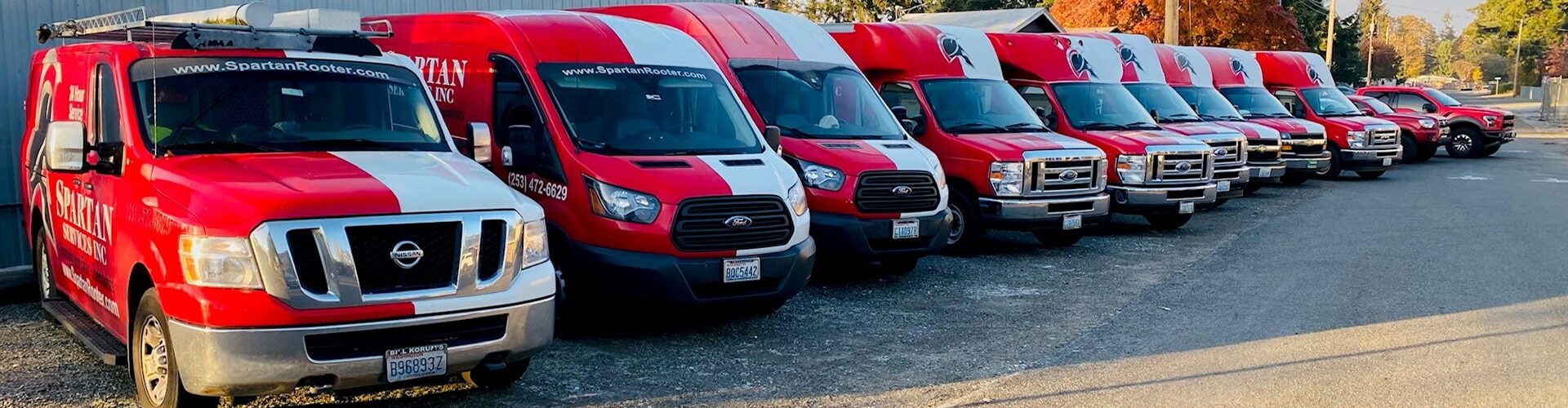

A blocked branch line is a nuisance. A blocked building sewer is the whole premises, because every fixture in it drains to the same place and none of them can be used until that place is open again. At Spartan Plumbing Inc., a Pierce County plumbing company since 1958, we clear blocked commercial drains and sewers and then check the line rather than leaving.
Clearing work starts with working out what is actually blocked: one fixture, one branch, or the main run out to the public sewer. That decision changes the tools, the access point and the cost, and it is worth ten minutes of triage. 24/7 emergency response covers the version of this that happens at eight on a Saturday night.
Our team clears the full bore of the line rather than punching a channel through the middle of what is blocking it. You get told what came out, where the obstruction sat, and whether anything about the pipe made it happen.
This one is specific to ground like ours. The Spanaway soil series is somewhat excessively drained glacial outwash, running to extremely gravelly sand below roughly nineteen inches, so a line with a break in it can drain into the surrounding gravel and appear to clear itself. What actually happened is that the blockage is still there and the contents found another way out, which is a much worse problem than a blocked pipe.
A properly placed cleanout turns a two-hour job into a forty-minute one. Older commercial buildings frequently have none outside, or have one that was paved over, and reaching the line then means pulling a fixture or creating an access. That cost belongs to the building rather than to the blockage, and it recurs every single time.
In a multi-tenant building, every suite feeding the blocked run keeps adding to it until somebody tells them to stop. The suite that reports the problem is usually the one with the lowest fixture, not the one causing it, and by the time the report reaches the property manager three other tenants have run a dishwasher.
Grease, roots, wipes, solids and a collapsed section all block a line and none of them respond to the same tool. Sending a cable through a grease plug opens a channel and leaves the deposit; sending high pressure water at a line that has already failed structurally makes the failure worse. Identifying what you are dealing with first is not a delay, it is the job.
Water finds the lowest opening, which in most commercial buildings is a floor drain in a kitchen, a wash-down area or a restroom. That makes the floor drain the messenger rather than the cause, and chasing the floor drain instead of the line downstream of it is a common way to spend money without fixing anything.
A backup in a restaurant, a cafe or any premises handling food is not only a plumbing problem. Sewage inside a food preparation area raises questions for the operator, the health authority and the insurer at the same time, and the decision about whether to keep serving is not the plumber’s to make. What we can do is get the line open and document what happened.
Every job runs the same way. We look at the system, tell you plainly what we found, put the estimate in writing before we start, and finish to code. Our Spanaway plumbing services page also covers residential work, and our commercial plumbing services page explains how we handle business properties.
Pressurized water cuts grease, scale, and debris out of commercial drain lines, and a paired high-definition camera run shows the inside of the pipe before and after, so the result is on record rather than guessed at.
Cured-in-place lining rebuilds a failed or cracked sewer line through small access points, sparing parking lots, landscaping, and flooring. Where the line is too far gone, we replace it outright.
Commercial tankless installation and repair for operations that need hot water on tap all day. On-demand units drop the standby energy a tank wastes and remove the recovery wait between draws.
Full commercial repiping for buildings running corroded, undersized, or out-of-spec supply lines. We pull the failing system and put in modern materials rated to carry the building’s demand for decades.
Tenant-improvement plumbing, fixture and appliance hookups, supply-line repairs, and full system upgrades. New space or existing, we take it from first cut to final connection.
Repair and replacement of broken downspouts that carry water off your foundation, plus sump pump fixes and primary or backup pump installs that keep below-grade space dry through a storm.
Diagnosis, repair, and full replacement for commercial tank heaters across every major brand and size, getting the hot water back on quickly so the operation keeps moving.
Scheduled and emergency work on pinholes, burst lines, and freeze damage anywhere in the building. We pin the source down first so the wall or floor only opens where it has to.
Motorized cabling and hydro jetting on floor drains, floor sinks, mop sinks, kitchen lines, and main sewers. We clear the full length of the line rather than punching a single hole through the clog.
Full support across tank, tankless, and heat pump units, including scheduled maintenance plans that stretch equipment life and head off the surprise failures.
Complete plumbing for commercial kitchens, restroom renovations, tenant improvements, and whole-facility remodels, coordinated with your contractor or property manager.
Heat pump water heater installation and repair for operations chasing lower utility costs, since these units draw far less power than standard resistance heating and pay back well in this climate.
Scheduled and emergency cleaning for every commercial drain type, from grease traps to floor drains to the main building sewer, stopping the backups and floods that shut a business down.
Video inspection of commercial sewer lines to locate root intrusion, collapse, offset joints, and blockages, giving you a clear read on the system before you commit to any repair.
The everyday commercial list handled by one licensed team: valves, fixtures, backflow devices, supply lines, and the small repairs that sit on a punch list until they turn into an after-hours call.
A single slow fixture is usually that fixture. Two or more failing together means the problem sits downstream of both, which puts it on a branch or on the main.
That is water leaving one fixture and arriving at another, which only happens when the shared line below them cannot carry it. It is one of the clearest signs that the blockage is past both.
Anything coming back into the building is a stop-work signal for that area. Keep people away from it, stop adding water to the system, and get it looked at rather than mopped.
Water backs up at the lowest available opening, so the affected fixture tells you about elevation rather than about location. It is useful information for triage and misleading if you treat it as the site of the fault.
When the operation did not change, the pipe did. That points at a defect, an intrusion or an accumulation rather than at something somebody put down a drain last week.
Two tenants with the same symptom means a shared line, and it also means the clock is running for everybody on it. That is worth escalating to the property manager immediately rather than each suite calling separately.
Clearing a line and clearing it properly are different jobs that often cost about the same on the day and very different amounts over the following year. Once the line is open, a camera inspection is what tells you whether you had an event or you have a defect.
We establish which fixtures are affected and which are not, which narrows the blockage to a branch or the main before anything is unloaded from the van. That saves opening access points that were never going to help.
Restoring flow through the middle of an obstruction ends the emergency and leaves the cause in place. Cutting the line back toward its own wall takes longer on the day and does not have you back in the same position next month.
Where the blockage sat, on which side of the property boundary, and what it consisted of are all much easier to establish during the clearance than afterward. In a shared building that record is what decides who carries the cost.
Clearing a line tells you it flows now. Looking at it tells you whether it will still flow in a month, and on a line that has blocked before, that is the part worth paying for.
Spartan Plumbing is licensed and certified to work on your Spanaway property.
Upfront estimates before work begins. No hidden fees or surprise charges after the fact.
We know the permit path, the inspection points, and the commercial code that applies in Spanaway.
Commercial-grade materials, pressure-tested connections, and documented work on every project.
We work around your operating hours where we can and keep the space clean while we work.
A blocked commercial sewer does not improve with time and it does not stay contained to one suite. We clear blocked drains and sewers for businesses across the Pacific Avenue South corridor and the surrounding streets, in single units and in multi-tenant buildings.
At Spartan Plumbing Inc., you get the line open, a plain account of what was in it, and the cost drivers in writing. Call us today at 253-231-7015 and stop adding water to the system while you wait.
Yes, and on this ground more than most. Sewer lines do not unblock themselves, so when a backup subsides without anyone touching it, the contents have usually found somewhere else to go, which on somewhat excessively drained gravel often means into the ground through a break in the pipe.
That is a worse position than a blocked line, not a better one, because it is discharging into the ground and it will keep doing so. A line that appeared to fix itself is a strong reason to look at it rather than a reason to relax.
Access first, then what is in the line, then the hour. A run reached through an existing exterior cleanout during business hours is at one end of the range, and a main with no usable access, cleared at midnight with a fixture pulled to get in, is at the other.
Whether the clearance needs cabling or hydro-jetting matters, and so does length of run. If the line has to be opened before anyone can even reach it, that access work is a real part of the cost and we say so up front.
If you suspect the public main rather than your own line, that is a sensible first call, and it costs nothing to make. Pierce County maintains its own mains, and the utility can check its line before you commission private work on yours.
Where the symptoms are confined to your building and the neighbors are unaffected, the problem is much more likely to be on the private side. Either way, reporting it creates a record, and a record is useful if the ownership question turns out to be contested.
Test in a sensible order and watch what happens. If one fixture is slow and everything else drains normally, the problem is local to that fixture or its branch. If several fixtures on different branches are affected, the restriction is downstream of all of them.
The most telling check is whether flushing one fixture makes another one back up. When it does, they share a line that is no longer carrying flow, and that moves the search toward the main.
Stop adding water to the system, which means telling staff and, in a shared building, telling the neighbors. Every flush, every sink and every dishwasher cycle is going into a line that cannot take it, and it makes the eventual mess larger.
Keep people and stock away from anything that has come up inside, and do not pour a chemical product down the line. It will not clear a main and it puts whoever opens that pipe next in contact with it.
That decision belongs to you and to your health authority rather than to a plumbing contractor, and it depends on where the water reached and what happens in that space. We would not tell you it is fine to carry on, because we are not the people qualified to say so.
What we can do is get the line open quickly and give you a written record of what happened, where it came from and what was done. That record is usually the first thing an inspector or an insurer asks for.
We find the best available access point, which might be a roof vent, an interior cleanout, or pulling a fixture out to get into the line. That approach works perfectly well, and it takes longer and costs more than a properly placed exterior cleanout would have.
It is also worth fixing as a standing problem. Installing a proper cleanout is modest work that pays for itself the second time the line needs attention, and on a building that has blocked once it usually will.
Sometimes, and it depends on what the blockage is made of and where it sat. Grease in a line serving a kitchen and a hair salon points somewhere fairly obvious, and a camera run showing where material is accumulating relative to each suite’s connection is real evidence.
What we can supply is factual: what came out, where it was, and what the line looks like. How that is applied under the leases is a matter for the landlord and the tenants, and we would rather hand over evidence than opinions.
It can, and the damage is rarely limited to what you can see. Water that has come up through a floor drain gets under flooring and into wall bases, and where a line has failed underground, material can migrate into the break and undermine a slab or a parking surface above it.
There is also the question of what is escaping. Drinking water for this area comes from wells in an aquifer system designated as a sole source aquifer, which is a good reason to treat a leaking sewer line as urgent rather than cosmetic.
Most clearances are hours rather than days, and the variable is access more than the blockage. Getting to the line through a cleanout that is where it should be is quick, and creating an access point where none exists is what stretches the job.
A collapse is the exception. If the line has failed structurally, clearing it is not possible and the work becomes a repair, which is why the camera run afterward matters so much.
If anything at all is coming back up into the building, treat it as an emergency. Waiting until morning means more water entering a line that already cannot take it, more contamination inside the premises, and a considerably larger cleanup than the one you have right now.
If a single fixture is slow and nothing is overflowing, it can usually wait for a scheduled visit, which is cheaper. The dividing line is whether the building can keep operating without making the problem worse.
 Book Now!
 Book Online