Emergency Plumbing in Tacoma & Pierce County 24/7 Human Support Free Second Opinion Quality Plumbing Services
Emergency Plumbing in Tacoma & Pierce County 24/7 Human Support Free Second Opinion Quality Plumbing Services
Emergency Plumbing in Tacoma & Pierce County 24/7 Human Support Free Second Opinion Quality Plumbing Services
Emergency Plumbing in Tacoma & Pierce County 24/7 Human Support Free Second Opinion Quality Plumbing Services

Text Us: 253-231-7015
Call Us: 253-231-7015
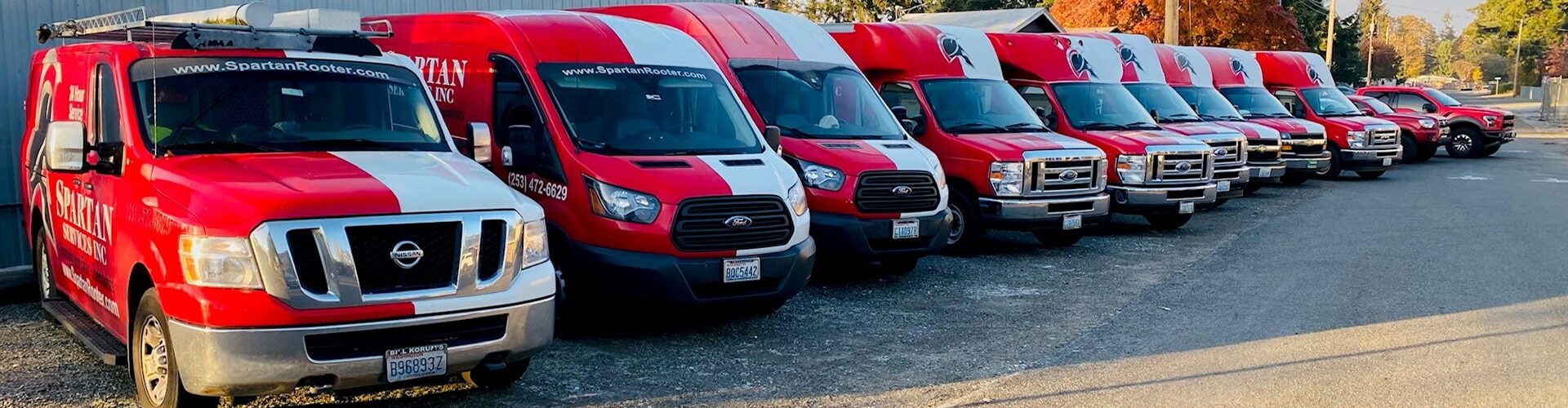

On a remodel, plumbing is the trade with the least freedom and the earliest deadline. Drainage runs downhill at a fixed fall, it lives in the floor and the walls, and every decision about it has to be right before anything closes up. At Spartan Plumbing Inc., a Pierce County plumbing company since 1958, we would rather walk the space while the design can still move.
We handle plumbing for commercial kitchen builds, restroom renovations, tenant improvements and whole-facility remodels, working to your contractor’s program or running the plumbing scope directly. Where a building has to keep operating through it, 24/7 emergency response covers whatever the construction disturbs out of hours.
Our team gives you the constraints early, in writing, including the ones that will not be popular. A fixture that cannot go where the drawing puts it is much cheaper to discover now than after the floor is poured.
Suites along this corridor change hands and change purpose regularly, and a space becoming a kitchen, a clinic or a salon carries requirements the previous use never triggered. Grease control, additional drainage capacity, backflow protection and permit scope all follow the use rather than the floor area. Pierce County is the authority on which of those apply, and the time to ask is during design.
Drawings describe intent, and older commercial construction describes history. Opening a wall or a ceiling can reveal pipe that is a different material, a different size or a different route from what the record shows, along with previous alterations nobody documented. That is not a failure of planning; it is why a contingency and an early survey both exist.
Moving a floor drain or adding drainage below a slab means breaking concrete and then working in what is underneath it. The Spanaway soil series runs 35 to 60 percent gravel with cobbles through the profile, which affects excavation, bedding and reinstatement. It is workable ground and it is not the clean trench a drawing implies.
A building generally has to keep a certain provision available while it is occupied, and how much is a question for the applicable code and the County rather than for the program. Taking every restroom out together is the fastest way to build and frequently not a permitted one. That constraint belongs in the sequence from the beginning.
Existing-condition drawings for older commercial premises are often approximations, and the errors that matter are the invisible ones: an invert that is lower than shown, a stack that is not where it appears, a vent that was capped during a previous alteration. Every one of those changes what is possible with the new layout.
The plumbing milestone that matters is not when the fixtures arrive, it is when the in-wall and under-floor work has to be complete and inspected. Programs built around finishes rather than around that point are the ones that stall, because closing up before an inspection means opening back up afterward.
Every job runs the same way. We look at the system, tell you plainly what we found, put the estimate in writing before we start, and finish to code. Homeowners can find our residential work on the Spanaway plumbing page, and our commercial plumbing page covers business properties in more detail.
Pressurized water cuts grease, scale, and debris out of commercial drain lines, and a paired high-definition camera run shows the inside of the pipe before and after, so the result is on record rather than guessed at.
Cured-in-place lining rebuilds a failed or cracked sewer line through small access points, sparing parking lots, landscaping, and flooring. Where the line is too far gone, we replace it outright.
Commercial tankless installation and repair for operations that need hot water on tap all day. On-demand units drop the standby energy a tank wastes and remove the recovery wait between draws.
Full commercial repiping for buildings running corroded, undersized, or out-of-spec supply lines. We pull the failing system and put in modern materials rated to carry the building’s demand for decades.
Tenant-improvement plumbing, fixture and appliance hookups, supply-line repairs, and full system upgrades. New space or existing, we take it from first cut to final connection.
Repair and replacement of broken downspouts that carry water off your foundation, plus sump pump fixes and primary or backup pump installs that keep below-grade space dry through a storm.
Diagnosis, repair, and full replacement for commercial tank heaters across every major brand and size, getting the hot water back on quickly so the operation keeps moving.
Scheduled and emergency work on pinholes, burst lines, and freeze damage anywhere in the building. We pin the source down first so the wall or floor only opens where it has to.
Motorized cabling and hydro jetting on floor drains, floor sinks, mop sinks, kitchen lines, and main sewers. We clear the full length of the line rather than punching a single hole through the clog.
Full support across tank, tankless, and heat pump units, including scheduled maintenance plans that stretch equipment life and head off the surprise failures.
Complete plumbing for commercial kitchens, restroom renovations, tenant improvements, and whole-facility remodels, coordinated with your contractor or property manager.
Heat pump water heater installation and repair for operations chasing lower utility costs, since these units draw far less power than standard resistance heating and pay back well in this climate.
Scheduled and emergency cleaning for every commercial drain type, from grease traps to floor drains to the main building sewer, stopping the backups and floods that shut a business down.
Video inspection of commercial sewer lines to locate root intrusion, collapse, offset joints, and blockages, giving you a clear read on the system before you commit to any repair.
The everyday commercial list handled by one licensed team: valves, fixtures, backflow devices, supply lines, and the small repairs that sit on a punch list until they turn into an after-hours call.
Every constraint is cheaper before the drawings are frozen. After that point, the same information turns into a variation rather than a design decision.
Breaking into a slab or a wall without knowing what is in it risks damaging live services and stopping the job. Locating first takes far less time than repairing what a saw finds.
Distance from drainage is a constraint that regularly forces a layout change. It is governed by fall and by what is under the floor, and it is worth checking before anything is committed.
New equipment can change drainage, supply capacity and backflow protection at once. An equipment schedule that has quietly moved on from the drawings is a familiar source of late variations.
Approval tells you what may be built. It does not tell you the order that keeps the building usable and gets the inspections in the right places, and that sequence is where the schedule is actually won or lost.
If the building stays occupied, somebody has to have decided what people use while their normal facilities are out. Leaving that until the first shutdown is how a program loses days.
Almost every expensive surprise on a remodel was knowable earlier. Where the work is a set of connections into an existing building rather than a construction project, our commercial plumbing installation and repair page covers that scope instead.
We look at what exists, where it runs, and what the new layout will demand of it, then say what is straightforward and what is not. Design changes are cheap on paper and expensive in concrete.
Everything that has to be complete before surfaces close gets planned as a single package, including the items nobody put on the drawing. Reopening finished construction is the most avoidable cost on any remodel.
Where the premises stay open, the work is broken into areas and windows, with the provision that has to remain available worked out first. You get the sequence in advance so staff and tenants can be told something specific.
Inspection points are scheduled as milestones rather than remembered at the end. That single habit removes a recurring reason plumbing holds up a finishing trade.
Spartan Plumbing is licensed and certified to work on your Spanaway property.
Upfront estimates before work begins. No hidden fees or surprise charges after the fact.
We know the permit path, the inspection points, and the commercial code that applies in Spanaway.
Commercial-grade materials, pressure-tested connections, and documented work on every project.
We work around your operating hours where we can and keep the space clean while we work.
The plumbing scope on a remodel is decided in the first few weeks and paid for in the last few. We plan and deliver commercial remodel plumbing across the Pacific Avenue South corridor and the streets around it, for owners, tenants, contractors and property managers.
At Spartan Plumbing Inc., you get the constraints, the sequence, the inspection points and the cost drivers in writing before demolition starts. Call us today at 253-231-7015 to book a walkthrough.
Because cosmetic refits move fixtures, and a fixture that moves needs drainage, venting and supply to move with it. Those live in the floor and the walls, which are the two things a cosmetic program assumes it can leave alone, so the conflict usually surfaces at the worst moment.
An early walk costs very little and frequently confirms that the plan works as drawn. When it does not, you find out while the layout can still change rather than after the finishes are ordered.
How much of the existing building the new layout can reuse. Keeping fixtures near existing drainage is inexpensive, and moving them away from it means opening floors, extending runs and sometimes reworking venting, which is a different order of work.
Phasing, out-of-hours access and the condition of what you find behind the surfaces all move it. We price the known scope and set out where the genuine unknowns are rather than burying them in a single figure.
Often you can, and the constraint is drainage rather than supply. Water can be run almost anywhere you like, while drainage needs continuous fall down to an existing connection point and venting arranged correctly, and those two requirements together decide what is realistic in a given space.
The practical answer comes from knowing what is under the floor. Where the invert allows it, a move is straightforward, and where it does not, the honest options are a different location, a different floor build-up, or a bigger piece of work.
You hear about it that day, with what it means for scope, cost and program. Concealed conditions are a normal feature of work in existing buildings rather than an exception, which is why a contingency belongs in the budget from the start.
What we will not do is carry on and present it at the end. A finding that changes the job is a decision for you to make while there are still options open.
Usually that is a requirement rather than a preference. The provision an occupied building has to maintain is set by the applicable code and confirmed through the County, and it is one of the first things worth establishing because it shapes the entire sequence.
Practically, it means phasing the work so one set of facilities is always available, or arranging temporary provision. Both are manageable when planned and disruptive when discovered.
We do, directly, and it works far better than routing everything through the client. Programming, access, inspection dates and the points where our work has to be complete before another trade proceeds are all conversations that belong between the trades.
Where you would rather hold that coordination yourself, that is workable too. What matters is that somebody owns it, because the gap between trades is where remodel schedules usually slip.
Before the layout is fixed, which in practice means during design rather than after it. The questions that shape a plumbing scope are all layout questions: where fixtures sit, what the tenant will run, and what has to stay in service.
If that moment has passed, it is still worth a walk before demolition. Even at that stage, locating the existing services and confirming what the new layout demands avoids the most expensive category of surprise.
That is common enough in older commercial buildings that we treat existing-condition drawings as a starting point rather than a record. Locating and verifying what is actually installed is a modest piece of work and it is the foundation for everything after it.
Once the real position is known, the design gets adjusted to it. That is a much better sequence than building to a drawing and discovering the discrepancy when the pipe does not meet.
It depends entirely on the phasing and on what provision has to stay available. Where the sequence can always leave one set of facilities in service, temporary provision is often unnecessary, and where the sequence cannot manage that, it needs arranging properly rather than improvising.
This is worth settling early because it affects both cost and program. It is also the item most often left off a schedule until the week the work starts.
Work that has been closed up before the inspector was able to see it, more than anything else. Inspections happen at defined points in the build, and covering that work before one means opening it back up again afterward, which costs time twice over.
Incomplete testing, missing access, and changes made on site without being reflected anywhere are the other regular causes. Booking the inspection into the program and finishing to it removes nearly all of them.
Frequently yes, and for a business that cannot close for a week it is often the only workable approach. The work gets divided into packages that each start and finish within a closure, so the premises reopen in a usable state each time.
It does add cost, because setting up and breaking down repeatedly is less efficient than working straight through. Whether that trade is worth it depends on what a longer closure would cost you, and that is your number rather than ours.
 Book Now!
 Book Online