Emergency Plumbing in Tacoma & Pierce County 24/7 Live Answer Free Second Opinion Quality Plumbing Services
Emergency Plumbing in Tacoma & Pierce County 24/7 Live Answer Free Second Opinion Quality Plumbing Services
Emergency Plumbing in Tacoma & Pierce County 24/7 Live Answer Free Second Opinion Quality Plumbing Services
Emergency Plumbing in Tacoma & Pierce County 24/7 Live Answer Free Second Opinion Quality Plumbing Services

Text Us: 253-231-7015
Call Us: 253-231-7015
Hydro jetting is safe for most old pipes in Tacoma when the water pressure is matched to the pipe material and the line is inspected first. Sound cast iron, lightly scaled galvanized, and intact clay laterals usually handle a reduced pressure range well. Heavily corroded or already failing pipes can be damaged, so a camera check before jetting is what keeps an aging line clear instead of leaking.
Tacoma is full of older houses, and older houses come with older pipes. According to U.S. Census data, the average local home is about 59 years old, and more than a quarter were built before 1940, which means a lot of cast iron, galvanized steel, and clay sitting under our streets and yards. So when a homeowner in South Tacoma hears the words “hydro jetting,” the very next question is usually a fair one: will that wreck my old pipes?
It is a good question, and the honest answer is “it depends.” Hydro jetting is a powerful, effective way to clear a line, but power matched to the wrong pipe is exactly how damage happens. If you want a plain-English read on what is safe and what is not, you can also lean on our professional drain cleaning team in Tacoma for a real-world look at your specific line.
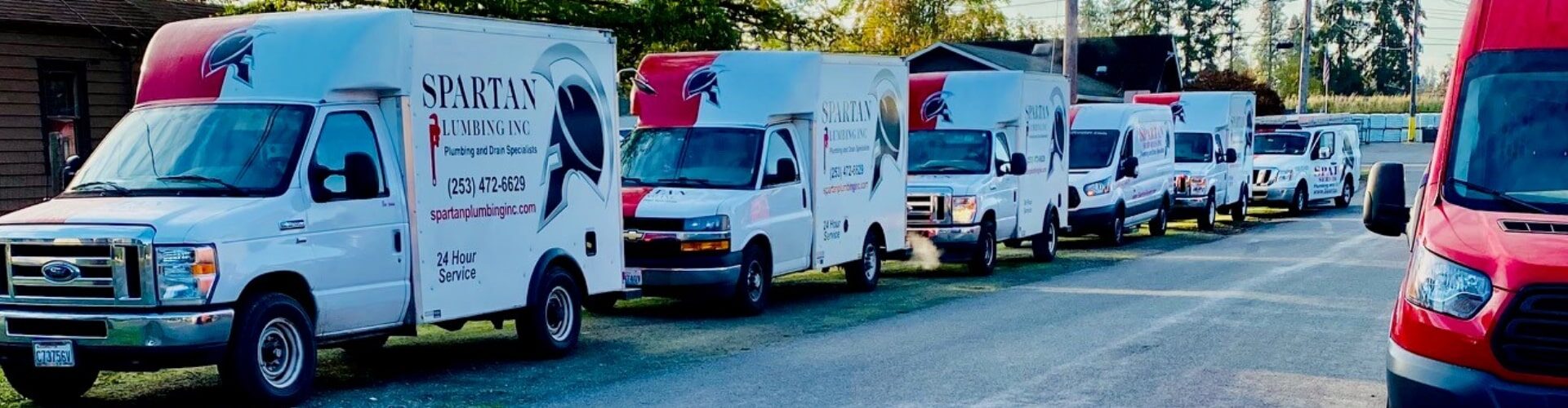
At Spartan Plumbing Inc. (LIC #SPARTSI794OC), we have worked on Pierce County pipes since 1958, so we have seen what hydro jetting does to every kind of aging line in this city. That experience is exactly why we never run the same pressure on every job. Contact us today for a straight answer on whether jetting is right for your older line.
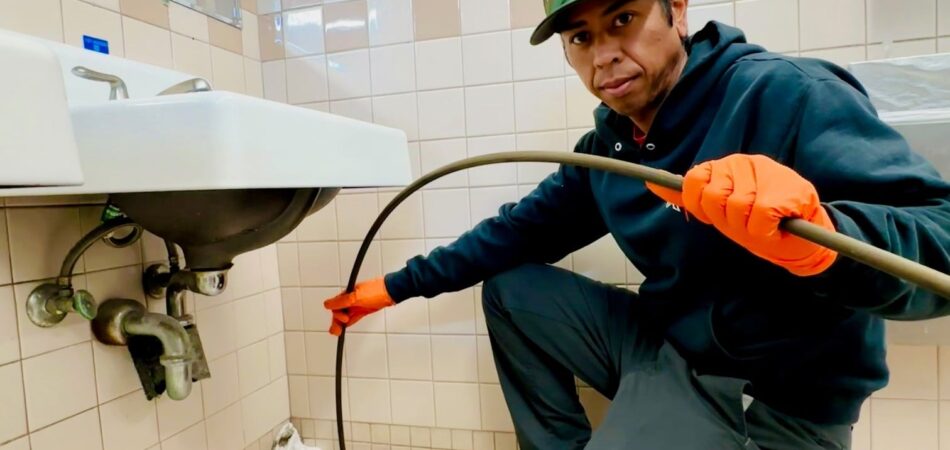
 Hydro jetting uses a high-pressure water stream, fed through a specialized nozzle, to scour the inside walls of a pipe. Instead of punching a hole through a clog the way a cable snake does, it strips the buildup off the pipe wall entirely. Grease, soap scum, sludge, and fine root hairs all get flushed downstream.
Most residential jetters run somewhere between 1,500 and 4,000 PSI, and that range matters more than any other number in this conversation. On a healthy line, that pressure is what makes jetting so thorough. On a fragile line, that same pressure is the thing you have to respect.
What makes jetting genuinely useful is that it cleans the full diameter of the pipe, not just the channel a snake bores through a blockage. Grease that has coated the walls for years, the slick film that builds up in kitchen drains, fine root hairs feeding through a joint, all of it gets sheared off and carried downstream. That is why a properly jetted line tends to stay clear far longer than one that was only cabled.
The takeaway here is simple. Hydro jetting is not inherently dangerous to old pipes, but it is unforgiving if nobody checks the pipe first.
The water does not know if it is hitting solid cast iron or a rust-thinned wall in a Stadium District basement. A person has to make that call, and that is the difference between a clean line and a leak.
Real talk: for a lot of older Tacoma homes, yes, hydro jetting is perfectly safe, as long as the pressure is dialed to the pipe. Trouble starts when a crew shows up, runs full pressure on every job, and never looks at what they are working with. That is where horror stories come from.
The safety question really breaks down by what your line is made of and how much life it has left. Here is the short version of how the common materials behave.
Cast iron corrodes from the inside out, so the outside can look fine while the wall is thinning. Sound cast iron handles jetting well, often at a reduced range around 1,500 to 2,000 PSI. The catch is that badly corroded cast iron can lose material under pressure, which is why a line gets inspected before anyone turns on the water.
Galvanized supply and drain lines are common in pre-war and mid-century Tacoma homes, and they tend to build heavy rust nodules inside. Lightly scaled galvanized can sometimes be jetted at low pressure, but heavily corroded sections usually need replacement, not cleaning. Jetting will not fix a pipe that is already failing.
A lot of older homes here still run clay laterals out to the main. Clay is brittle and prone to cracked or offset joints, so it gets the gentlest treatment of all, often under 1,500 PSI. If the joints are already compromised, jetting is not the answer and a repair is.
If a previous owner already replaced the line with PVC or ABS, you are in the easy category. These modern plastics tolerate standard jetting pressures without drama, which is why newer additions and remodels rarely raise the same concerns.
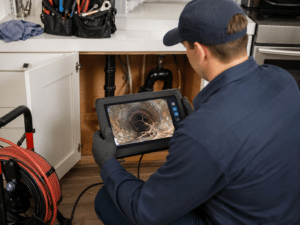 Here is the thing that separates a safe job from a gamble: knowing the pipe’s condition before the water turns on. A licensed plumber inspects the line first, and on older homes that often means running a camera down it so the real wall condition is visible, not guessed at.
That step is what lets us match pressure to the pipe instead of treating every line the same. A camera shows whether that cast iron stack in Old Town has solid walls or whether it is one good jolt away from a leak. If you want to see how that diagnostic works, our sewer camera inspection service for Tacoma homes is built exactly for this.
Skipping the look-first step to save twenty minutes is how a routine cleaning turns into a pipe replacement. We would rather find out the line is too far gone before we pressurize it, not after. That is also why we offer a free second opinion if another company already told you jetting is your only option.
It also lets us set the right pressure instead of defaulting to maximum. A solid PVC line can take the full range, while a corroded cast iron stack in an older home gets a much gentler approach. Our trucks come fully stocked, so when the inspection points to the right fix, we can usually handle it in the same visit rather than scheduling you a week out.
Sometimes the camera tells us the honest truth: this pipe is past cleaning. That is not bad news; it is the news that saves you from paying for a job that fails a month later. When a line is too corroded or cracked to jet safely, the smarter path is repair or rehabilitation.
For a lot of aging Tacoma laterals, that means trenchless rehabilitation instead of digging up the whole yard. A cured-in-place liner forms a new seamless pipe inside the old one, and quality liners are independently tested to last 50 years or more. Our trenchless sewer lining and replacement work is often the right move when a pipe has structural problems jetting cannot solve.
One thing worth understanding about older Tacoma homes is what usually causes the clog in the first place. In neighborhoods like Old Town and South Tacoma, a lot of the housing stock predates 1940. Recurring backups tend to trace back to grease built up over decades, fine root intrusion at aging joints, and the rough interior of corroded metal pipe that grabs debris. Those are pipe-condition problems, and they change how a line should be cleaned and whether jetting alone is even the right tool.
The point is that jetting and lining are not competitors; they are two tools for two different problems. Jetting clears a healthy pipe. Lining rebuilds a failing one. Knowing which problem you actually have is the whole game, and that comes from looking first.
Cost is usually the next question, so let’s be clear about it. Hydro jetting a residential line does not carry a single set price, because what it takes to clear the line depends heavily on the current condition of the plumbing and the nature of the job. Industry cost data shows that access, the severity of the blockage, and the pipe’s condition are what actually drive the price, not a flat menu rate.
That is why we never hand out a number sight unseen. Real pricing depends on the line, the access point, and what the camera finds once we look. A few things drive the number up or down:
We give an upfront written estimate before any work starts, so you know the number before we touch the pipe, not after. No surprise line items, no pressure to upsell a job your pipe does not need. If you are a senior or a veteran, we also take five percent off, and financing is available when a bigger repair turns out to be the right move.
It is worth remembering that the cheapest option up front is not always the cheapest in the end. Jetting a line that should have been relined just buys you a few months before the same problem returns, now with water damage attached. A clear-eyed look at the pipe is what keeps you from paying twice, which is the whole reason we inspect before we assume.
Hydro jetting is safe for plenty of old Tacoma pipes and risky for the wrong ones, and the only way to tell the difference is to look before you pressurize. Matched to the right line it is one of the cleanest ways to clear a pipe, but run blind on a corroded one and it is a problem.
At Spartan Plumbing Inc. (LIC #SPARTSI794OC), we have served Pierce County families since 1958, and our experience with hydro jetting in Tacoma means we will give you a straight answer about your pipes before anyone fires up a jetter. Call us today for a free second opinion and an upfront written estimate on your older line.
It can, if the pressure is not matched to the pipe’s condition. High-pressure water can break through weak or badly corroded walls, which is why a licensed plumber inspects the line first and adjusts pressure for older cast iron, galvanized, or clay before jetting.
Sound cast iron usually handles jetting safely at a reduced range, often around 1,500 to 2,000 PSI. The risk comes with cast iron that has corroded from the inside out, since the wall may be too thin to take the pressure, so condition gets checked before any water runs.
Residential jetters typically run between 1,500 and 4,000 PSI, but old or fragile lines get dialed down. Cast iron is often reduced to roughly 1,500 to 2,000 PSI, and brittle clay is treated gentler still, frequently under 1,500 PSI, to avoid cracking.
Age and material are the main clues. Tacoma homes built before 1940, common across South Tacoma and Old Town, often have cast iron, galvanized steel, or clay laterals, and the average local home is about 59 years old. A camera inspection confirms what is actually down there.
The better tool depends on the goal and the pipe. Snaking punches through a clog quickly and is gentler on fragile lines, while jetting scours the whole pipe wall clean. For older or weakened pipes, snaking or low-pressure jetting is often the safer first step.
Jetting can cut and flush out fine root intrusion that has worked into a line. For heavy root masses or roots that have cracked the pipe, though, cleaning alone is temporary, and repair or trenchless lining usually addresses the underlying entry point.
For most homes, every 18 to 24 months is a reasonable maintenance interval, though lines with recurring grease or root problems may need it more often. A camera inspection helps set the right schedule rather than guessing or over-servicing the line.
There is no flat rate, because the price depends on how the line is accessed, the severity of the blockage, and the condition of the pipe itself. A simple flush through a clean cleanout is very different from a deep grease and root problem in a corroded line. We inspect first and provide an upfront written estimate before any work begins, so you know the number before we start.
 Book Now!