Emergency Plumbing in Tacoma & Pierce County 24/7 Live Answer Free Second Opinion Quality Plumbing Services
Emergency Plumbing in Tacoma & Pierce County 24/7 Live Answer Free Second Opinion Quality Plumbing Services
Emergency Plumbing in Tacoma & Pierce County 24/7 Live Answer Free Second Opinion Quality Plumbing Services
Emergency Plumbing in Tacoma & Pierce County 24/7 Live Answer Free Second Opinion Quality Plumbing Services

Text Us: 253-231-7015
Call Us: 253-231-7015
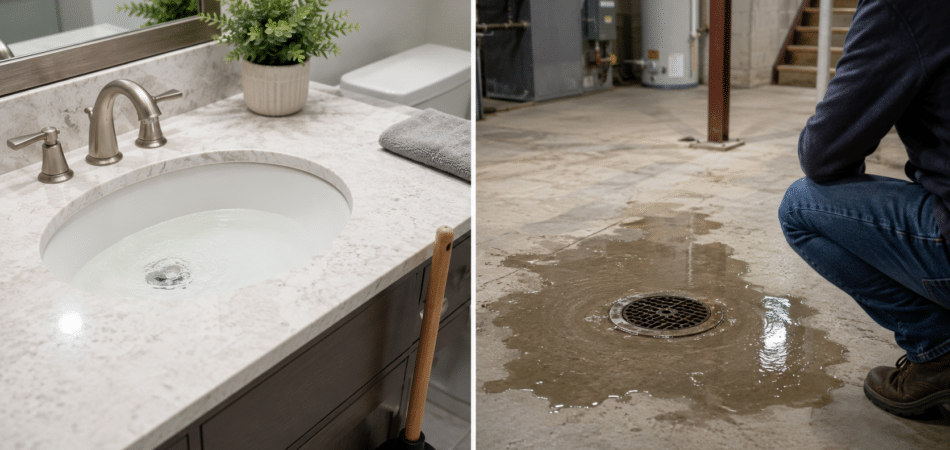
A simple drain clog affects one fixture and usually clears with snaking, while a blocked sewer line backs up multiple fixtures at once and signals a problem in the buried pipe that carries waste from your Tacoma home to the city main. Telling the two apart early saves money and prevents sewage from coming up where you least want it.
The difference between a clog and a blocked sewer line matters more in Tacoma than in many cities. A large share of our housing stock is old, the average home here is roughly 59 years old, and many North End and Proctor District properties still run waste through aging clay sewer laterals that crack, settle, and invite tree roots. When several drains slow down on the same day, you are likely looking at the buried line, not the sink trap.
We see this confusion constantly across Pierce County. A Hilltop homeowner snakes a kitchen sink three times in a month, never realizing the real blockage sits twelve feet underground. If you want help reading the signs, our Tacoma drain cleaning and clog removal team can pinpoint whether the trouble is local or main-line.
At Spartan Plumbing Inc. (LIC #SPARTSI794OC), we have served Tacoma families since 1958, and that history shows up in how quickly we separate a minor clog from a buried emergency.
Contact us today to find out whether your backup is a simple clog or a buried sewer problem.
A drain clog is a localized blockage inside the pipe serving a single fixture, like a bathroom sink, a shower, or one toilet. The water slows or stops at that one spot, the rest of the house drains normally, and the fix is usually mechanical removal of hair, grease, soap, or food.
A blocked sewer line is a blockage in the main lateral, the single buried pipe that collects waste from every fixture and carries it to the city sewer. When that line is obstructed, the whole house has nowhere to drain, so problems show up at the lowest fixtures first and spread upward as water backs up through the system.
The table below sorts the two at a glance so you can match what you are seeing at home to the likely source before anyone touches a pipe.
You can read most of the difference from your own fixtures before a plumber arrives. The pattern of where water slows, backs up, or gurgles tells you whether the trouble is one branch or the whole buried line. A few minutes of careful observation often saves a wasted snaking job on the wrong pipe.
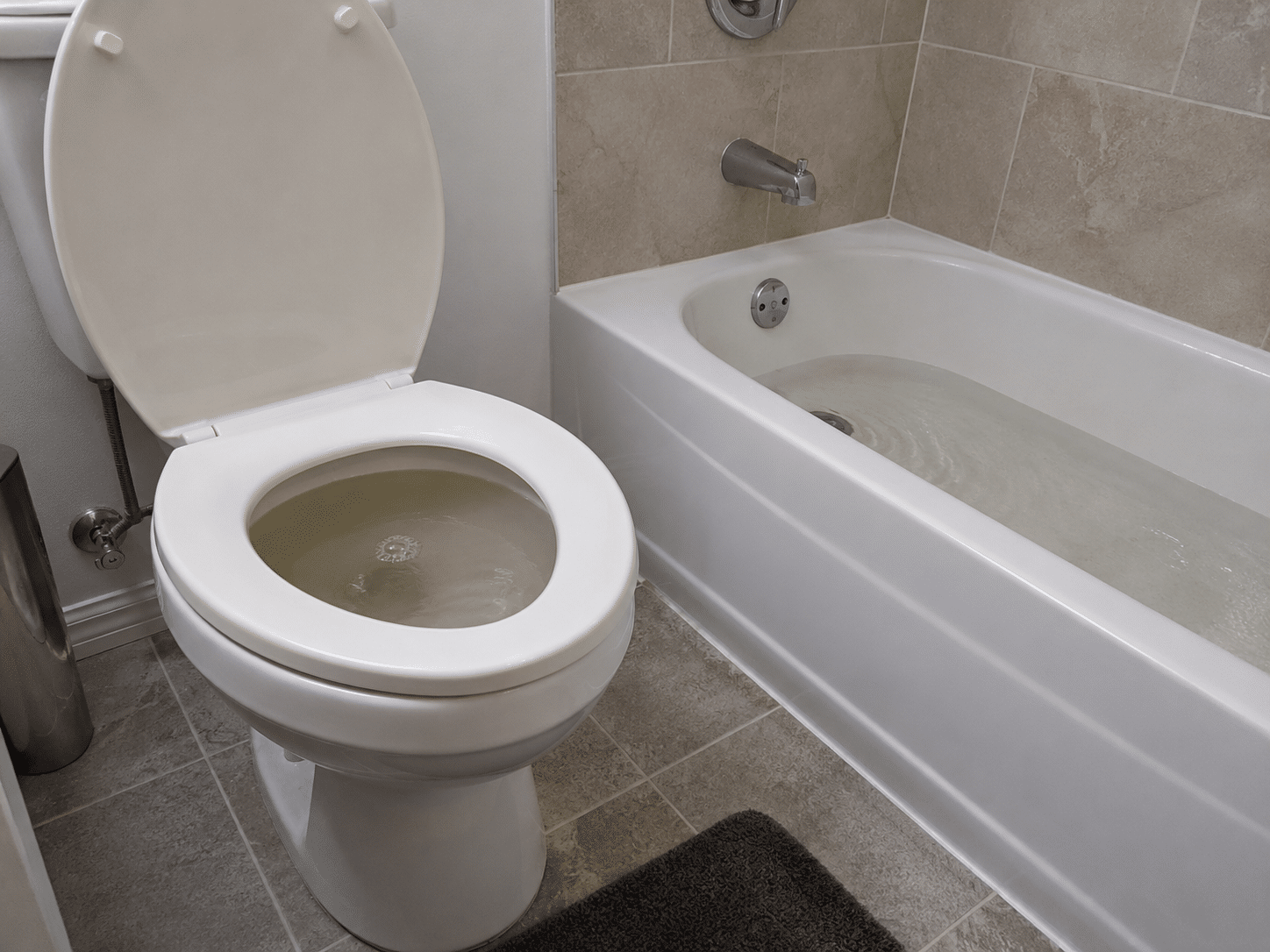 One slow drain almost always points to a local clog in that fixture’s branch line. When a toilet, a tub, and the laundry standpipe all act up on the same day, the shared main lateral is the common link.
Two or more simultaneous backups are the single clearest tell that the problem sits downstream in the sewer line, not at any one trap.
Sewer blockages reveal themselves at the lowest point in the house because water seeks the easiest exit. A first-floor shower, a basement floor drain, or a ground-level toilet will overflow before upstairs fixtures show anything. If wastewater appears in a tub when you flush a toilet, the main line is backing up and pushing waste to the lowest open drain.
Gurgling happens when trapped air has nowhere to go because the line downstream is blocked. Flush a toilet and listen for the nearby shower drain to bubble, or run the kitchen sink and watch the toilet water rise. That air displacement only occurs when the buried lateral is obstructed, which separates a main blockage from a simple branch clog.
A sewer-gas smell indoors, or a soggy, unusually green patch in a North End or Proctor District yard, often means the buried lateral is cracked or blocked and leaking. Branch clogs rarely produce outdoor symptoms. When indoor odors pair with yard changes, treat it as a main-line issue and stop running water until a licensed plumber inspects the line.
The age and materials of Tacoma’s buried plumbing explain why main-line blockages show up here more than in newer suburbs. Roughly 26.9% of homes in the area predate 1940, and the median build year sits around 1967, according to census housing data, so a large number of laterals are clay or early cast iron approaching or past their service life.
Clay sewer laterals join in short sections with seams that shift as the ground settles. Those seams leak just enough moisture to attract tree roots, and Tacoma’s mature maples and firs send fine roots into the joints, where they expand into dense mats that snag waste and paper. Decades of Pacific Northwest rain, around 40 inches a year, keep the soil moving and the joints flexing.
Materials and habits stack the odds further. Older Hilltop and Proctor District homes often have flat or sagging lateral runs that let grease and solids settle instead of flushing through. Add wipes, cooking fat, and the occasional intruding root, and an aging line that drained fine for years can block within a single season.
The right fix depends on what is actually blocking the line and how much pipe is damaged. A one-time obstruction calls for a far smaller job than a collapsed or root-filled clay lateral, and a licensed plumber inspects the line to confirm which situation you have before recommending anything. The common paths run from simple clearing to full pipe restoration.
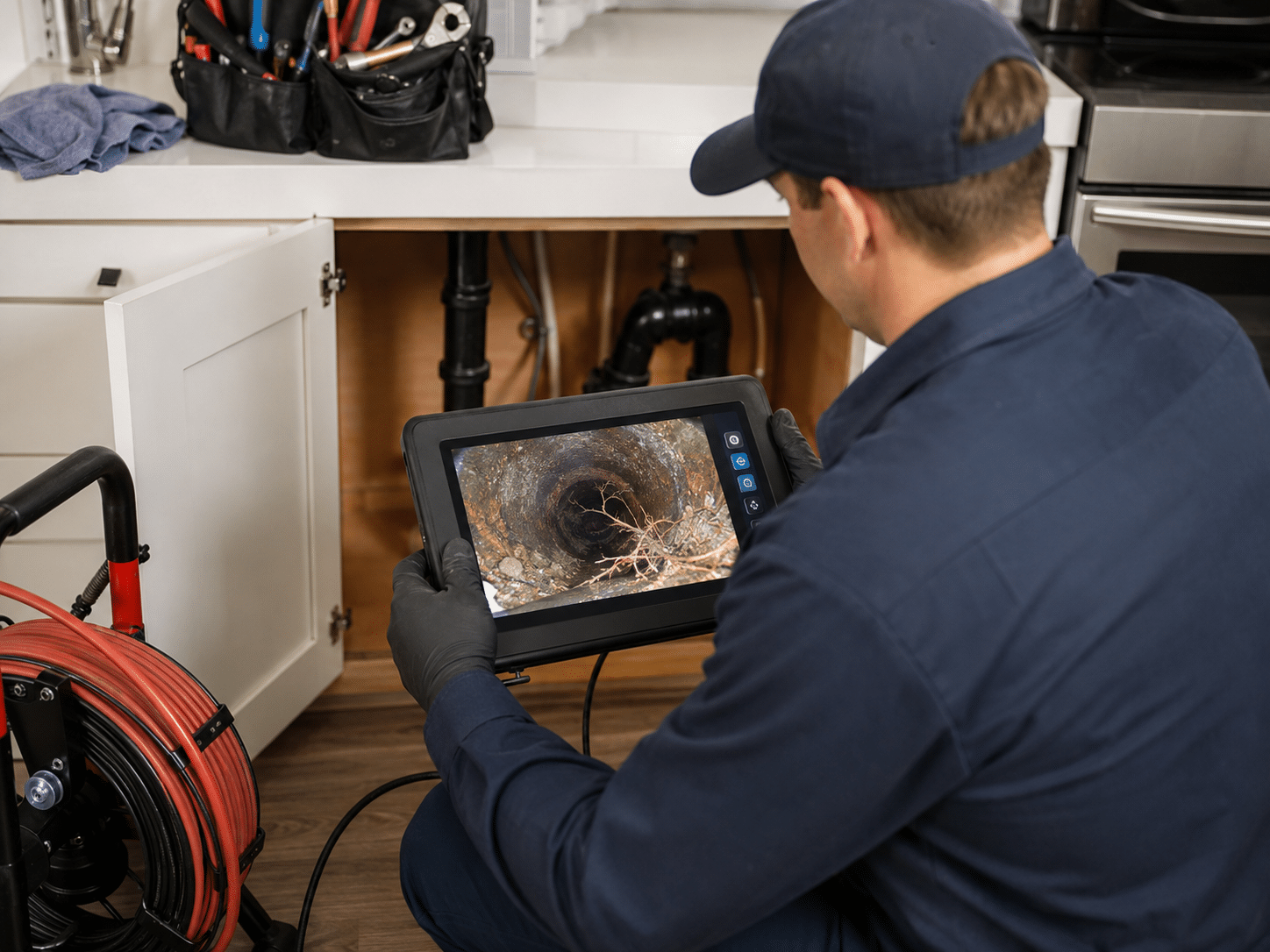 When the line is intact but plugged with roots, grease, or paper, professional cabling or hydro jetting restores flow without digging.
What clearing the main lateral costs depends on how accessible the cleanout is, how far down the blockage sits, and whether roots or hardened grease make it stubborn, so a quick obstruction is a much smaller job than a heavily root-bound line.
Clearing is the right first step when the pipe itself is structurally sound.
If the lateral is cracked, leaking at the joints, or repeatedly invaded by roots, a cured-in-place liner rebuilds the pipe from the inside through small access points. The cost of trenchless lining tracks with the length of pipe affected, the depth of the line, and how much of the lateral needs rebuilding, so a short spot section is far less involved than a full end-to-end lining. Our trenchless sewer lining and pipe replacement service spares most of your yard and driveway.
A single collapsed section under a driveway may only need a dig-and-replace spot repair, while a lateral that has failed end to end calls for full replacement. To map exactly where and how badly the pipe has failed, our Tacoma sewer line camera inspection service documents the condition so you only pay to fix what is broken.
In Tacoma, the property owner maintains the entire side sewer from the building all the way to the city main, per the City of Tacoma side sewer rules, not just the portion on your lot. That makes early diagnosis worth the trouble, since a small cleared blockage today can prevent a costly buried failure later. The city’s Residential Sewer Conservation Loan Program is a low-interest loan that can cover up to 90% of qualifying repair costs for eligible owners.
Start by reading the pattern: one slow fixture points to a branch clog you may clear yourself, while two or more backing up at once means the buried lateral needs a professional. Stop running water at the first sign of a main-line backup so waste does not surface at your lowest drains, and get the line looked at before the next heavy Pacific Northwest rain pushes the soil and the problem further. As a trusted local source for sewer line service in Tacoma, we have seen how fast a small blockage turns into a buried failure.
At Spartan Plumbing Inc. (LIC #SPARTSI794OC), we have helped Tacoma and Pierce County families separate simple clogs from serious sewer blockages since 1958, and we back every visit with flat-rate, written estimates, a free second opinion, and a 100% satisfaction guarantee. When your drains are acting up across the house, you deserve a straight answer. Call us today to find out whether it is a ten-minute clog or a buried line that needs real work.
Check how many fixtures are affected. A single slow sink or tub is almost always a local clog, while two or more drains backing up at the same time, especially the lowest ones, points to a blocked main sewer line. Gurgling toilets and water rising in a tub when you flush confirm a main-line issue.
You can usually clear a minor branch clog with a hand snake or hot water, but a true main sewer blockage sits in the buried lateral, often plugged by roots or grease beyond reach of a store-bought tool. Repeated whole-house backups need a professional, who can clear the line safely and confirm the pipe is intact.
The earliest signs are multiple drains slowing on the same day, gurgling from toilets when other fixtures run, and water backing up at the lowest drain such as a basement floor drain or first-floor shower. A sewer-gas smell or a soggy patch in the yard can also signal a buried blockage.
Many Tacoma homes predate 1940 and still use clay sewer laterals whose joints shift and leak as the ground settles. Those leaking seams attract tree roots, and decades of Pacific Northwest rain keep the soil moving, so older lines in neighborhoods like the North End and Hilltop block more often than newer ones.
The cost depends on how accessible the cleanout is, how far down the blockage sits, and whether it is a simple obstruction or a root-bound line. Clearing an intact pipe is a far smaller job than lining or replacing a cracked or collapsed lateral, where the length affected and the depth of the line drive the price. A camera inspection confirms which path you actually need, and we put a written estimate in your hands first.
Roots return whenever the pipe still has open joints or cracks for them to enter, so clearing alone is a temporary fix on a damaged clay lateral. Trenchless lining seals the inside of the pipe and removes the entry points, which is the durable way to keep roots out for the long term.
Treat raw sewage coming up through drains or toilets as urgent, because it is a health hazard and can damage flooring and walls quickly. Stop running water, keep people away from the affected area, and have a licensed plumber inspect the line right away to clear the blockage and limit the damage.
In Tacoma, the property owner is responsible for the entire side sewer from the building to the city main, including the section in the street. The city maintains only its main sewer. Tacoma’s Residential Sewer Conservation Loan Program can help eligible owners cover up to 90% of qualifying repair costs.
 Book Now!