Emergency Plumbing in Tacoma & Pierce County 24/7 Live Answer Free Second Opinion Quality Plumbing Services
Emergency Plumbing in Tacoma & Pierce County 24/7 Live Answer Free Second Opinion Quality Plumbing Services
Emergency Plumbing in Tacoma & Pierce County 24/7 Live Answer Free Second Opinion Quality Plumbing Services
Emergency Plumbing in Tacoma & Pierce County 24/7 Live Answer Free Second Opinion Quality Plumbing Services

Text Us: 253-231-7015
Call Us: 253-231-7015

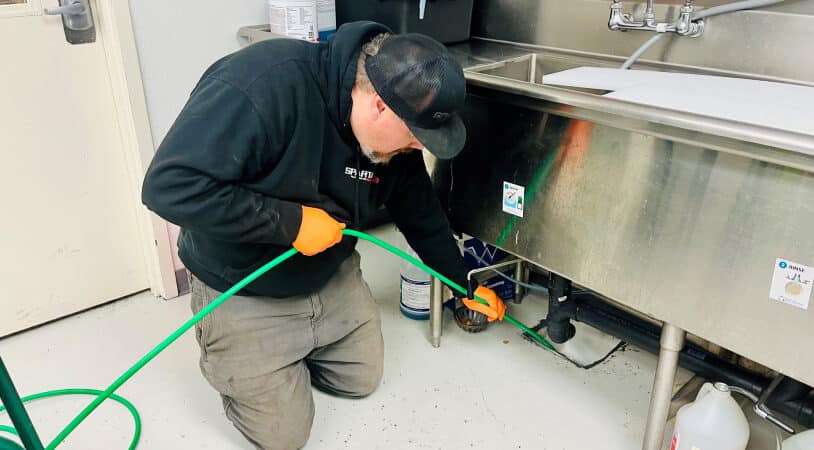
Most Tacoma households should have their drains professionally cleaned once a year, while older homes and heavy-use households benefit from twice-yearly service. Tacoma’s aging clay and cast-iron lines, soil movement, and tree-root intrusion allow grease and scale to build up faster than in newer pipes. A yearly cleaning clears that buildup before it turns into a backup that floods a finished basement.
Most Tacoma homeowners only think about their drains when the water stops going down. That reactive habit is exactly how a slow kitchen sink in South Tacoma turns into a weekend emergency.
The honest answer to how often drains need professional cleaning is once a year for an average household, with twice-yearly service for older or heavier-use homes. Knowing where your home falls on that scale saves money and prevents the backups that flood finished basements. If you are weighing whether a yearly visit is worth it, our Tacoma drain cleaning service exists precisely to catch buildup before it becomes a blockage.
At Spartan Plumbing Inc. (LIC #SPARTSI794OC), we have cleaned drains for Pierce County families since 1958, long enough to know how Tacoma’s housing stock behaves. The neighborhoods, the soil, and the pipe materials under your home all shape how often your lines need attention.
Contact us today to set the right cleaning schedule for your home.
Professional drain cleaning is not the same as pouring a bottle down the sink and hoping. It is the mechanical removal of the buildup coating the inside of your pipes, restoring the full diameter of the line rather than punching a temporary hole through a clog.
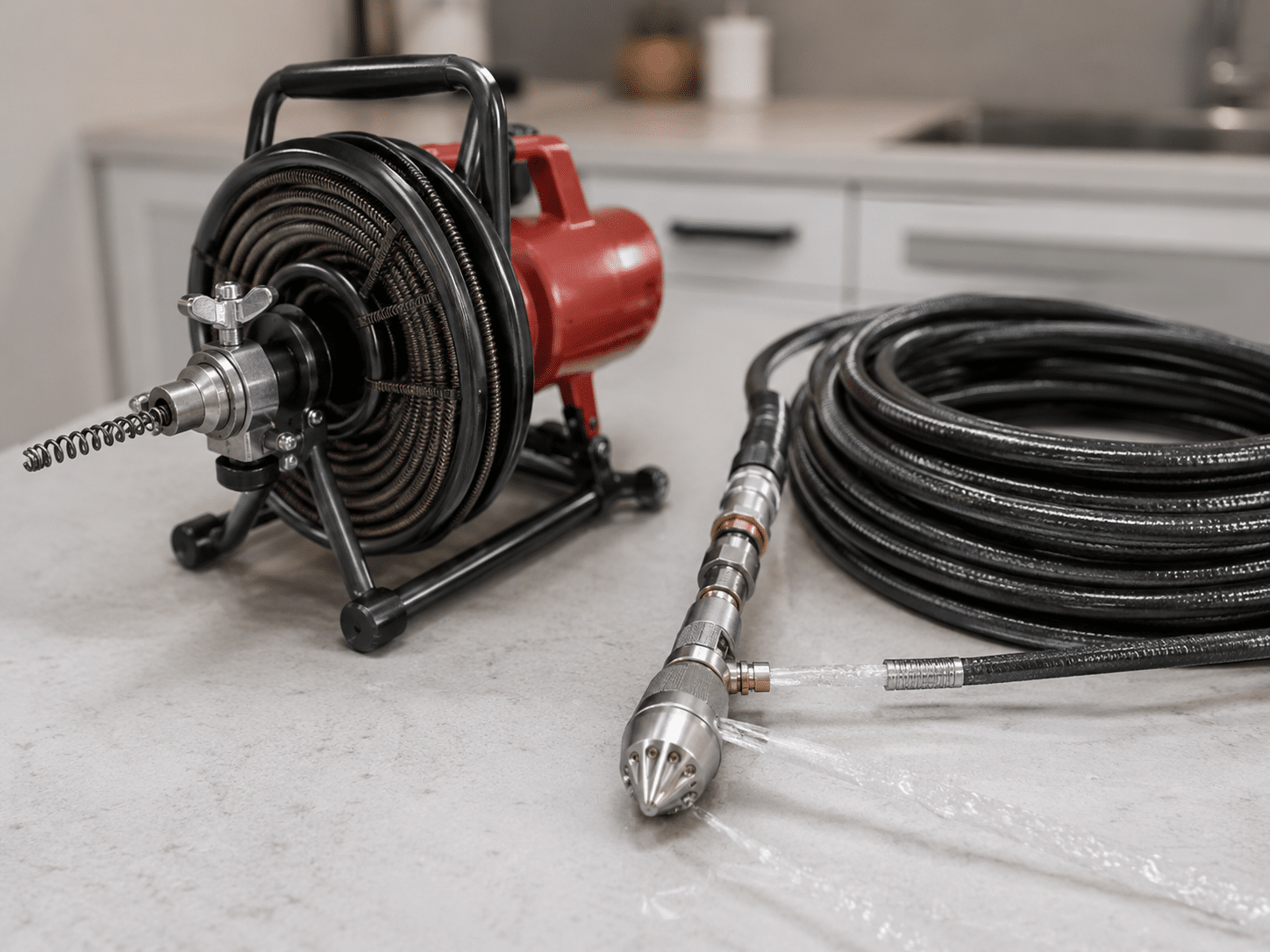 A drain snake, or auger, pushes a rotating cable through the line to break apart or pull back a clog. Hydro-jetting uses pressurized water to scour grease, soap scum, and scale off the entire pipe wall. Snaking is the right call for a single isolated clog, while jetting suits chronic grease lines and main-line buildup.
Even a drain that still flows can be quietly narrowing. Grease and soap residue layer onto the pipe wall season after season, shrinking the channel until a single bad week tips it into a full backup. Clearing the wall, not just the center, is what makes a cleaning last.
When buildup keeps returning, a licensed plumber inspects the line to find out why. That may involve checking for sags, root intrusion, or a deteriorating section before recommending the right cleaning method. Our Tacoma sewer camera inspection is one tool for this, used to confirm what a hands-on check suggests rather than as an automatic first step.
Tacoma drains clog for reasons tied directly to local housing and habits. Understanding the cause is what tells you whether yearly cleaning is enough or whether you are on a twice-a-year schedule.
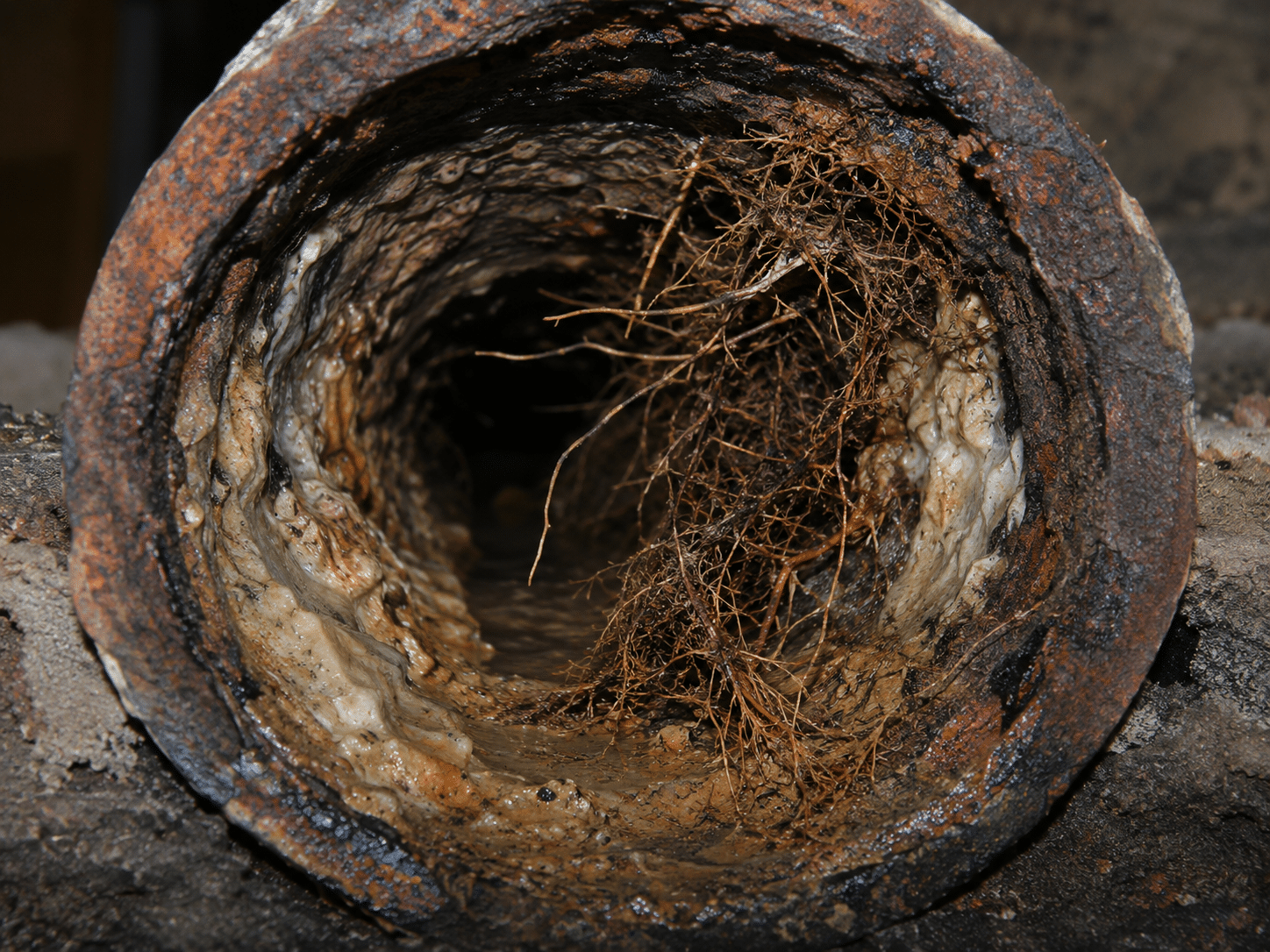
Many homes built before the 1970s in Tacoma still run vitrified clay or cast iron sewer laterals, and the City of Tacoma notes that most homes built before 1950 have never had their side sewer replaced. After decades, cast iron corrodes and develops a rough interior that grabs grease, while clay joints crack and shift. Rough, aging pipe walls trap debris far faster than smooth modern PVC.
Mature trees across Stadium District and Old Town send fine roots toward the moisture and nutrients inside sewer lines. Where clay sections meet, decades of soil movement open small gaps that roots slip through and then expand until they choke the flow. This is one of the most common reasons a Tacoma line that was cleaned a year ago is slow again.
 The everyday culprits never change. Cooking grease poured down a kitchen sink, hair and soap in the bathroom, and food scraps past a tired disposal all coat the line:
Tacoma sits on glacial till, dense layers of clay, silt, sand, and gravel that swell when saturated and contract in dry summers. That seasonal shifting leaves buried pipes unsupported in spots, so lines sag and low points collect the debris that eventually clogs.
Drains usually warn you before they quit. Catching these early is the difference between a scheduled cleaning and an after-hours call.
Slow drainage in more than one fixture is the clearest signal that buildup is widespread rather than a single local clog. Gurgling sounds from a toilet or tub when another fixture drains point to trapped air behind a partial blockage.
A recurring sewage odor means waste is sitting in the line instead of flowing through. And if you are plunging the same drain every few weeks, the real problem is coating you cannot reach from the surface.
Water backing up into a lower fixture, such as a basement floor drain or a first-floor shower, is the most urgent sign of all, because it usually means the main line is involved rather than a single branch. Multiple fixtures acting up at once tells the same story. The earlier you read these clues, the smaller the fix tends to be.
Ignoring these signals is how a small clog turns into an after-hours backup. Acting at the first slow drain keeps cleaning on a routine schedule, and our team offers 24/7 human support when a slow drain turns into a backup overnight.
Frequency is not one-size-fits-all. The right interval depends on your home’s age, your household size, and what goes down the drains. Plumbing professionals broadly recommend an annual cleaning for a typical home, stepping up to twice a year for older homes, larger families, and heavy grease use.
The table below maps common Tacoma situations to a sensible interval and the main factors that drive what a cleaning will cost, so you can plan ahead. Industry cost data shows that access, scope, and pipe condition move the price far more than any flat rate.
There is real money in getting this right. Snaking a chronic grease clog often clears it for only three to six months, while hydro-jetting the same line can hold for two to three years, which makes the right method on the right schedule the cheaper path over time. We provide a written estimate before any work begins, so the number you approve is the number you pay.
Once we understand the cause, the maintenance plan follows from the cause rather than from a guess. A clear method keeps your line healthy without overselling work you do not need.
A light annual cleaning on a sound line is straightforward snaking. A grease-laden kitchen line or a main with years of scale calls for hydro-jetting to strip the wall clean. Choosing correctly is why two homes a block apart in Old Town can need very different service.
If a line clogs again soon after cleaning, the cause is structural, not just dirty. Root intrusion, a sag, or a cracked section needs to be found and addressed, which is where camera confirmation and broader general plumbing repair work come in rather than cleaning the same line over and over.
The goal is a routine that fits your home, not a contract you forget. We set a frequency based on your pipe age and usage, then adjust if your drains tell us they need more or less. Our trucks arrive fully stocked, so most cleanings are handled in a single visit.
What you do day to day stretches the time between professional visits. Keep cooking grease out of the kitchen sink, use a strainer in every drain to catch hair and food scraps, and run hot water after heavy use. None of this replaces a yearly cleaning on an older line, but it slows the buildup that forces a second visit. Small habits in a Hilltop kitchen add up to fewer surprises down the line.
Drain cleaning frequency comes down to knowing your home. A newer house with light use is fine on a yearly check, while an older Stadium District or South Tacoma home with clay or cast iron lines and mature trees nearby usually earns a twice-a-year rhythm. Matching the interval to your actual pipes is what keeps small buildup from becoming a flooded floor.
At Spartan Plumbing Inc. (LIC #SPARTSI794OC), we have kept Pierce County drains flowing since 1958, trusted for professional drain cleaning in Tacoma, and we back every visit with a written estimate, a free second opinion, and a 100% satisfaction guarantee. Call us today to set up the right cleaning schedule for your home.
Most plumbing professionals recommend professional drain cleaning once a year for an average household. Homes more than 30 years old, larger families, and households that put heavy grease or food waste down the drain often benefit from cleaning twice a year to keep buildup from narrowing the pipes.
Yes, because professional cleaning removes the buildup coating the entire pipe wall, not just the center of a clog. That prevents the slow narrowing that leads to sudden backups, and it gives a plumber a chance to spot early corrosion or root intrusion before it becomes an expensive repair.
The cost of professional drain cleaning depends on how you reach the line, how severe the blockage is, and whether a simple snaking or full hydro-jetting is needed. Industry cost data shows that access and scope drive the price, so a clogged sink branch costs far less than jetting a grease-laden main line. Pipe age and condition matter too, which is why we provide a written on-site estimate before any work begins.
Snaking pushes a cable through the line to break up or pull back a clog, which suits a single isolated blockage. Hydro-jetting uses high-pressure water to scour grease, scale, and debris off the full pipe wall, which is better for chronic grease lines and main-line buildup that keeps returning.
Recurring clogs soon after a cleaning usually point to a structural cause rather than ordinary buildup. In older Tacoma homes that often means tree roots entering cracked clay joints, a sagging section over shifting glacial-till soil, or a corroded cast iron line with a rough interior that traps debris.
Light maintenance like hot water, a drain strainer, and avoiding grease helps, and a hand auger can clear a minor surface clog. Deep buildup, recurring clogs, and main-line issues need professional equipment, since store-bought chemicals rarely remove wall scale and can damage older pipes.
Done correctly, no. A trained plumber matches the method to the pipe, using gentler snaking on fragile clay or corroded cast iron and reserving high-pressure jetting for lines that can handle it. Inspecting the line first is how we avoid harming aging Tacoma plumbing.
A camera inspection makes sense when a line clogs repeatedly despite cleaning, when you suspect root intrusion, or before buying an older home. It confirms whether the problem is buildup or a structural fault, so you fix the real issue instead of cleaning the same line again and again.
 Book Now!