Emergency Plumbing in Tacoma & Pierce County 24/7 Live Answer Free Second Opinion Quality Plumbing Services
Emergency Plumbing in Tacoma & Pierce County 24/7 Live Answer Free Second Opinion Quality Plumbing Services
Emergency Plumbing in Tacoma & Pierce County 24/7 Live Answer Free Second Opinion Quality Plumbing Services
Emergency Plumbing in Tacoma & Pierce County 24/7 Live Answer Free Second Opinion Quality Plumbing Services

Text Us: 253-231-7015
Call Us: 253-231-7015
The clearest warning sign of a main sewer line clog in Tacoma is multiple drains backing up or gurgling at the same time, especially low fixtures like the tub, toilet, and floor drains. Sewage odors, water rising in unexpected places, and slow drainage across the whole house all point to the main line rather than a single trap.
A main sewer line clog rarely shows up out of nowhere. It builds quietly under your Tacoma yard, then announces itself when several drains slow down or back up on the same day. Knowing the early red flags lets you act before raw sewage reaches your floors.
This guide walks through the symptoms that point to your main line instead of a single fixture. Tacoma homes carry their own risks here, since many older neighborhoods still run wastewater through aging clay laterals that crack and invite tree roots. Spotting the difference early saves money and prevents a flooded floor.
At Spartan Plumbing Inc. (LIC #SPARTSI794OC), we have helped Pierce County families since 1958, and we have seen how fast a slow drain turns into a flooded basement. If a clog has spread past one fixture, a sewer camera inspection in Tacoma shows exactly where the blockage sits.
Contact us today to confirm whether the problem is in your main sewer line.
 A single slow sink usually means a local blockage in that trap or branch. A main line clog is different because it sits downstream of everything, so it affects the whole house at once. That distinction tells you whether to grab a plunger or call a licensed plumber.
The simplest home test is to run one fixture and watch another. Flush a toilet and listen for the shower drain to gurgle, or run a bathroom sink and watch the toilet bowl for a rising water level. When one fixture reacts to another, the blockage is in the shared main line that all of them feed into.
Tacoma homes in Proctor District and the North End often have a basement or crawlspace floor drain that backs up first, since it sits at the lowest point. If that drain overflows when you run the washing machine, treat it as a main line problem until it is checked out.
A few quick checks help you separate a main line clog from a single-fixture problem before you call:
The most reliable signs of a main sewer line clog are physical and easy to confirm without tools, and they are the ones we see most often in older Tacoma homes. These symptoms show up because wastewater has nowhere to go, so it pushes back into the house through the path of least resistance.
When two or more drains slow or back up on the same day, the problem is almost always the main line. A toilet, tub, and laundry drain acting up together points downstream, not to three separate clogs. One fixture is a local issue, but several at once means the shared line is blocked.
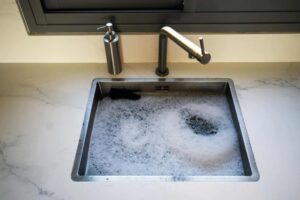 A distinct glug-glug sound from the toilet when you run the sink or washer means trapped air is escaping past a blockage. That air displacement only happens when the line downstream is restricted. Persistent gurgling is one of the earliest red flags, often showing up before any visible backup.
Flush a toilet and watch water rise in the shower, or run the washer and find water at a floor drain. Wastewater is being forced backward because it cannot pass the clog. This cross-fixture backup is the single clearest confirmation that your main line is the culprit.
A rotten-egg or sewage smell near drains, in a utility sink, or over a wet patch in the yard signals a clog or crack in the main pipe. Trapped waste releases sulfur gas that travels back up the line. An outdoor smell over the lateral often means the blockage sits between the house and the city connection.
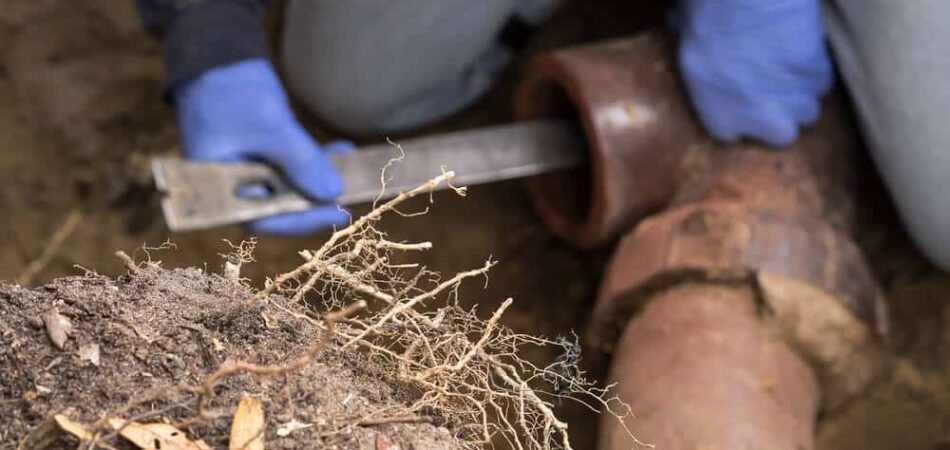
Older Tacoma neighborhoods carry a structural disadvantage that newer suburbs do not. Many homes built before the 1960s in the North End and surrounding areas still run on original vitrified clay sewer laterals. Decades of soil movement open the mortar joints between clay sections, creating gaps where roots and groundwater enter.
Tacoma averages roughly 40 inches of rain a year, according to NOAA climate data, and the clay in its glacial soil swells when saturated through fall and winter. That swelling presses on buried pipe walls and widens existing cracks. Sustained rainfall also raises the water table, pushing groundwater through compromised joints and accelerating buildup.
Mature street trees common across South Tacoma add the final pressure. Roots are drawn to the moisture and nutrients inside aging pipes, then expand each season until they choke the line. A clog in one of these laterals is rarely a one-time event without a proper fix.
Once you confirm the symptoms point to the main line, the priority is to stop adding water. Avoid running the dishwasher, washing machine, or multiple sinks, since each cycle pushes more wastewater toward a line that cannot drain. Reducing the load keeps a slow backup from becoming an overflow.
Skip the store-bought chemical drain openers on a suspected main line clog. They rarely reach a deep blockage, they can sit in the pipe and damage older clay, and they create a hazard for the plumber who opens the line later. A targeted approach works better than caustic guesswork.
The next step is a professional diagnosis. A licensed plumber inspects the line, clears the blockage with the right equipment, and confirms whether roots or a collapsed section caused it.
Our professional drain cleaning in Tacoma removes the obstruction and restores full flow, and our fully stocked trucks mean most repairs finish in one visit. We also offer a free second opinion if another company has already quoted you.
A partial clog can hold steady for days, giving you time to schedule service during normal hours. The danger is that main line blockages tend to worsen fast once they start, because every use of water adds to the obstruction. What drains slowly on Monday can back up completely by the weekend.
You are in emergency territory the moment sewage reaches living space or you lose all drainage at the lowest fixture. Standing wastewater carries health risks and damages flooring, drywall, and stored belongings within hours. At that point, waiting costs far more than a same-day call.
Our 24/7 human support line in Tacoma connects you with a real person, not voicemail, so someone helps you triage the situation right away. If you are unsure whether your case can wait, treat any active backup as urgent and let a professional make the call.
Cost depends on the clog’s severity, how easy the cleanout is to reach, and which method clears it. The table below explains the factors that move the price for each clearing method rather than quoting a figure. We provide a flat-rate written estimate before any work starts, so the number you approve is the number you pay.
A simple snake job on a reachable clog costs the least, while a stubborn root mass needing hydro jetting and a camera check costs more. Your actual price depends on the specific blockage, the condition of the line, and how easily the cleanout can be reached at your home.
Two factors push Tacoma jobs toward the upper range more often than the average suburb. Aging clay laterals frequently hide root intrusion that a simple snake only punches through temporarily, so hydro jetting becomes the practical choice. A hard-to-find or buried cleanout also adds time, which is why an upfront written estimate matters before anyone starts digging or guessing.
A main sewer line clog only gets worse the longer it sits, and the difference between a routine clearing and a sewage cleanup is often just a few days of waiting. If multiple drains are backing up, gurgling, or sending odors through your Tacoma home, the safe move is professional sewer line cleaning in Tacoma before the next backup.
At Spartan Plumbing Inc. (LIC #SPARTSI794OC), we have cleared Pierce County main lines since 1958, and our licensed, background-checked technicians back every repair with a written warranty and a 100% satisfaction guarantee. Call us today to clear the line and stop the backups for good.
The main sign is multiple drains backing up or gurgling at the same time, especially the lowest fixtures like a tub, toilet, or basement floor drain. If running one fixture causes water to rise or bubble in another, the blockage is in the shared main line rather than a single drain.
Most homeowners cannot fully clear a main line clog because the blockage usually sits deep in the line, past the reach of a household snake. You can reduce water use and stop the backup from worsening, but a deep clog, root intrusion, or cracked pipe needs professional equipment and a licensed plumber to clear safely.
Gurgling means trapped air is being forced back up the line because a downstream blockage is restricting flow. When draining the washer makes a separate toilet bubble, the two fixtures share a main line that is partly clogged. It is an early warning sign worth acting on before a full backup.
No, chemical drain cleaners are a poor choice for a suspected main line clog. They rarely reach a deep blockage, they can damage older clay pipes common in Tacoma, and the leftover chemicals create a hazard when a plumber later opens the line. Mechanical clearing is safer and more effective.
Many Tacoma homes built before the 1960s still use original clay sewer laterals whose joints loosen over decades of soil movement. The gaps let tree roots and groundwater in, and the region’s heavy rainfall swells the surrounding soil against the pipe. Together these conditions make older laterals far more clog-prone.
A clogged drain affects one fixture, like a single slow sink, and clears with local work on that trap or branch. A clogged sewer line affects the whole house at once because it sits downstream of every drain, so multiple fixtures back up together until the shared line is cleared.
The cost of clearing a main sewer line clog depends on where the blockage sits, how easily the cleanout can be reached, and which method the job calls for. A simple cable snaking job on a soft, reachable clog costs the least, while stubborn or root-filled clogs that need hydro jetting cost more, and a camera inspection adds to the total when it is needed to confirm the cause. We provide a written estimate on site before any work begins.
It becomes an emergency once sewage reaches living space or you lose all drainage at the lowest fixture, since standing wastewater poses health risks and damages your home within hours. A partial clog with slow drainage can often wait for a scheduled visit, but any active backup should be treated as urgent.
 Book Now!