Emergency Plumbing in Tacoma & Pierce County 24/7 Human Support Free Second Opinion Quality Plumbing Services
Emergency Plumbing in Tacoma & Pierce County 24/7 Human Support Free Second Opinion Quality Plumbing Services
Emergency Plumbing in Tacoma & Pierce County 24/7 Human Support Free Second Opinion Quality Plumbing Services
Emergency Plumbing in Tacoma & Pierce County 24/7 Human Support Free Second Opinion Quality Plumbing Services

Text Us: 253-231-7015
Call Us: 253-231-7015

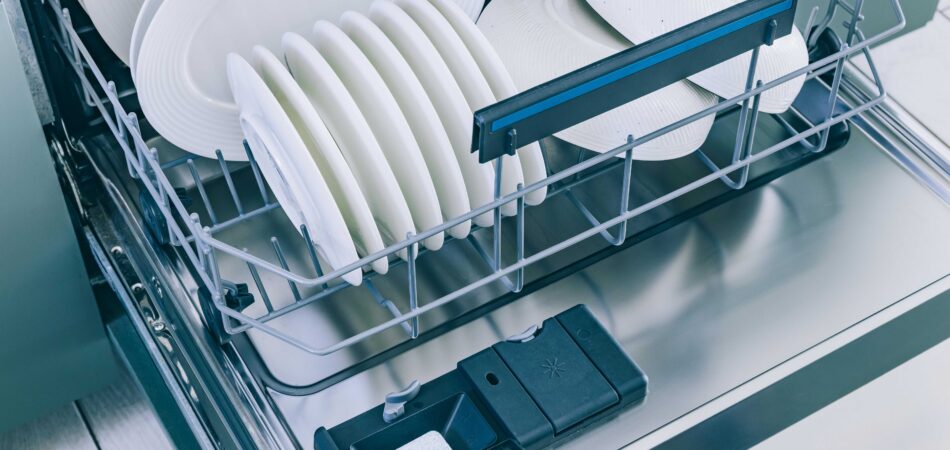
Smart dishwashers connect to plumbing similarly to traditional units, requiring a hot water supply line, a drain line, and a 120V power source. The “smart” features are handled via Wi-Fi, while the physical plumbing connections involve attaching a water supply line to the hot water valve under the sink and connecting a drain hose to the garbage disposal or sink drain.
A smart dishwasher connects to plumbing through flexible lines that tap into your home’s water supply and drainage system. The smart features, like app control, remote cycle starts, and alerts, connect through Wi-Fi.
But the plumbing connections are the same as any standard dishwasher: a hot water supply line, a drain hose, and a power source. At Spartan Plumbing Inc., we install smart dishwashers for Tacoma and Pierce County homeowners who want the job done right.
Ready to get started? Contact us today to schedule your installation.
The installation process involves two main connections: the water supply and the drain. The water supply brings hot water into the dishwasher, while the drain carries dirty water out to your home’s plumbing system.
Here’s how each step works:
The first step is turning off the water supply to the kitchen sink area. The shut-off valve is usually located under the sink, though in some homes it may be near the main water meter. Turn the handle clockwise until the flow stops completely.
This step protects your home from flooding while work is done on the water lines. After shutting off the valve, test the faucet to confirm no water is running before proceeding.
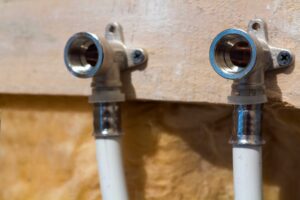 The existing single-outlet stop valve under the sink gets replaced with a dual-outlet valve. This component provides two separate connection points at the water source: one feeds the kitchen faucet supply line, and the other feeds the new dishwasher supply line.
A dual outlet valve gives you independent control over the dishwasher’s water supply. If you ever need to service the dishwasher, you can shut off the water without affecting the sink. This makes future maintenance much simpler.
A flexible supply hose, typically braided stainless steel, runs from the back of the dishwasher to the dual outlet valve. The fitting gets hand-tightened onto the valve’s open port first, making sure the threads align properly. An extra quarter-turn with an adjustable wrench secures it firmly.
A tight connection here prevents low-pressure leaks that can damage cabinetry and flooring over time. This line delivers the consistent, clean water supply the dishwasher needs for effective cleaning cycles.
The dishwasher’s drain hose connects to the air gap first. The connection point is on the bottom of the air gap, which is mounted to the kitchen sink deck. It connects first to the smaller vertical connection. Then another drain hose connects to the angled outlet before running to the sink drain connection, which is located on the vertical drainpipe just under the connection to the basket strainer or disposal inlet.
Proper placement here ensures wastewater exits efficiently and prevents dirty water from backing up into the dishwasher. A correct drain connection keeps dishes clean and prevents odors inside the appliance. A high loop is an alternative to an air gap, but not allowed by code in Washington.
In Tacoma and Pierce County, building inspectors typically check air gap installation on permitted kitchen plumbing work. The air gap requirement under Washington’s adopted plumbing code is the safer choice when you want the install to pass the final inspection the first time, especially on remodels that move or modify the drain lines.
If connecting to a garbage disposal, there’s a knockout plug blocking the drain port inside the fitting. This plug needs to be removed before the drain hose can connect. Use a screwdriver or a punch tool to push the plug into the disposal, then remove the pieces.
Skipping this step is a common mistake that prevents the dishwasher from draining at all. The result is flooding or appliance malfunction, so plug removal is a necessary part of the process.
Push the end of the drain hose firmly onto the air gap connection. Slide a stainless steel hose clamp over the connection and tighten it with a screwdriver or nut driver.
This creates an airtight, watertight seal that prevents the hose from slipping off during drain cycles. A secure connection ensures dirty water flows into the plumbing system, not onto your kitchen floor.
The drain hose needs to form a high loop before connecting to the drain. This means the hose arches upward, rising near the top of the cabinet or counter height, before dropping back down to the connection point. Secure the loop to the underside of the counter with a strap or bracket.
The high loop prevents dirty sink water from flowing backward into the dishwasher through a process called back-siphonage. It acts as a simple but effective barrier that keeps wastewater moving in one direction only.
The tools needed for smart dishwasher installation are common items found in most basic toolkits. Having the right tools makes the process safer and helps create tight, secure connections.
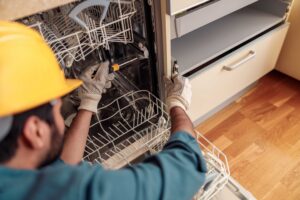
An unlevel dishwasher creates problems with water flow, drainage, and everyday operation. Taking time to align the unit correctly prevents issues that show up later.
A level dishwasher allows the spray arms to distribute water evenly across all dishes. When the unit tilts, water coverage becomes uneven, and cleaning suffers. A small level placed on the top edge confirms proper positioning.
Water flows toward the sump and out through the drain hose when the dishwasher sits level. A tilted unit causes water to collect in the back of the tub, leading to odors and potential mold growth.
Proper alignment reduces strain on flexible water lines and door gaskets. A crooked dishwasher puts pressure on connection points and can cause the door seal to close unevenly, which leads to leaks over time.
A dishwasher that sits securely on the floor vibrates less when the motor runs. If the unit wobbles, vibration amplifies and creates louder noise during operation. Firm contact on all four feet minimizes rattling.
The dishwasher racks need a level tub to roll freely on their tracks. If the unit tips forward, the upper rack may slide out on its own, making loading and unloading difficult. Adjustable feet bring each corner up or down until the racks move smoothly.
Regular maintenance keeps seals and connections in good condition and helps prevent leaks. A well-maintained dishwasher performs better and lasts longer.
Clean the filter, spray arms, and interior regularly to prevent food debris and mineral buildup. Clogged filters cause water to drain slowly, putting pressure on the drain pump and hoses. Removing trapped food ensures water flows freely.
Use only dishwasher detergent and measure the correct amount. Too much soap creates excessive suds that can leak from the door seal or flood the air gap connection. Loading dishes correctly also prevents them from hitting the spray arms and seals during cycles.
Check periodically that the dishwasher remains level. A carpenter’s level confirms the unit hasn’t shifted. A level appliance keeps the door seal closing evenly and reduces stress on internal parts.
A smart water leak detector placed on the floor beneath the dishwasher sends an alert to your phone if water is detected. This early warning lets you shut off the supply before significant damage occurs.
The manufacturer provides instructions for recommended cleaning products and maintenance schedules. Following these guidelines ensures compatible materials are used and protects the warranty against damage from improper care.
Professional plumbing installation ensures all water and drain connections meet local codes and work correctly from day one. A plumber confirms the supply line is tight, the air gap prevents backflow, and all connections are secure.
In older Tacoma homes, especially pre-1970 kitchens in the North End, Stadium District, or South Tacoma, the cabinet dimensions, supply line angles, and vent stack positions may all need adapter sleeves or repositioning to fit modern smart dishwashers. A licensed plumber familiar with Pierce County’s older housing stock can spot these constraints before the new appliance arrives, not after.
Professional help is especially valuable when dealing with older plumbing systems where connections may be corroded or non-standard. Plumbers identify weak points and replace components that might fail under the stress of a new appliance.
Smart dishwashers bring convenience to your kitchen, but that convenience depends on solid plumbing connections. A properly installed dual outlet valve, secure drain hose, and air gap keep water flowing where it should and prevent the leaks that lead to costly repairs.
At Spartan Plumbing Inc. (LIC #SPARTSI794OC), we have installed dishwashers and other major appliances for Tacoma and Pierce County kitchens since 1958. Whether you’re upgrading to a smart unit or replacing an old dishwasher in an older kitchen with quirky existing plumbing, our licensed team gives you a written, up-front estimate before any work begins, and we handle the air gap, dual outlet valve, and code-compliant drain so the install passes inspection the first time. Call or text 253-231-7015 to schedule your smart dishwasher install.
Professional plumbers aren’t always required, but their expertise prevents costly mistakes, especially with complex setups or older plumbing. A homeowner might handle a basic installation, but a professional ensures connections are correct and the unit operates efficiently.
Yes. Professional services follow local building codes and ensure the correct placement of the air gap or high loop to prevent backflow. They guarantee secure connections to both the water supply and the drain line.
Plumbers identify hidden issues in existing plumbing systems that homeowners might miss. They confirm water pressure is correct, install valves safely, and create leak-free connections that protect your warranty against installation errors.
Yes. An inspection examines the condition of pipes and valves under the sink before the new appliance connects. This identifies corrosion or weak points that could fail later, allowing problem parts to be replaced before they cause damage.
No. A smart dishwasher connects to the existing hot water line that feeds the kitchen sink. A dual outlet stop valve splits the line into two outputs, allowing the dishwasher to draw water without affecting the sink’s supply.
Yes. Plumbers know exactly where to tap into the hot water supply and drain lines. They have the fittings and experience to make connections tight and compliant, especially when working with unique or older plumbing materials.
Yes. The main risks involve water damage and electrical hazards. An improperly secured drain line can release dirty water, and a loose supply line can flood the kitchen. Incorrect power disconnection also creates a shock risk.
A level unit is necessary for proper cleaning and drainage. If the dishwasher tilts, water pools inside the tub, and the spray arms don’t distribute water evenly. Leveling using the adjustable feet prevents these issues.
Yes. Professionals install durable supply hoses and proper clamps, and they know how much tension to apply to fittings. Quality installation prevents leaks that develop from vibration over time.
Yes. Leak detection identifies existing pinhole leaks or weak seals in the area where new connections will be made. Addressing these issues upfront prevents the new appliance from causing an immediate failure in compromised plumbing.
 Book Now!