Emergency Plumbing in Tacoma & Pierce County 24/7 Human Support Free Second Opinion Quality Plumbing Services
Emergency Plumbing in Tacoma & Pierce County 24/7 Human Support Free Second Opinion Quality Plumbing Services
Emergency Plumbing in Tacoma & Pierce County 24/7 Human Support Free Second Opinion Quality Plumbing Services
Emergency Plumbing in Tacoma & Pierce County 24/7 Human Support Free Second Opinion Quality Plumbing Services

Text Us: 253-231-7015
Call Us: 253-231-7015

Selecting the right water heater for your home helps provide a steady supply of hot water and can reduce energy use.
The best size depends on things like the number of people in your household, your weekly hot water use, and when you use the most hot water.
Understanding these needs will help you make a smart choice that avoids wasting energy.
At Spartan Plumbing Inc. (LIC #SPARTSI794OC), we can help you find the right water heater for your Tacoma home. Contact us today for expert advice and professional installation.
Start by figuring out how much hot water your household uses. Think about the times and activities that require hot water. This will guide you toward picking the right unit for your situation.
 Peak-hour usage refers to the highest amount of hot water your household needs during the busiest hour of the day. This part is helpful when selecting a water heater that can handle those peak times. Common household activities that use hot water include:
For instance, if two people take showers and a dishwasher is running at the same time, that’s about 26 gallons. Adding laundry to the mix could raise your peak demand to about 66 gallons.
Knowing how much you use can help guide your tank size choice. A 50–60 gallon tank usually works for one to two people, while a larger family might need an 80-gallon tank.
Many households use hot water for more than one task at once. For example, someone may be showering while another is washing dishes or running a load of laundry. If your water heater isn’t sized for these overlapping uses, you could run out of hot water. Be sure to include these patterns when deciding what size to go with.
Hot water use often changes depending on the time of year or during events. In colder months, the incoming water is colder and takes more energy to heat.
For instance, in areas where the incoming water temperature drops below 50°F (10°C) in the winter, you may want a larger water heater to make up for the extra work it needs to do. Family gatherings or increased use in the summer, such as after swimming, can also raise demand.
In Tacoma and Pierce County, this matters more than the national average suggests. Pacific Northwest incoming water can drop into the mid-40s°F (around 7°C) during cold snaps, which means a water heater sized purely from a national chart often comes up short in a Tacoma winter when household demand peaks during the rainy season.
So when figuring out the size that works for your home, keep these changes in mind.
Changes like adding a bathroom, upgrading appliances, or growing your family can increase your hot water use. By selecting a size that offers some flexibility, you won’t need to replace your water heater later if your needs increase.
If you’re planning to finish your basement or add more space to your home, you might want to go with a larger unit that can support higher demand later on.
Once you know how much hot water you need, the next step is choosing the type of water heater that works best. The three main types are tank, tankless, and hybrid water heaters. Each one works differently and has its own sizing method.
Tank water heaters store hot water in a tank. The tank size determines how much hot water is available at once.
The First-Hour Rating (FHR) tells you how much hot water the heater can provide in the first hour of use. Here’s a general guide:
For example, a 30-gallon tank is often enough for two people. For bigger households, something like an 80-gallon unit is usually a better match.
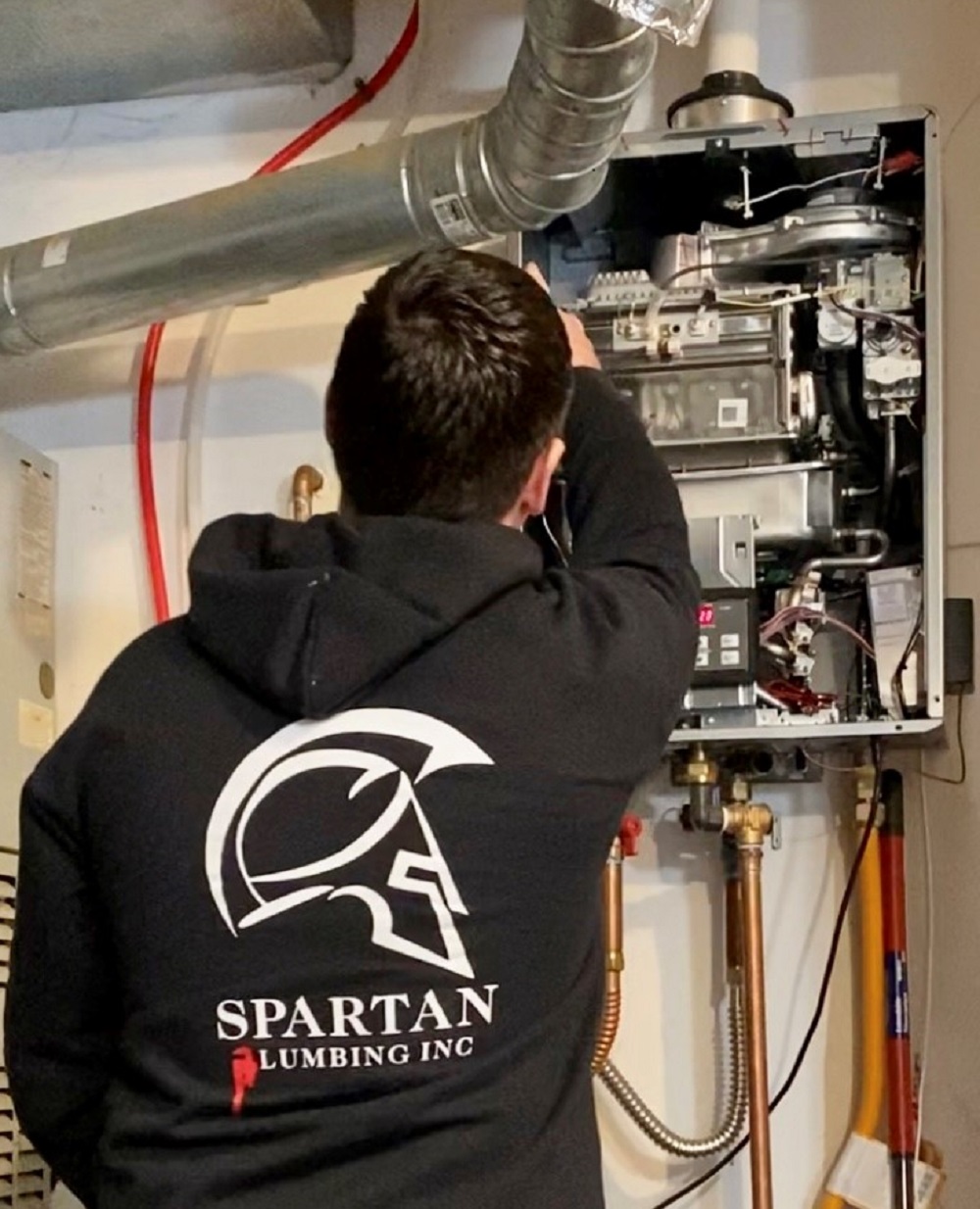 Tankless water heaters heat water as you use it. They don’t store hot water, so their size depends on how much hot water you use at the same time.
To choose the right size, figure out your peak flow rate in gallons per minute (GPM). In colder areas, you also need to consider how much the water temperature needs to rise to reach your preferred setting. For instance, if the water entering your home is 50°F (10°C), your unit needs to heat it up by at least 50°F.
Tankless units work well for smaller homes or lower hot water use, but they must be sized correctly for homes with higher needs.
Hybrid water heaters use a heat pump along with a traditional tank. These units are very efficient and usually suit medium to large households. An 80-gallon hybrid heater is a good fit for a family of four and may help reduce energy bills over time.
Just be aware that these models tend to be larger than standard tank heaters, so check that you have enough space for installation.
When you’re picking a water heater, it’s helpful to think about factors like how much space you have, energy usage, local weather, water quality, and fuel type.
Measure your available space before buying. Tank heaters often need more room for ventilation, while tankless models can be installed in tighter areas. Extra space also makes repairs and upkeep easier in the future.
An energy-saving model can lower your long-term costs. Look for ENERGY STAR®-certified units to help you save money and power. Choosing a properly sized heater also helps avoid wasting energy, since oversized units tend to use more fuel than needed.
If you live somewhere cold, you’ll likely need a larger heater because the water coming into your home is colder and takes more effort to heat. In areas with hard water, a water softener can help extend the life of your water heater and keep it running efficiently.
In Tacoma, Tacoma Public Utilities delivers soft to moderately soft water by U.S. standards, so a water softener is rarely needed for water heater longevity. The local sizing factor that matters more here is the cold incoming temperature year-round, which favors slightly larger capacity than national sizing charts would suggest for the same household size.
Water heaters may run on gas, electricity, or solar energy, depending on where you live and what’s available. Gas models heat water quickly, while electric ones are often easier to install and widely available. Solar-powered units are more eco-friendly but may need extra heating help during the winter.
Getting the right water heater size means you’ll have enough hot water for your needs without wasting money on energy. Look at how many people are in your home, when you use the most hot water, and what kind of heater works best for your situation.
The FHR shows how much hot water the unit can deliver during your busiest hour. Add up the gallons you’ll use during that time, like for showers, laundry, and dishwashing.
Pick a heater with an FHR that’s equal to or a little more than your total to avoid running out of hot water.

Online tools can help guide you to the right size. Enter info like your household size, number of bathrooms, and daily habits. These tools can recommend a heater that fits your home’s needs.
If you’re not sure what size or model to choose, a professional plumber can help. At Spartan Plumbing Inc., we can look at your household’s needs and walk you through your options, whether you’re considering a tank or tankless system.
Recovery time is how fast your heater can warm water again after use. If your household uses a lot of hot water, go with a unit that heats up quickly or has a larger storage tank so you don’t run out.
Choosing the right water heater size helps you have enough hot water and keep your energy costs under control. When you look at your household’s hot water needs, it becomes easier to make a choice that offers long-term comfort and reliability.
At Spartan Plumbing Inc. (LIC #SPARTSI794OC), we have helped Tacoma and Pierce County homeowners size, install, and service water heaters since 1958. From tank to tankless to heat-pump units, our licensed team can match the capacity to your household demand and put the work on a written, up-front estimate before any installation begins, including professional water heater installation that fits your space and efficiency needs. Call or text 253-231-7015 to walk through your water heater sizing options.
Most PNW households end up with a slightly larger water heater than national sizing charts recommend, because incoming water temperatures are colder year-round (often 45 to 55°F) and the heater has to do more work per gallon. A 50-gallon tank suits most 2 to 3 person households here, while 75 to 80 gallons is common for families of 4 or more. Tankless units in the PNW typically need 8 to 11 GPM flow rate to handle simultaneous showers.
Each additional person adds roughly 12 to 15 gallons to the household’s peak-hour hot water demand. A 1 to 2 person household typically needs a 30 to 40 gallon tank, a 3 to 4 person household needs 50 to 60 gallons, and 5+ person households usually need 75 to 80 gallons or a high-output tankless unit. Pierce County families with teenagers often need to size up because morning showers stack into a 90-minute peak window.
First-Hour Rating (FHR) is the amount of hot water in gallons that a tank water heater can deliver during the busiest hour of the day, starting from a full tank of hot water. To use it, add up all the hot water your household needs during peak use (showers, dishwashing, laundry) and pick a heater with an FHR that equals or slightly exceeds that total. Most water heater nameplates and spec sheets list FHR prominently.
A slight oversize is usually the safer mistake than an undersize, especially in the Pacific Northwest where cold incoming water already taxes capacity. An oversized tank costs more upfront and uses slightly more energy keeping the extra water hot, but an undersized tank runs out of hot water mid-shower and forces premature replacement. For tankless units, undersizing is more punishing because the unit simply can’t keep up during peak demand.
Tacoma’s incoming water temperature ranges from roughly 45 to 55°F most of the year, dipping to the mid-40s during cold snaps. This is significantly colder than the national average baseline used in most sizing charts. The practical impact is that a tank water heater takes longer to recover between uses, and a tankless unit has to do more heating per gallon, so both types should be sized 10 to 20% larger than national charts would suggest.
The clearest sign is running out of hot water before everyone has showered in the morning. Other triggers include adding a family member, finishing a basement bathroom, installing a soaking tub, or buying a high-flow shower system. If your current tank is more than 8 years old and you’re already considering replacement, sizing up by 10 to 20 gallons is usually cheaper than discovering capacity shortage 6 months after a like-for-like swap.
 Book Now!