Emergency Plumbing in Tacoma & Pierce County 24/7 Live Answer Free Second Opinion Quality Plumbing Services
Emergency Plumbing in Tacoma & Pierce County 24/7 Live Answer Free Second Opinion Quality Plumbing Services
Emergency Plumbing in Tacoma & Pierce County 24/7 Live Answer Free Second Opinion Quality Plumbing Services
Emergency Plumbing in Tacoma & Pierce County 24/7 Live Answer Free Second Opinion Quality Plumbing Services

Text Us: 253-231-7015
Call Us: 253-231-7015
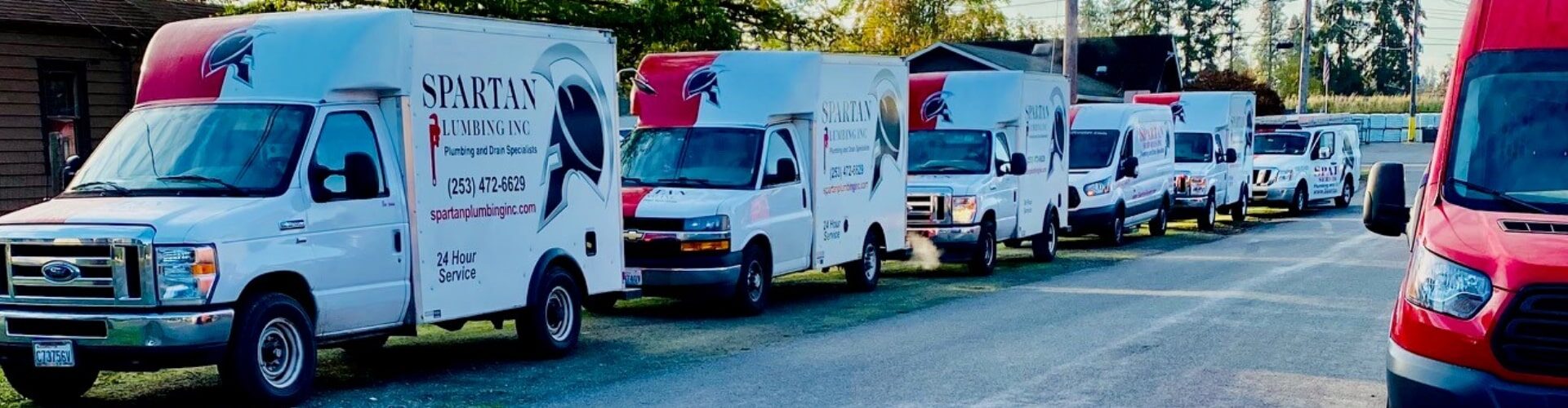

Poor commercial plumbing in Tacoma directly damages customer satisfaction, triggers negative reviews, and can force temporary closures. According to the EPA, a single dripping faucet wastes over 3,000 gallons per year, and BrightLocal’s 2026 survey found that 97% of consumers read reviews before choosing a local business. Tacoma and Pierce County businesses must also comply with WAC 51-56 and Pierce County Code 13.04.055. Spartan Plumbing Inc. has served Tacoma commercial properties since 1958 with licensed, insured technicians and 24/7 emergency response.
Plumbing failures in Tacoma commercial buildings drive customers away, trigger one-star reviews, and risk code violations under WAC 51-56. Routine maintenance from a licensed plumber catches problems before they cost your business revenue, reputation, and operating time.
Tacoma’s commercial building stock is older than most business owners realize. With a median construction year of 1967 and more than 26.9% of structures built before 1940, properties along 6th Avenue in the Stadium District and throughout South Tacoma often rely on cast-iron drain lines, galvanized supply pipes, and clay sewer laterals that are well past their expected service life. When these aging systems fail inside a restaurant, retail shop, or medical office, the damage goes beyond the plumbing itself. It lands on your reputation.
Spartan Plumbing Inc. has worked with commercial properties in Tacoma and Pierce County since 1958. Our licensed, insured, background-checked technicians handle everything from emergency pipe bursts to scheduled drain cleaning and backflow testing. If your building’s plumbing is affecting tenants, customers, or compliance, start here.
What Tacoma Business Owners Need to Know About Commercial Plumbing and Customer Experience
A single plumbing failure can halt revenue-generating operations within minutes. Restaurants lose table turns, medical offices cancel appointments, and retail stores close restrooms that customers expect to be functional and clean.
Consider what happens when a floor drain backs up in a Hilltop restaurant kitchen during the Friday dinner rush. The kitchen shuts down. Food prep stops. The health inspector has grounds to issue a citation under Pierce County Code 13.04.055, which governs commercial wastewater discharge. That one evening of lost revenue is only the beginning once you factor in the emergency repair bill and the cleanup.
The same applies to office buildings and retail spaces across Tacoma. A burst supply line in a second-floor suite sends water cascading into the tenant below. A failed water heater in a salon means no hot water for clients and cancelled appointments for the rest of the day. These are not hypothetical scenarios. They happen routinely in buildings with aging pipe systems and no preventive maintenance schedule.
For every dollar spent on preventive plumbing maintenance, businesses typically save up to five dollars in future emergency repair costs. Emergency service calls alone often run two to three times the cost of a planned repair.
Dripping faucets, sewer odors, clogged restrooms, low water pressure, water heater failures, and pipe leaks are the six most common commercial plumbing problems that directly damage customer perception and satisfaction.
The EPA reports that a faucet dripping once per second wastes over 3,000 gallons of water per year. In a commercial restroom with multiple fixtures, that number multiplies. Beyond water waste, a dripping faucet in a customer-facing restroom signals neglect. It tells your customers that maintenance is not a priority.
Dry P-traps, grease buildup in floor drains, and improperly vented drain lines all produce sulfur-like smells that drive customers out of restaurants, retail stores, and waiting rooms. In Pierce County’s older commercial buildings, deteriorating clay sewer laterals and root intrusion are common sources. These odors are not just unpleasant. They can indicate a code compliance issue under WAC 51-56, which requires properly functioning vent and drainage systems.
High-traffic commercial restrooms in areas like the Stadium District and Proctor District see heavy daily use. Paper towels, hygiene products, and excess toilet paper cause blockages that a standard plunger cannot clear. When a restroom goes out of service, customers notice and remember.
Mineral buildup inside galvanized pipes, corroded valves, and failing pressure regulators all reduce flow. For restaurants that depend on consistent water pressure for dishwashers and prep sinks, low pressure disrupts the entire operation.
Commercial water heaters serve restrooms, kitchens, and cleaning systems simultaneously. When one fails, salons lose hot water for clients, restaurants cannot meet health code sanitation standards, and tenants file complaints. In Tacoma, where Pierce County averages 38 inches of rain per year and cold, damp winters are the norm, hot water is not optional for any business.
A single burst pipe can release hundreds of gallons per hour. Water damage restoration for a commercial space commonly runs between $5,000 and $15,000, not including lost revenue during the closure. Cast iron and galvanized pipes in Tacoma buildings built before 1970 are at the highest risk.
BrightLocal’s 2026 Local Consumer Review Survey found that 97% of consumers read online reviews before choosing a local business. A single restroom complaint or odor mention in a Google review can steer dozens of potential customers to a competitor.
Online reviews now function as a first impression before customers ever walk through the door. For Tacoma restaurants, coffee shops along 6th Avenue, and retail stores in the Proctor District, a review mentioning a broken toilet, foul smell, or water on the floor carries outsized weight. Potential customers scrolling through Google or Yelp will skip a four-star business if recent reviews mention plumbing problems.
The damage compounds over time. A property manager who delays a drain repair saves a few hundred dollars in the short term but risks a pattern of negative reviews that takes months to recover from. For businesses that depend on foot traffic in Tacoma’s walkable commercial districts, that reputation damage translates directly to lost revenue.
Review platforms also feed into AI-generated search summaries. When Google or other AI tools pull information about your business, negative plumbing mentions become part of the automated snapshot that potential customers see first.
Yes. Health departments in Pierce County can issue citations or temporary closures for plumbing failures that create unsanitary conditions, particularly in food service and healthcare settings.
Pierce County Code 13.04.060 addresses sewer system maintenance requirements for commercial properties. Food service establishments face additional scrutiny. A backed-up floor drain, a non-functioning handwashing station, or a grease trap overflow can each trigger a health inspection failure. The Tacoma-Pierce County Health Department conducts routine inspections and responds to complaints, and plumbing-related violations are among the most common findings.
Beyond health code enforcement, practical shutdowns happen constantly. A burst pipe that floods a dining area forces an immediate closure until the water is extracted and the space is dried. A sewer backup that sends wastewater into a commercial kitchen means the kitchen cannot reopen until the line is cleared and the space is sanitized. These closures cost Tacoma businesses thousands of dollars per incident in lost revenue, emergency repairs, and restoration.
Property managers who oversee multi-tenant commercial buildings face the additional challenge of one tenant’s plumbing failure affecting others. A clogged drain on the second floor can cause water damage to the ground-floor business below, creating liability exposure and tenant disputes.
Commercial properties in Tacoma should schedule professional plumbing inspections at least twice per year, with quarterly inspections recommended for food service, healthcare, and high-traffic retail locations.
Washington state’s plumbing code under WAC 51-56 establishes minimum standards, but the actual inspection frequency your building needs depends on several factors: the age of the structure, the type of business, the volume of daily water usage, and the condition of the sewer lateral connecting your building to the municipal system.
Older commercial properties in the Hilltop and South Tacoma corridors often have original cast-iron drain lines that are 50 to 70 years old. These pipes develop internal corrosion, joint separation, and root intrusion that worsen gradually. A sewer camera inspection twice a year catches these issues while they are still manageable. Without that visibility, property managers only discover the problem when a backup or collapse forces an emergency call.
For food service businesses, we recommend quarterly drain cleaning and grease trap service in addition to the biannual inspection. Restaurants generate grease, food waste, and high water volume that accelerate pipe deterioration. Staying ahead of a buildup is far less expensive than responding to a backup during business hours.
Backflow prevention devices also require annual testing under Washington state law. WA L&I mandates that certified testers verify backflow assemblies to protect the public water supply. Tacoma Public Utilities tracks compliance, and businesses that miss their annual test face potential water service interruption.
A complete commercial plumbing maintenance plan covers scheduled drain cleaning, sewer camera inspections, water heater service, backflow testing, fixture checks, and emergency response priority for unplanned failures.
Scheduled cleaning removes grease, mineral scale, and debris before blockages form. For commercial kitchens and restrooms, this is the single most effective step to prevent backups. Hydro jetting uses high-pressure water to scour the interior of drain lines, restoring full flow capacity without chemicals.
A waterproof camera inserted into the sewer lateral reveals cracks, root intrusion, bellied sections, and joint failures that are invisible from above ground. For Tacoma properties built on clay or cast iron laterals, camera inspections provide the data needed to plan repairs before a collapse occurs.
Commercial water heaters need annual flushing to remove sediment, anode rod inspection or replacement, and thermostat calibration. Neglected units lose efficiency, produce inconsistent temperatures, and fail prematurely. In a commercial setting, a water heater failure during business hours disrupts every tenant and customer in the building.
Required annually under WA L&I regulations, backflow testing ensures that contaminated water cannot reverse flow into the public supply. This is especially critical for restaurants, medical offices, and any business that uses chemical additives in their water systems.
Faucets, toilets, urinals, and floor drains all wear over time. A maintenance visit catches worn valve seats, failing flapper valves, and corroded supply connections before they become leaks or failures that affect your customers.
Even with the best maintenance schedule, unplanned failures happen. A maintenance plan that includes priority emergency response means your building gets attention faster when a pipe bursts at 2 a.m. or a sewer backs up on a holiday weekend.
Not every plumbing issue requires an emergency call, but waiting too long turns manageable repairs into expensive shutdowns. Here is a straightforward guide for Tacoma business owners and property managers:
The cost difference between a scheduled repair and an emergency call is significant. Emergency commercial plumbing calls typically cost two to three times the rate of a planned service visit. For property managers overseeing multiple Tacoma locations, a maintenance plan with scheduled visits eliminates most emergency calls.
The best time to address commercial plumbing problems is before your customers, tenants, or a health inspector notices them. Routine inspections, scheduled drain cleaning, and proactive pipe repair protect your revenue, your reviews, and your compliance standing in Pierce County.
Spartan Plumbing Inc. has served Tacoma commercial properties since 1958. Our technicians are licensed, insured, and background-checked. We offer flat-rate upfront pricing with a written estimate before any work begins, and our trucks are fully stocked, so most repairs are completed in a single visit. Call 253-231-7015 to schedule a commercial plumbing inspection or set up a maintenance plan.
A small, undetected leak can waste thousands of gallons of water per month and add hundreds of dollars to your utility bill. If the leak causes structural water damage, restoration costs for a commercial space in Tacoma typically range from $5,000 to $15,000, not including lost revenue during any closure.
Yes. Washington state law under WA L&I mandates annual backflow prevention testing for commercial properties. Tacoma Public Utilities monitors compliance, and businesses that fail to test on schedule risk water service disruption. Backflow assemblies must be tested by a certified technician.
WAC 51-56 is the Washington State Plumbing Code that governs all commercial plumbing systems. Pierce County Code 13.04.055 and 13.04.060 add local requirements for wastewater discharge and sewer system maintenance. Food service and healthcare facilities face additional health department inspection standards.
We typically have a technician on-site within one hour for emergency calls in Tacoma and Pierce County. Our trucks are stocked with parts for the most common commercial repairs, so most emergencies are resolved in a single visit without waiting for special-order parts.
Yes. Backed-up floor drains, non-functioning handwashing stations, grease trap overflows, and inadequate hot water supply are all plumbing-related issues that can result in health inspection failures. The Tacoma-Pierce County Health Department can issue citations or require temporary closure until the violation is corrected.
The EPA reports that a faucet dripping at one drip per second wastes over 3,000 gallons per year. In a commercial restroom or kitchen with multiple fixtures, total waste from minor leaks can reach 10,000 gallons or more annually. At Tacoma Public Utilities, water rates add up to a meaningful cost.
Sewer odors most commonly result from dry P-traps in floor drains, grease buildup, or improperly vented drain lines. Scheduled drain cleaning, regular use of all floor drains to keep P-traps filled, and a sewer camera inspection to check for cracked or separated pipes will address the most common causes in Tacoma’s older commercial buildings.
Absolutely. Given that the median construction year for Tacoma properties is 1967, many commercial buildings still have original clay or cast-iron sewer laterals. A camera inspection before purchase reveals root intrusion, pipe deterioration, bellied sections, and joint failures that could cost thousands to repair after closing. It is one of the most cost-effective steps in commercial property due diligence in Pierce County.
 Book Now!