Emergency Plumbing in Tacoma & Pierce County 24/7 Live Answer Free Second Opinion Quality Plumbing Services
Emergency Plumbing in Tacoma & Pierce County 24/7 Live Answer Free Second Opinion Quality Plumbing Services
Emergency Plumbing in Tacoma & Pierce County 24/7 Live Answer Free Second Opinion Quality Plumbing Services
Emergency Plumbing in Tacoma & Pierce County 24/7 Live Answer Free Second Opinion Quality Plumbing Services

Text Us: 253-231-7015
Call Us: 253-231-7015

The signs your water heater is failing in Tacoma include rust-tinted hot water, rumbling or popping noises, a slow drop in water temperature, and moisture or pooling near the base. Most tanks send these warnings for weeks or months before they quit, so catching them early lets you plan a calm repair or replacement instead of facing a cold shower and a flooded floor.
Water in Tacoma is soft, rated by Tacoma Public Utilities at roughly one to two grains per gallon, so our tanks do not face the heavy scale buildup that other regions deal with. That does not make a water heater immortal. Age, sediment, and a worn anode rod still wear these units down, and Pierce County’s older housing stock means many tanks here have been quietly working past their prime.
Knowing the difference between a minor fix and a unit on its last legs saves money and stress. This guide covers how long water heaters last, the physical and performance signs of failure, and why Tacoma homes are tough on these systems. If a leak shows up alongside these symptoms, our Tacoma leak detection and repair team can pinpoint the source before water damage spreads.
We have seen every stage of water heater decline across North End, Proctor District, and South Tacoma. At Spartan Plumbing Inc. (LIC #SPARTSI794OC), we have served Pierce County families since 1958, and we would rather help you read the warning signs now than rush an emergency replacement later. Contact us today for an honest inspection before a failing tank forces an emergency replacement.
Most failures trace back to one thing: age. A water heater that is past its expected lifespan is far more likely to leak, lose efficiency, or fail outright, so knowing your unit’s age is the first diagnostic step. Check the serial number sticker on the tank, where the first letters and digits usually encode the manufacture month and year.
A standard storage tank water heater typically lasts 8 to 12 years, and ENERGY STAR recommends replacing one that is more than 10 years old. The steel tank corrodes slowly from the inside no matter how soft the water is, and once the lining gives way, a leak is only a matter of time. If your tank is in that window, every other warning sign carries more weight.
Tankless units last considerably longer, generally 15 to 20 years or more, because they have no large steel vessel sitting full of hot water around the clock. Their key parts are also replaceable, stretching service life further. Many Proctor District homeowners upgrading an aging tank choose tankless for this longevity.
Soft local water actually helps tanks here reach the upper end of their range, since there is less scale to insulate the burner or heating element. The bigger factor is maintenance. A unit that has never been flushed or had its anode rod checked ages faster than its years suggest, which is common where the heater was installed and then forgotten.
Once a tank crosses the 10-year mark, the smart move is to plan rather than react. Budgeting for a replacement on your own schedule beats paying emergency rates after a tank ruptures on a Sunday. Our team offers a free second opinion if you want an honest read on whether your unit has years left.
The clearest signals of a failing water heater are the ones you can see, hear, or smell. These physical symptoms usually point to internal corrosion or sediment, the two conditions that most often end a tank’s life. Noticing more than one at once means the unit is likely closer to failure than to a simple repair.
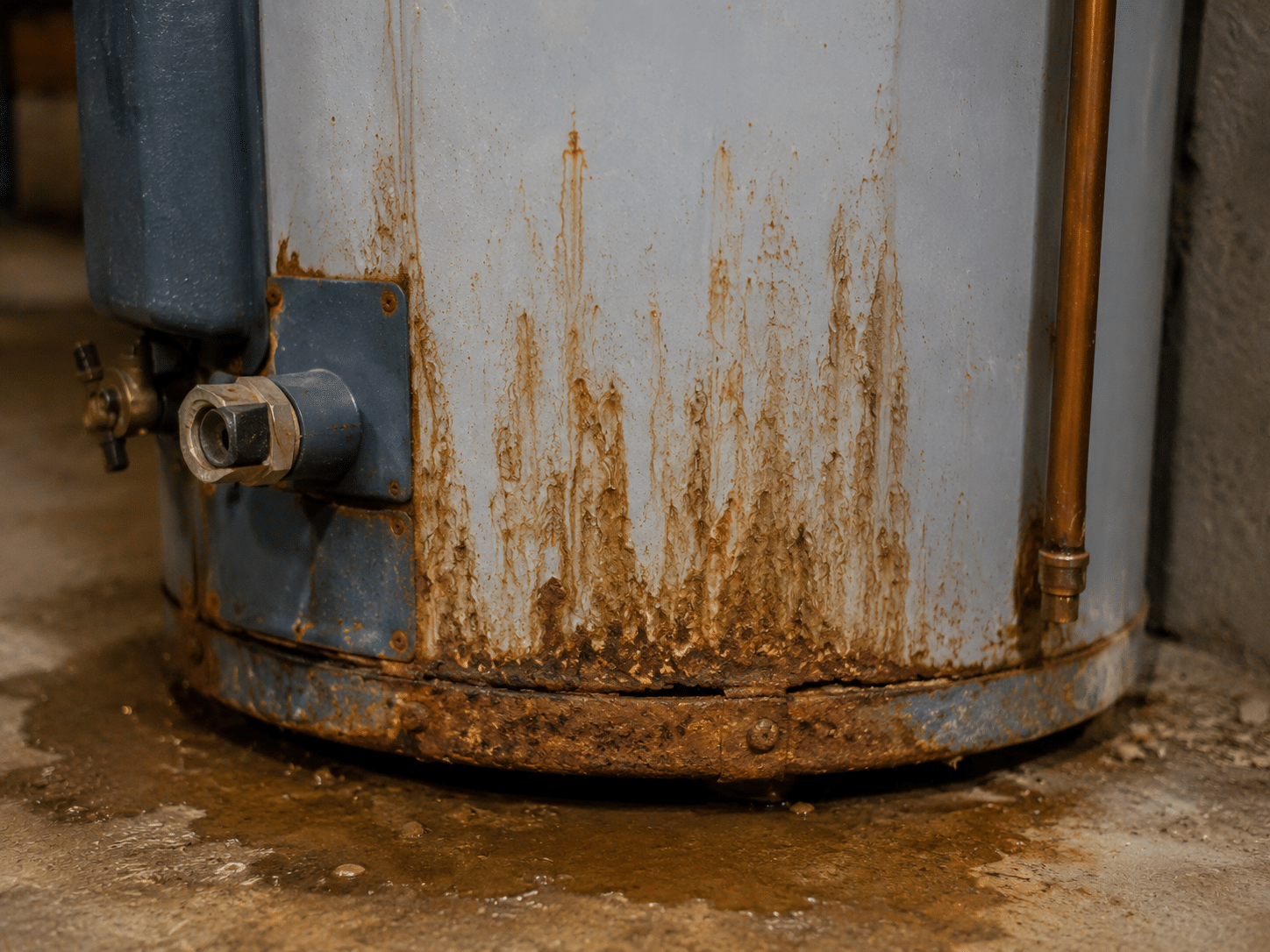 When only your hot water runs rusty or brown, the corrosion is almost certainly inside the tank or its anode rod, not the city supply.
This usually means the sacrificial anode has been used up and the steel tank itself has started to rust. Once a tank rusts from the inside, there is no reliable repair, only replacement.
A water heater that bangs, pops, or rumbles when it heats is struggling against a layer of sediment baked onto the bottom. The noise comes from water boiling beneath that hardened layer. Even with Tacoma’s low mineral content, decades without a flush let sediment overheat the steel and accelerate wear.
Dampness, rust streaks, or a small puddle near the bottom of the tank is one of the most serious signs. It can mean a fitting or valve needs attention, but it can also mean the tank wall has finally corroded through. We treat any standing water near a heater as a reason to inspect immediately before it becomes a full rupture.
A sulfur or rotten-egg odor in your hot water often traces back to a reaction between a deteriorating anode rod and bacteria in the tank. While sometimes correctable, in an older unit it frequently signals the anode is spent and the tank is no longer well protected. It is a cue to have the unit inspected rather than ignored.
Not every warning sign is visible. Some of the most telling clues show up in how the system performs day to day. When a water heater works harder to deliver less, internal wear is usually the reason, and these changes tend to worsen steadily.
If your showers turn cold sooner than they did a year ago, sediment is likely the culprit. As debris fills the bottom of the tank, it crowds out the volume available for hot water. A South Tacoma family suddenly fighting over hot water often has a sediment-choked tank, not an undersized one.
Lukewarm water can point to a failing heating element, a worn thermostat, or sediment insulating the heat source from the water. In a gas unit, it may signal a burner problem. These are sometimes repairable, but in a tank near the end of its lifespan, the repair cost often points toward replacement.
A water heater fighting sediment or a failing element burns more energy to do the same job. If your gas or electric bill has crept up without any change in household habits, an aging heater is a common hidden cause. Upgrading to an efficient unit can recover much of that waste.
When you call for the same water heater more than once in a year, the math usually favors replacement. Inconsistent temperatures, repeated pilot or element failures, and recurring leaks are the system telling you it is done. Our technicians give a written, flat-rate estimate up front so you can weigh repair against replacement with real numbers.
Tacoma’s housing stock shapes how water heaters age here. The median local home was built around 1967, and a sizable share predates 1940, so many heaters sit in basements or crawl spaces alongside older galvanized lines.
Those conditions, plus deferred maintenance, push units toward early failure even in our gentle water. The table below breaks down the main local factors.
Because so many Pierce County heaters were installed and left alone, a quick professional look often reveals a unit much closer to failure than its owner realized. That is why we recommend pairing any water heater concern with a broader look at the home’s plumbing, especially in houses still running original supply lines.
Once you have spotted the signs, the question becomes whether to fix the unit or replace it. The answer usually comes down to age, the problem, and cost. A single failed part on a five-year-old tank is worth repairing, while the same fault on a twelve-year-old tank rarely is.
What a replacement costs depends on the size and type of unit, the condition of the existing connections, and how involved the installation is in your space. A straightforward swap of a like-for-like tank costs less than a job that needs new venting, relocation, or an upgrade to tankless. Our written estimate reflects your actual unit and setup, and when repeated repairs start approaching the cost of a new unit, replacement is almost always the better value.
Some signs effectively make the decision for you. Use this quick checklist to gauge where your unit stands:
 Tank is over 10 years old and showing symptoms: lean toward replacement
We carry common parts and units on fully stocked trucks, so most repairs and many replacements happen in a single visit. If you want a clear read before spending anything, our free second opinion gives you an honest assessment with no pressure.
A failing water heater almost always warns you first, and acting on those early signs is the difference between a planned upgrade and a flooded utility room. If your unit is past ten years, running rusty, rumbling, or not keeping up, have it looked at before the next cold morning forces the issue. You can review your options on our Tacoma water heater service page or fold the check into a broader look at your home’s residential plumbing system.
At Spartan Plumbing Inc. (LIC #SPARTSI794OC), we have helped Tacoma and Pierce County homeowners read these signs and make confident decisions since 1958, backing every job with a written warranty and a 100% satisfaction guarantee, from routine inspections to trusted water heater repair in Tacoma. Call us today for an honest inspection or a flat-rate estimate, and our licensed technicians will help you decide what comes next.
The earliest signs are usually rust-colored or discolored hot water, rumbling or popping noises during heating, and hot water running out faster than it used to. A rotten-egg smell from the hot tap and any moisture around the base are also common early warnings. Noticing two or more together points to a unit nearing the end of its life.
A conventional tank water heater typically lasts 8 to 12 years, and ENERGY STAR suggests replacing one over 10 years old. Tankless units generally last 15 to 20 years or more. Tacoma’s soft water helps tanks reach the upper end of their range, but skipped maintenance can shorten that significantly.
Yes, if only the hot water is rusty or brown while the cold runs clear, the corrosion is almost always inside the tank or anode rod rather than the city supply. It usually means the sacrificial anode is spent and the steel tank has begun rusting from the inside. A rusted-through tank cannot be repaired and needs replacement.
Those sounds come from water boiling beneath a layer of sediment hardened onto the bottom of the tank. Even with Tacoma’s low mineral content, years without a flush allow sediment to build up, overheat the steel, and shorten the tank’s life. Flushing can help early on, but in an older tank it often signals advancing wear.
Repair makes sense for a single failed part on a newer tank, while replacement is usually the better value once a unit passes 10 years or shows tank corrosion. A leaking or rust-colored tank should be replaced, since the steel itself has failed. When repeated repairs approach replacement cost, replacing is the smarter long-term choice.
The cost depends on the size and type of unit you choose, the condition of the existing connections, and how involved the installation is, since a like-for-like tank swap is simpler than a job needing new venting or a switch to tankless. That is why a single figure rarely fits any one home. We provide a written, flat-rate estimate based on your actual unit before any work begins.
It depends on where the leak is. A leak from a valve, fitting, or connection can often be repaired, but water seeping from the bottom of the tank usually means the steel wall has corroded through, which cannot be fixed. Any standing water near a heater should be inspected promptly to rule out a failing tank.
Tacoma’s soft water, rated at roughly one to two grains per gallon, does reduce scale buildup and can help tanks reach the upper end of their lifespan. It does not stop the internal steel corrosion that eventually ends every tank, though. Age, sediment, and a worn anode rod remain the main factors that determine how long your unit lasts.
 Book Now!