Emergency Plumbing in Tacoma & Pierce County 24/7 Live Answer Free Second Opinion Quality Plumbing Services
Emergency Plumbing in Tacoma & Pierce County 24/7 Live Answer Free Second Opinion Quality Plumbing Services
Emergency Plumbing in Tacoma & Pierce County 24/7 Live Answer Free Second Opinion Quality Plumbing Services
Emergency Plumbing in Tacoma & Pierce County 24/7 Live Answer Free Second Opinion Quality Plumbing Services

Text Us: 253-231-7015
Call Us: 253-231-7015
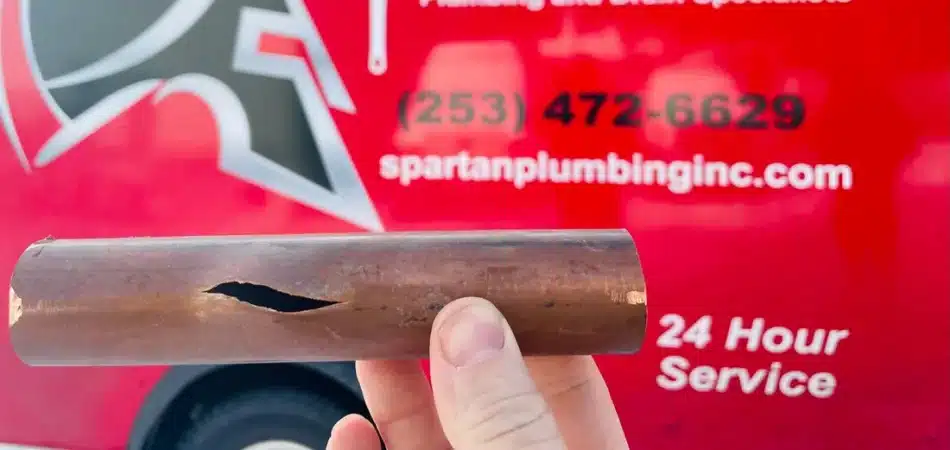
A common cause of burst pipes in Tacoma is water freezing in an unprotected pipe, but aging galvanized pipe, water pressure that runs too high, and poorly made connections cause failures too. Prevention means keeping exposed pipes warm in cold snaps, holding water pressure in a safe range, replacing worn pipe, and knowing where your main shutoff is.
A burst pipe can turn a quiet winter night in Tacoma into a soaked crawl space or a stained ceiling within hours. Knowing the usual causes helps you spot the risk before the water is on the floor.
Many Tacoma homes are decades old, with a median construction year of about 1968, and some older houses can still carry original galvanized supply pipe. Add a Pierce County cold snap and an unheated crawl space, and exposed pipes are at real risk.
At Spartan Plumbing Inc., we have served Tacoma and Pierce County homeowners since 1958 as a licensed and insured local team, and we repair leaking and burst pipes across the area. Schedule a pipe check before the next Tacoma cold snap if you want a second look at older or exposed lines.
University of Illinois Building Research Council research found that a pipe bursts when an ice blockage traps water against a closed faucet and further ice growth drives that pressure dangerously high. That is why a pipe can split where little or no ice has formed.
In the same study’s field tests, an uninsulated pipe in an unheated attic started to freeze once the outdoor temperature fell to about 20 degrees Fahrenheit. The researchers noted that pipes can also freeze between 20 and 32 degrees when cold air leaks in through wall gaps.
Freezing nights are not constant in Tacoma, so exposed pipes are easy to overlook. In any Tacoma home, pipes in a crawl space, garage, attic, or exterior wall need attention first.
Cold is not the only trigger for a burst pipe in a Tacoma home. These four causes build slowly until a weak spot gives way.
Galvanized steel supply pipe is still found in some older homes, and once its zinc coating wears away, the steel rusts from the inside. InterNACHI, the home inspector association, puts the useful life of galvanized pipe at about 20 to 30 years and notes that corrosion inside a pipe is hard to see.
More than a quarter of local homes were built before 1940, according to U.S. Census Bureau data. If your home still has its original galvanized pipe, that pipe has likely outlasted the estimate. A thinned wall can fail under normal household pressure with no freeze involved.
The U.S. Department of Energy’s Building America Solution Center notes that most plumbing codes call for a pressure reducing valve when incoming water pressure is above 80 psi, because higher pressure can rupture pipes and damage fixtures. Pressure that sits too high strains every joint in the house.
Surges add to that strain. Water hammer, the bang you hear when a valve or appliance shuts off fast, sends a pressure shock through the line, and repeated shocks can loosen joints over time. A gauge on an outdoor faucet shows your static pressure.
A drain line is not under constant pressure the way a supply line is, so a clog rarely bursts a pipe by itself. What a clog does is hold water and waste inside the pipe, and that standing load pushes on old joints until something leaks. Older cast iron and clay drain lines with worn joints can leak this way.
On the supply side, rust and mineral scale can narrow the inside of an old pipe over the years. A backup that keeps returning in the same drain is worth having cleared and checked.
Every joint, fitting, and valve in the house is a possible failure point. A fitting that was never tightened properly, sealed with the wrong material, or used to join two metals that react with each other can drip quietly for a long time before it finally lets go.
Old shutoff valves and the short flexible supply lines under sinks and toilets wear out with age too. Past DIY repairs and quick fixes from earlier remodels are worth a look, since a small mistake at one joint can turn into a flooded cabinet.
This table shows where Tacoma pipes can run into trouble.
| Pipe Location | Why It Is at Risk | What Helps |
|---|---|---|
| Crawl spaces, garages, attics, and exterior walls | Unheated air reaches the pipe first in a cold snap | Insulate and seal drafts, since insulation alone cannot stop a freeze |
| Original galvanized supply pipe | Rust thins the wall from the inside | Have it inspected and plan replacement before it fails |
| Outdoor faucets and hoses | Water left in the line freezes at the wall | Disconnect hoses, then shut off and drain the line each fall |
Pipes often warn you before they fail. Watch for these signs in your Tacoma home:
If you suspect a hidden leak, our team for leak detection and repair in Tacoma can find the source.

Prevention comes down to keeping pipes warm and pressure in check. These steps cover the basics for a Tacoma home:
For a fuller winter checklist, read our guide to protecting your pipes during cold weather.
Fast action limits the damage. Take these steps in order:
If a pipe has frozen but not burst, never thaw it with an open flame.
If your home has original galvanized pipe, exposed crawl space lines, or water pressure you have never checked, a pipe check now is far easier than cleaning up a flooded floor later. For homeowners who need burst pipe repair in Tacoma, we give an upfront written estimate before any work begins.
At Spartan Plumbing Inc., we have served Tacoma and Pierce County since 1958 as a licensed and insured team with 24/7 human support. Speak with us at 253-231-7015 about a burst or frozen pipe.
Water freezes at 32 degrees Fahrenheit, but a pipe usually needs colder air and exposure before it freezes. In University of Illinois Building Research Council field tests, an uninsulated attic pipe began to freeze at about 20 degrees outside. Drafts can freeze a pipe sooner, so protect exposed Tacoma pipes on any freezing night.
Yes. Corroded galvanized pipe, water pressure above 80 psi, repeated water hammer, and poorly made connections can all cause a pipe to fail in any season. In older Tacoma homes, a pipe wall thinned by rust can give way under normal household pressure.
Common signs include a sudden drop in water pressure, the sound of running water when every tap is off, water stains on walls or ceilings, and a water bill that jumps for no clear reason. A musty smell or pooling water near a wall can also point to a hidden break.
Shut off the main water valve first, then open the faucets to drain the pipes. If water has reached outlets or electrical areas, turn off power to that area only if you can do it safely without standing in water, or call your electric utility. Then call us for the repair.
Yes, on nights when exposed pipes could freeze. A slightly open faucet relieves the pressure that builds behind an ice blockage, and that pressure is what bursts the pipe. Open both the hot and cold sides, and leave the faucet open even if the drip stops.
It can. Most plumbing codes call for a pressure reducing valve when incoming water pressure is above 80 psi, because higher pressure can rupture pipes and damage fixtures. Pressure that stays high strains joints and fittings every day, and a simple gauge on an outdoor faucet shows where your home stands.
A clogged drain rarely bursts a pipe on its own, because drain lines are not under constant pressure like supply lines. A clog does hold water and waste in the pipe, and that load can push leaks out of old, weak joints. A drain that keeps backing up should be cleared and checked.
The cost depends on where the break is, how hard the pipe is to reach, the pipe material, and whether a short repair or a longer section of new pipe is needed. Older galvanized lines can widen the scope. We give you an upfront written estimate before any work begins.
 Book Now!