Emergency Plumbing in Tacoma & Pierce County 24/7 Live Answer Free Second Opinion Quality Plumbing Services
Emergency Plumbing in Tacoma & Pierce County 24/7 Live Answer Free Second Opinion Quality Plumbing Services
Emergency Plumbing in Tacoma & Pierce County 24/7 Live Answer Free Second Opinion Quality Plumbing Services
Emergency Plumbing in Tacoma & Pierce County 24/7 Live Answer Free Second Opinion Quality Plumbing Services

Text Us: 253-231-7015
Call Us: 253-231-7015
Hiring a professional plumber in Tacoma ensures compliance with local WA L&I regulations, provides 24/7 emergency response for burst pipes or sewer backups, and offers specialized expertise for older homes or specific Puget Sound area water conditions. Pros deliver long-lasting repairs, preventing costly water damage, and offer maintenance plans that extend water heater lifespans.
Most plumbing problems in Tacoma do not start at the faucet. They start in the pipes behind the wall, the sewer lateral under the lawn, or the water heater closet you stopped checking after the first cold-snap fix worked. Tacoma’s housing stock is older than most homeowners realize. The median home was built in 1967, the average home is 66 years old, and roughly 26.9% of homes in the area predate 1940 (ATTOM and Point2Homes data). That means cast iron drains, galvanized supply lines, and clay sewer laterals are still buried under driveways in the North End, Hilltop, and South Tacoma.
DIY plumbing in that environment can backfire fast. A weekend fix on a 60-year-old galvanized line can turn into a flooded crawlspace by Tuesday. Hiring a professional plumber is not about complexity for its own sake. It is about working with materials and code requirements that are not always obvious until something fails.
At Spartan Plumbing Inc., we have served Tacoma and Pierce County homes since 1958, and we have seen what DIY shortcuts look like once the drywall comes off. If you are weighing whether to handle a plumbing repair yourself or call in a licensed plumber, our team is happy to walk through the options with no pressure. Contact us today!
Tacoma homes built before the 1980s often hide three problems behind clean drywall: corroded galvanized supply lines, brittle cast iron drains, and clay sewer laterals settling under decades of root pressure. A new washer on a faucet does not fix any of that. When DIY repairs ignore what the pipes are actually made of, the patch usually fails inside a season.
Galvanized steel pipes, common in Tacoma homes built before 1960, corrode from the inside out. By the time you see a brown stain on the ceiling, the pipe wall is already too thin to hold a clamp. Cast iron drain lines crack at the hub fittings. Clay sewer laterals, standard in Stadium District and Proctor District homes built from the 1920s to 1950s, separate at the joints and let in roots that block flow even after a basic auger pass.
The five highest-risk DIY plumbing repairs in older Tacoma homes are usually the same ones homeowners assume are simple. Each one looks like a parts swap and ends up touching gas, code, or structural framing.
A licensed plumber is not just someone with better tools. They are credentialed by Washington State Labor & Industries (L&I), trained in current code, and accountable for the repair in ways a DIY fix never is. That accountability is what keeps your insurance valid, your resale clean, and your repair warrantied across Tacoma and Pierce County.
Washington requires plumbers to pass a state exam through L&I before working on residential plumbing systems. That training covers the Uniform Plumbing Code as adopted in WAC 51-56, venting requirements, backflow prevention, and gas line work. We bring that current code knowledge to every Tacoma job, which matters in older neighborhoods where the existing plumbing predates the rules that now govern repairs to it.
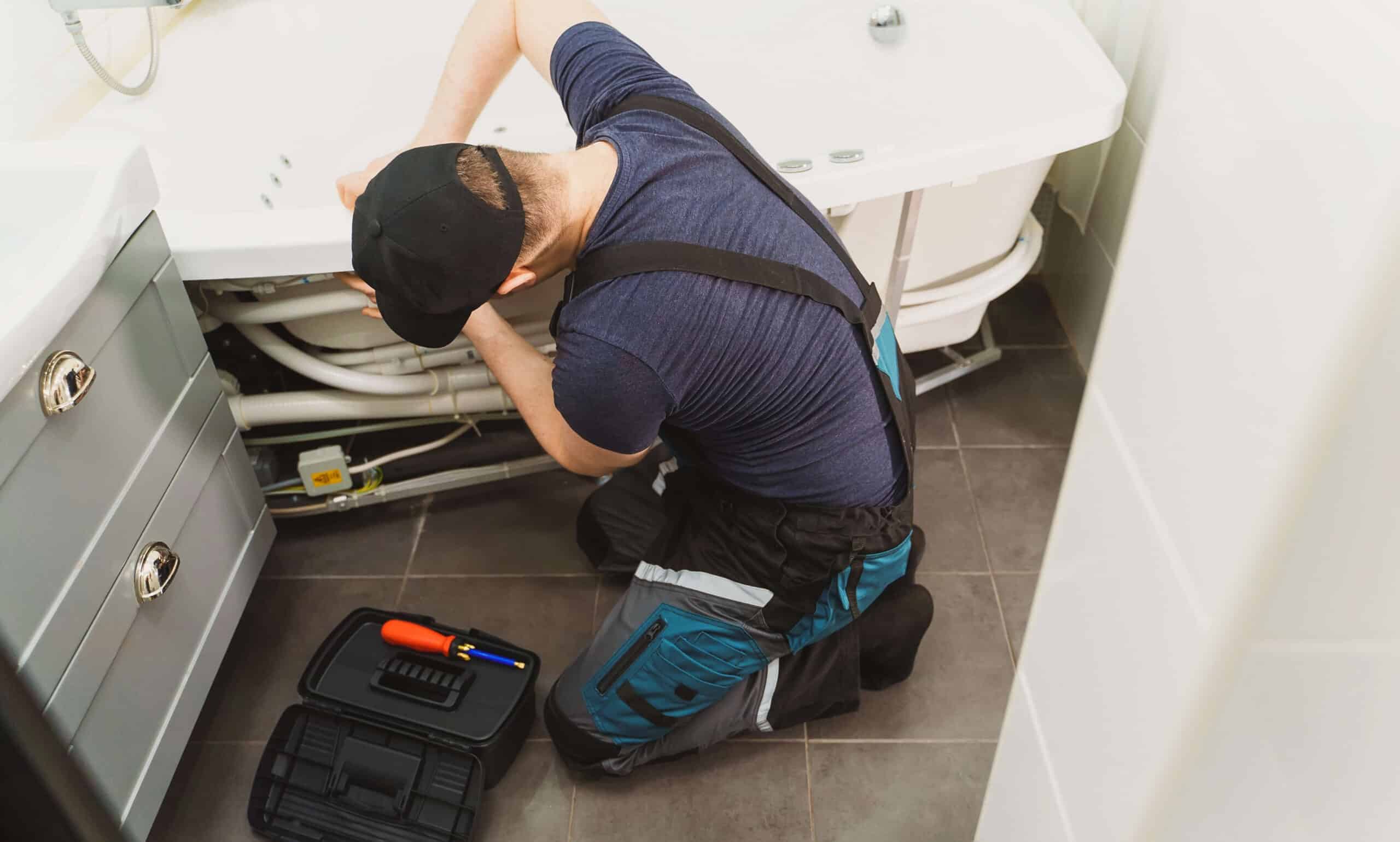
A licensed Tacoma plumber arrives with equipment most homeowners would never rent for a single job. We use video sewer line camera inspections in Tacoma to confirm the exact failure point before any digging starts, then match the repair to the actual condition of the line instead of guessing from the cleanout.
The math on DIY versus a professional plumber depends on the repair, but the long-term cost difference shows up fastest on three jobs: drain cleaning, water heater work, and sewer line repair. The table below tracks where the DIY route starts cheaper and ends more expensive once permits, repeat failures, and resale inspections are factored in.
| Repair | DIY Approach | Licensed Plumber Approach | Where DIY Costs Climb |
|---|---|---|---|
| Recurring drain clog | Rented snake or chemical drain cleaner | Hydro-jetting with camera follow-up | Repeated chemical use corrodes older galvanized and cast iron drains |
| Water heater swap | Tank-for-tank swap, no permit | Permitted install with correct T&P discharge and expansion tank | Failed inspection at home sale, voided manufacturer warranty |
| Slow leak under slab | Patch ceiling or floor drywall | Pressure test, locate, isolate, repair | Hidden mold remediation and subfloor replacement |
| Main shutoff replacement | Solder swap on live supply | Press-fit replacement with planned bypass | Whole-house water shutoff during a failed solder |
| Sewer line root intrusion | DIY snake from a cleanout | Camera inspection, hydro-jet, cured-in-place lining if needed | Yard excavation when a DIY snake punches through a weak clay joint |
The hidden cost of a DIY plumbing fix is rarely the part you replaced. It is the water damage from a leak that started small and ran for weeks before anyone saw it. Professional drain cleaning in Tacoma includes a camera follow-up so the underlying cause (a belly in the line, a partial root intrusion, scale buildup) is identified and addressed instead of recurring every 90 days.
Pierce County and the City of Tacoma require permits for most water heater replacements, sewer line repairs, and any work involving gas lines. Unpermitted work shows up at resale. A buyer’s inspector flags an undersized T&P discharge line, a missing expansion tank, or a sewer lateral that does not meet current code. The cost to redo that work after closing usually exceeds the cost of doing it right the first time. Our water heater service in Tacoma pulls the permit and finals the inspection so the install does not become a closing issue later.
Some plumbing repairs are reasonable weekend projects. Others are not, and in Tacoma the line between them usually has to do with what is behind the wall, what code applies, and how much hidden water damage can result if the fix fails. Call a licensed plumber, not a DIY video, when any of the following apply:
Hiring a licensed plumber is not about avoiding DIY entirely. It is about knowing where the line is between a fixable weekend repair and a job that needs code, permits, and equipment behind it. For most Tacoma homeowners, the math favors a pro the moment the repair touches gas, the sewer lateral, or anything older than the drywall around it.
A quote, a permit, and a final inspection on the same job means the repair holds up the next time someone runs a closing inspection on the house. That is the part DIY cannot deliver, no matter how good the YouTube tutorial is.
At Spartan Plumbing Inc. (LIC #SPARTSI794OC), we have served Tacoma and Pierce County since 1958 with licensed, insured, background-checked plumbers, fully stocked trucks for one-visit repairs, and flat-rate written estimates before the wrench comes out. To talk to a plumber about your situation, call 253-231-7015.
A licensed plumber works to Washington State code (WAC 51-56), pulls required permits, and uses equipment a DIYer cannot rent for a single job. In older Tacoma homes with cast iron, galvanized, or clay piping, that combination prevents repeat failures and resale problems.
Yes. Pierce County and the City of Tacoma require a permit and final inspection for most water heater replacements, including standard tank, tankless, and heat pump water heaters. Unpermitted swaps frequently fail at resale inspection.
Every plumber in Washington is licensed through L&I, and the state runs an online contractor and individual certification lookup. Our license number is SPARTSI794OC, registered to Spartan Plumbing Inc.
Replacing a faucet, swapping a toilet flapper, installing a new shower head, and clearing a P-trap under a sink are reasonable DIY repairs. Anything involving the gas line, the sewer lateral, or pipe older than 50 years should go to a licensed plumber.
Costs vary by job, pipe material, and access. We give flat-rate written estimates before any work starts, so the price is set before the wrench comes out. Free second opinions are available on bids you have already received.
Tacoma’s median home was built in 1967, and roughly 26.9% of homes in the area predate 1940. That means cast iron drains, galvanized supply lines, and clay sewer laterals are still common, and each material has specific repair requirements that standard DIY parts do not meet.
Often, yes. Homeowner policies frequently exclude water damage caused by unpermitted or non-licensed plumbing work. A licensed repair with permit documentation keeps the claim path clean if a future leak does occur.
We serve all of Tacoma and Pierce County, including the North End, Hilltop, South Tacoma, Proctor District, Stadium District, and Old Town. Service runs through the surrounding Pierce County communities as well.
 Book Now!