Emergency Plumbing in Tacoma & Pierce County 24/7 Human Support Free Second Opinion Quality Plumbing Services
Emergency Plumbing in Tacoma & Pierce County 24/7 Human Support Free Second Opinion Quality Plumbing Services
Emergency Plumbing in Tacoma & Pierce County 24/7 Human Support Free Second Opinion Quality Plumbing Services
Emergency Plumbing in Tacoma & Pierce County 24/7 Human Support Free Second Opinion Quality Plumbing Services

Text Us: 253-231-7015
Call Us: 253-231-7015
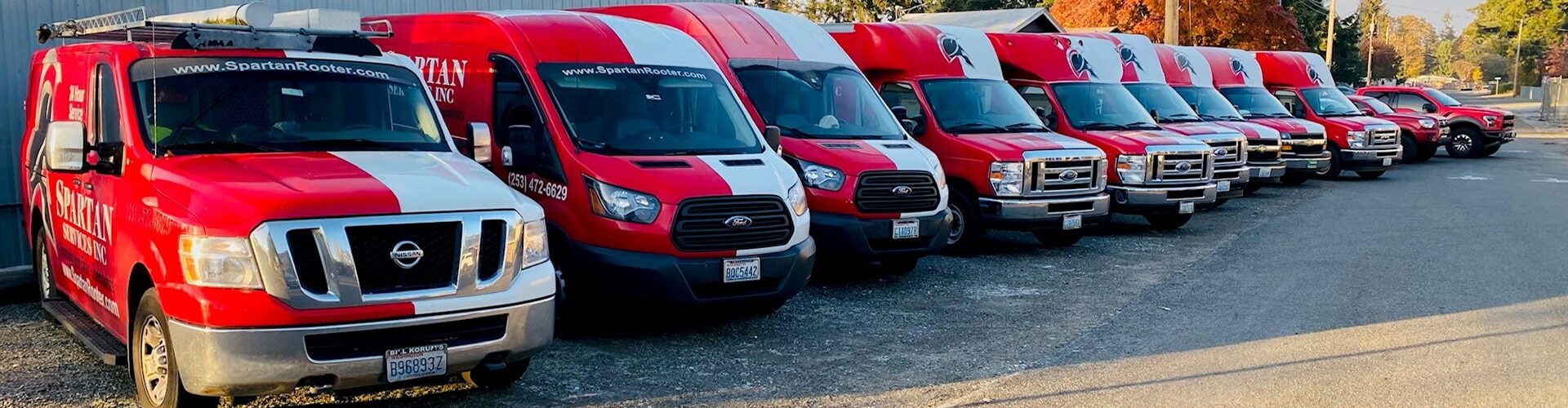

A commercial building generates a running list of small plumbing tasks, and that list is exactly what gets postponed until one item turns into an after-hours emergency. A seized shut-off valve, a fixture that never seated right, a supply line weeping behind a wall: none of them close your doors on their own, and together they are what a failed inspection looks like. At Spartan Plumbing Inc., we have worked on Pierce County commercial plumbing since 1958.
Our crews are licensed and insured on every job, we put the estimate in writing before we start, and we finish to the code the inspection is measured against. Every visit comes with 24/7 emergency response and a free second opinion on any commercial plumbing estimate you already hold.
Our team looks at the system before quoting anything, explains what we found in plain terms, and tells you which items are genuinely urgent and which can wait a quarter. That is how a punch list gets shorter instead of longer.
Lakewood’s commercial core is older than most people assume. The Colonial Center opened in 1937 as one of the first suburban shopping centers in the country and expanded through the 1950s, and buildings from that era are still in use. Original-era supply lines, valves, and drain runs are common here in a way they are not in a newer market.
That age shows up first in the parts nobody looks at. A shut-off valve that has not been operated in decades seizes in place, and the tenant discovers it during the emergency when they need it most.
The Lakewood Towne Center replaced the enclosed portion of the Lakewood Mall, which was demolished in 2001 and rebuilt as an open-air center, so a tenant there is working with building services of a completely different vintage from a tenant a short distance away in the older center.
Two properties in the same city can therefore need opposite work. One needs failing original components replaced; the other needs a newer system maintained before it drifts. Diagnosing by building age rather than by symptom is what separates the two.
The International District, known locally as Koreatown, runs along South Tacoma Way, and the corridor carries a dense concentration of restaurants and food markets. Korean barbecue and similar formats are high-grease operations by design.
Fats, oils, and grease leave a fixture warm and then cool into a solid film on the pipe wall a short distance downstream. Each service period adds a layer, and without a grease interceptor on a maintained schedule the usable bore shrinks until a lunch rush closes it.
Commercial tenants report low pressure at a fixture and assume the fixture is the problem. In a building of this age, it usually is not. Decades of mineral deposit and internal corrosion narrow the supply line until two fixtures cannot run at once.
Replacing the fixture changes nothing when the restriction sits upstream. The only way to tell the difference is to check pressure at more than one point in the run.
Backflow prevention assemblies, floor drains, mop sinks, and the valves that isolate them tend to fall between the landlord and the tenant, so nobody schedules them. They surface at inspection instead.
That is the most avoidable category of commercial plumbing problem, because it is entirely a maintenance question rather than a failure question.
A space plumbed for one use rarely suits the next one without work. A retail unit becoming a food operation needs drain capacity, grease handling, and fixture counts the original layout never carried.
When the incoming use does not match what is in the floor, the work is not optional. It is what the occupancy sign-off depends on.
Every job runs the same way. We look at the system, tell you plainly what we found, put the estimate in writing before we start, and finish to code. Here is the rest of what we cover for commercial properties.
Pressurized water cuts grease, scale, and debris out of commercial drain lines, and a paired high-definition camera run shows the inside of the pipe before and after, so the result is on record rather than guessed at.
Cured-in-place lining rebuilds a failed or cracked sewer line through small access points, sparing parking lots, landscaping, and flooring. Where the line is too far gone, we replace it outright with as little disruption as the site allows.
Commercial tankless installation and repair for operations that need hot water on tap all day. On-demand units drop the standby energy a tank wastes and remove the recovery wait between draws.
Full commercial repiping for buildings running corroded, undersized, or out-of-spec supply lines. We pull the failing system and put in modern materials rated to carry the building’s demand for decades.
Tenant-improvement plumbing, fixture and appliance hookups, supply-line repairs, and full system upgrades. New space or existing, we take it from first cut to final connection.
Repair and replacement of broken downspouts that carry water off your foundation, plus sump pump fixes and primary or backup pump installs that keep below-grade space dry through a storm.
Diagnosis, repair, and full replacement for commercial tank heaters across every major brand and size, getting the hot water back on quickly so the operation keeps moving.
Scheduled and emergency work on pinholes, burst lines, and freeze damage anywhere in the building. We pin the source down first so the wall or floor only opens where it has to.
Motorized cabling and hydro jetting on floor drains, floor sinks, mop sinks, kitchen lines, and main sewers. We clear the full length of the line rather than punching a single hole through the clog and leaving the rest in place.
Full support across tank, tankless, and heat pump units, including scheduled maintenance plans that stretch equipment life and head off the surprise failures.
Complete plumbing for commercial kitchens, restroom renovations, tenant improvements, and whole-facility remodels, coordinated with your contractor or property manager to hold the schedule and the budget.
Heat pump water heater installation and repair for operations chasing lower utility costs, since these units draw far less power than standard resistance heating and can pay back well in this climate.
Scheduled and emergency cleaning for every commercial drain type, from grease traps to floor drains to the main building sewer, stopping the backups and floods that shut a business down before they start.
Video inspection of commercial sewer lines to locate root intrusion, collapse, offset joints, and blockages, giving you a clear read on the system before you commit to any repair or replacement.
The everyday commercial list handled by one licensed team: valves, fixtures, backflow devices, supply lines, and the small repairs that sit on a punch list until they turn into an after-hours call.
A valve that has seized is a valve you cannot use in an emergency. You find out at the worst possible moment, and by then the isolation you needed is not available.
Replacing a stuck valve is a small planned job. Discovering it during a burst line is not.
One slow fixture is a branch problem. Pressure that has fallen everywhere points to the main supply, a regulator, or narrowing inside the supply lines themselves.
That distinction decides whether you are looking at a small repair or a system approaching the end of its life.
A grease line that closes mid-service is not a plumbing inconvenience; it is lost business and a health-inspection exposure. It also rarely happens without warning.
Slow drainage in the days before a backup is the signal, and it is the cheapest moment to act.
If water pools rather than clearing during normal operation, the drain is not keeping up with what it is being given. That is a restriction, not a quirk.
Left through a wet season, it becomes a slip hazard and an inspection problem at once.
Backflow assemblies, fixture counts, and drain capacity all get looked at when a space changes hands or comes up for compliance review. Finding a problem then leaves no room to plan.
Getting ahead of it turns a deadline into a scheduled job.
A fault that returns is telling you the cause was never addressed. Repeating the same fix is more expensive over a year than diagnosing it properly once.
That pattern is the clearest signal that the underlying component, not the symptom, needs attention.
A mid-century center and a 2001 build fail differently, and treating them the same wastes money on both. We assess what is actually installed before recommending anything, which is what stops an old system being patched and a newer one being over-specified.
Building work in Lakewood is permitted by the City of Lakewood, while sewer service is provided by the Pierce County Sewer Division under a franchise agreement. Knowing which body governs which part is half the job, and we leave you the documentation either way.
Our trucks are stocked for the common commercial repairs, so a list of small items is one visit rather than several trades on separate days. That is the practical difference between a building that is compliant and a list that keeps growing.
Grease lines, floor drains, and backflow devices all respond to a maintenance cadence. Setting one causes less disruption than the emergency it prevents, and it happens when your doors are closed.
Lakewood business owners and property managers choose us for licensed professionals, upfront pricing with no hidden fees, code-compliant work that passes inspection, and repairs built to last.
Spartan Plumbing is licensed and certified to work on your Lakewood property.
Upfront estimates before work begins. No hidden fees or surprise charges after the fact.
We know the permit path, the inspection points, and the commercial code that applies in Lakewood.
Commercial-grade materials, pressure-tested connections, and documented work on every project.
We work around your operating hours where we can and keep the space clean while we work.
The items a commercial building postpones are cheap individually and expensive as a group, because the one you leave is usually the one that fails during service. Handling them together costs less downtime than dealing with them one emergency at a time.
At Spartan Plumbing Inc., we have served Pierce County businesses, Lakewood included, since 1958, with 24/7 human support for the failure that cannot wait until morning. Call us today at 253-231-7015 to book commercial general plumbing service.
Commercial general plumbing covers the everyday work that keeps a building compliant and operating: shut-off and isolation valves, fixtures, supply lines, backflow devices, floor drains, mop sinks, minor leaks, and pressure problems. It is the category that prevents the larger failures rather than reacting to them.
Annually suits most commercial properties, and more often where food service, shared laterals, or a known problem is involved. Given how much of Lakewood’s commercial stock dates to the mid-century era, an annual review is the sensible baseline here rather than the cautious option.
Sewer service in Lakewood is provided by the Pierce County Sewer Division, and under Pierce County Code the side sewer serving a property is maintained by the property owner. That covers clearing, repair, and replacement from the building to the point of connection, though your lease may divide it between landlord and tenant.
The City of Lakewood is the permitting authority for building work, which is a different body from the Pierce County Sewer Division that provides the sewer service and the Lakewood Water District that supplies the water. Three separate organizations, and knowing which one governs a given task saves considerable time.
Pressure that has fallen everywhere points upstream rather than at any one fixture, usually to the main supply, a pressure regulator, or narrowing inside the supply lines. In a building of Lakewood’s typical age, decades of mineral deposit and internal corrosion reducing the usable bore is a realistic explanation.
It depends entirely on volume and format, and a high-grease operation needs a far shorter interval than a light one. Once we see how quickly your line loads, we can set a cadence that matches your actual service pattern instead of applying a generic schedule that is either wasteful or too late.
Usually, and for most commercial work it is the better arrangement. We schedule around your operating hours wherever access allows it, and where work has to happen while you are open we contain the area and keep it clean.
A backflow prevention assembly stops water in the building from being drawn back into the public supply. Commercial properties commonly require one, and it is a device that needs periodic testing rather than a fit-and-forget item, which is why it so often surfaces at inspection instead of on a schedule.
No, and it is often not the right one. A single failure on an otherwise sound run is a repair. Repeated failures on the same run mean the system has reached the end of its life, and at that point replacing it costs less over a few years than a series of individual repairs.
Yes. We provide 24/7 human support for commercial plumbing emergencies across Lakewood and Pierce County, including burst supply lines and sewer backups that cannot wait for business hours.
Yes, and it is usually the more efficient way to do it. Our trucks carry the common commercial parts, so a punch list is normally one appointment rather than several. Send the whole list when you book so we bring what the job needs.
It depends on how many items are on the list, how accessible each one is, whether parts are standard or have to be sourced for older equipment, and whether what looks like a small repair turns out to be a symptom of something larger. You get an upfront written estimate before any work starts.
 Book Now!
 Book Online