Emergency Plumbing in Tacoma & Pierce County 24/7 Human Support Free Second Opinion Quality Plumbing Services
Emergency Plumbing in Tacoma & Pierce County 24/7 Human Support Free Second Opinion Quality Plumbing Services
Emergency Plumbing in Tacoma & Pierce County 24/7 Human Support Free Second Opinion Quality Plumbing Services
Emergency Plumbing in Tacoma & Pierce County 24/7 Human Support Free Second Opinion Quality Plumbing Services

Text Us: 253-231-7015
Call Us: 253-231-7015
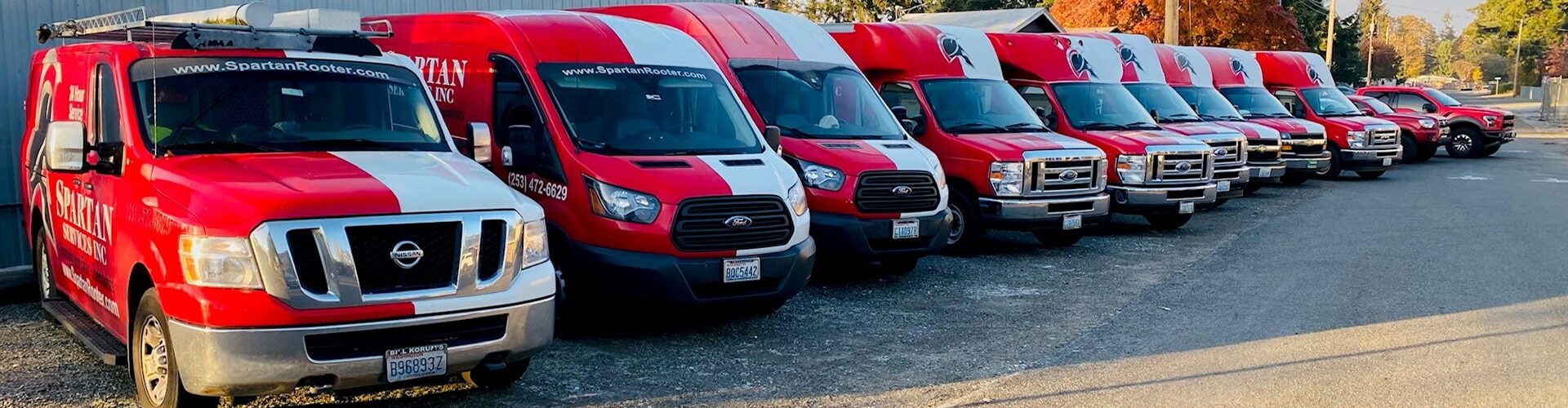

When the same run leaks twice, the question stops being how to patch it and becomes whether the system has reached the end of its service life. That is a different conversation, and it is far cheaper to have before the third leak than after it. At Spartan Plumbing Inc., we have repiped commercial buildings across Pierce County since 1958.
We work in copper and PEX, size the new system to the demand the building actually carries today, and plan the shutdown around your operating hours. Our crews are licensed and insured, the estimate is written before we start, and 24/7 emergency response covers a line that has already let go.
Our team will tell you plainly whether you are looking at a localized repair or a system approaching the end of its life. That answer saves more money than any single repair does.
The Colonial Center opened in 1937 as one of the first suburban shopping centers in the country and expanded through the 1950s, and buildings from that era are still trading in Lakewood. Their supply systems have been under constant pressure since the mid-century.
Materials and jointing methods from that period were not designed for a seventy-year service life. They were designed for the tenants of their day, and most of those tenants have long since changed.
Pinholes develop from internal corrosion over a long period, weep rather than spray, and often run inside a wall or above a ceiling for months before anything visible appears. A single pinhole on an otherwise sound run is a repair.
Repeated pinholes on the same run mean something different. The pipe has reached the point where repairing one spot at a time costs more over two years than replacing the section.
Tenants report low pressure at a fixture and assume the fixture is the problem. In a building of this age it usually is not, because decades of mineral deposit and internal corrosion narrow the usable bore of the supply line itself.
Once two fixtures cannot run at once, replacing either fixture changes nothing. The restriction sits upstream of both.
Lakewood commercial space has turned over repeatedly, and a unit plumbed for retail rarely suits a food operation without work. Fixture counts, simultaneous demand, and hot water draw all rise with the change.
A system that was adequate for the original use becomes marginal for the current one, and marginal systems fail during peaks rather than during quiet periods.
Water arriving discoloured at more than one outlet points to the interior condition of the supply line rather than to anything local. It is corrosion product, and it means the inside of the pipe is deteriorating.
In a food service or hospitality setting that is not only a plumbing issue, it is a customer-facing one.
When access, downtime, and restoration are added together, a single repair on a difficult run can approach what replacing that run would cost. At that point repeated repair stops being the economical choice.
That calculation is worth running honestly rather than defaulting to whichever option looks smaller on the day.
Every job runs the same way. We look at the system, tell you plainly what we found, put the estimate in writing before we start, and finish to code. Here is the rest of what we cover for commercial properties.
Pressurized water cuts grease, scale, and debris out of commercial drain lines, and a paired high-definition camera run shows the inside of the pipe before and after, so the result is on record rather than guessed at.
Cured-in-place lining rebuilds a failed or cracked sewer line through small access points, sparing parking lots, landscaping, and flooring. Where the line is too far gone, we replace it outright with as little disruption as the site allows.
Commercial tankless installation and repair for operations that need hot water on tap all day. On-demand units drop the standby energy a tank wastes and remove the recovery wait between draws.
Full commercial repiping for buildings running corroded, undersized, or out-of-spec supply lines. We pull the failing system and put in modern materials rated to carry the building’s demand for decades.
Tenant-improvement plumbing, fixture and appliance hookups, supply-line repairs, and full system upgrades. New space or existing, we take it from first cut to final connection.
Repair and replacement of broken downspouts that carry water off your foundation, plus sump pump fixes and primary or backup pump installs that keep below-grade space dry through a storm.
Diagnosis, repair, and full replacement for commercial tank heaters across every major brand and size, getting the hot water back on quickly so the operation keeps moving.
Scheduled and emergency work on pinholes, burst lines, and freeze damage anywhere in the building. We pin the source down first so the wall or floor only opens where it has to.
Motorized cabling and hydro jetting on floor drains, floor sinks, mop sinks, kitchen lines, and main sewers. We clear the full length of the line rather than punching a single hole through the clog and leaving the rest in place.
Full support across tank, tankless, and heat pump units, including scheduled maintenance plans that stretch equipment life and head off the surprise failures.
Complete plumbing for commercial kitchens, restroom renovations, tenant improvements, and whole-facility remodels, coordinated with your contractor or property manager to hold the schedule and the budget.
Heat pump water heater installation and repair for operations chasing lower utility costs, since these units draw far less power than standard resistance heating and can pay back well in this climate.
Scheduled and emergency cleaning for every commercial drain type, from grease traps to floor drains to the main building sewer, stopping the backups and floods that shut a business down before they start.
Video inspection of commercial sewer lines to locate root intrusion, collapse, offset joints, and blockages, giving you a clear read on the system before you commit to any repair or replacement.
The everyday commercial list handled by one licensed team: valves, fixtures, backflow devices, supply lines, and the small repairs that sit on a punch list until they turn into an after-hours call.
A second failure in the same place is the system telling you the first repair addressed a symptom. The third one confirms it.
That pattern is the single clearest indicator that the run, not the joint, is what has failed.
A drop everywhere points upstream, to the main supply, a regulator, or narrowing inside the supply lines. Isolating which of the three it is takes a measurement rather than a guess.
If it is the lines themselves, no downstream work will improve it.
Discolouration at one tap can be local. Discolouration at several is the system.
In a building serving the public, that becomes urgent for reasons beyond the plumbing.
Once walls or ceilings are open, the condition of the supply lines is visible for the first time in decades. That is the cheapest moment to act on what is found.
Closing the wall over a failing run guarantees opening it again later at full cost.
When a third party has put the system in writing, the timeline is no longer yours to set. Acting early keeps the phasing and the shutdown planning under your control.
Waiting usually means doing it fast rather than doing it well.
A burst supply line in a commercial building damages finishes, stock, and tenant operations, and the cost lands well beyond the plumbing. One event is usually enough to change the calculation.
At that point the question is whether the rest of the system is in the same condition, and that is answerable.
One pinhole on a sound run is a repair. Repeated failures on the same run are a system at the end of its life. We tell you which one you have rather than quietly booking the next repair, because that distinction is where the real money sits.
Both are proven supply materials and each suits different situations depending on routing, accessibility, and what is already installed. We recommend based on the run rather than on a single default.
A system laid out decades ago was sized for the fixtures of that era. If tenancies have changed or fixture counts have risen, replacing like for like carries the original limitation forward. We size for the current demand instead.
A system replacement is disruptive once, on a date you choose, phased so tenants keep operating where possible. A failing system is disruptive repeatedly, on dates it chooses. For most buildings the planned version is the cheaper inconvenience by a wide margin.
Lakewood business owners and property managers choose us for licensed professionals, upfront pricing with no hidden fees, code-compliant work that passes inspection, and repairs built to last.
Spartan Plumbing is licensed and certified to work on your Lakewood property.
Upfront estimates before work begins. No hidden fees or surprise charges after the fact.
We know the permit path, the inspection points, and the commercial code that applies in Lakewood.
Commercial-grade materials, pressure-tested connections, and documented work on every project.
We work around your operating hours where we can and keep the space clean while we work.
A pipe that has failed once in a building of this age has told you something about the rest of the run. Finding out what the whole system looks like is a small piece of work that decides how the next ten years go.
At Spartan Plumbing Inc., we have served Pierce County businesses, Lakewood included, since 1958, with 24/7 human support for the line that will not wait. Call us today at 253-231-7015 to schedule an assessment.
The clearest signals are repeated pinhole leaks on the same run, pressure that has dropped across the whole building rather than at one fixture, discoloured water at multiple outlets, and a repair cost that is approaching what replacing the section would be.
Copper and PEX. Both are proven supply materials, and the right choice depends on the routing, how accessible the run is, and what is already installed in the building. We assess that before recommending either.
Not necessarily, but it is worth investigating rather than just patching. A single failure on an otherwise sound run can be repaired. When the same run produces a second and third, the pipe has reached the end of its service life.
It depends on the size of the building, the number of fixtures, how accessible the runs are, and whether the work can be phased. We give a realistic window after assessing the property, and we plan the sequence so occupied areas keep operating where possible.
Usually yes, with phasing. We plan the shutdowns around your operating hours and sequence the work so occupied units keep water where it is practical. Where a full shutdown is unavoidable we tell you upfront and schedule it when it costs least.
No. Access is planned to minimize opening, working through ceilings, service voids, and existing access points wherever the routing allows. Where a wall does have to be opened, it is opened at that point rather than exploratively.
Pressure that is low throughout points to the main supply, the pressure regulator, or narrowing inside the supply lines themselves. In a building of Lakewood commercial vintage, decades of mineral deposit and internal corrosion reducing the usable bore is a realistic explanation
Yes, and it is often the right call when the rest of the system is sound. It becomes the wrong call when the same failure keeps appearing elsewhere, at which point partial replacement turns into a series of repairs rather than a solution.
Building work in Lakewood is permitted by the City of Lakewood, and plumbing work that alters the system is regulated under the Washington state plumbing code. We handle the permitting so the work is inspected and documented.
Repiping concerns the supply side, which in Lakewood is served by the Lakewood Water District, a separate body from the Pierce County Sewer Division that handles the sewer. The two are unrelated for this work, though we coordinate with either where a job touches them.
Where it can be safely abandoned in place it usually is, since removing it often means opening more of the building than the replacement itself required. Where it has to come out, we remove and dispose of it as part of the job.
It depends on the size of the building, the number of fixtures, the material chosen, how accessible the runs are, how much has to be opened and restored, and whether the work is phased around tenants. You get an upfront written estimate before any work starts.
 Book Now!
 Book Online