Emergency Plumbing in Tacoma & Pierce County 24/7 Live Answer Free Second Opinion Quality Plumbing Services
Emergency Plumbing in Tacoma & Pierce County 24/7 Live Answer Free Second Opinion Quality Plumbing Services
Emergency Plumbing in Tacoma & Pierce County 24/7 Live Answer Free Second Opinion Quality Plumbing Services
Emergency Plumbing in Tacoma & Pierce County 24/7 Live Answer Free Second Opinion Quality Plumbing Services

Text Us: 253-231-7015
Call Us: 253-231-7015
Tacoma homeowners should schedule a sewer line camera inspection before buying a home, when drainage symptoms appear, after 25 years without an inspection, or when large trees sit near the sewer lateral. In Pierce County, where the median home was built in 1967, most residential sewer laterals are clay or concrete and are the property owner’s responsibility to maintain. Spartan Plumbing Inc. provides camera inspections throughout Tacoma and Pierce County.
Most Tacoma homes were built before plastic sewer pipe became standard. If your home predates 1980 and you have never had a camera inspection, scheduling one now can reveal cracks, root intrusion, or joint failures in aging clay or cast iron laterals before they cause a backup or yard collapse.
The median construction year for Tacoma homes is 1967, and roughly 26.9% of the housing stock dates to before 1940 (ATTOM, Point2Homes). That means thousands of properties across the North End, Hilltop, and South Tacoma still rely on the original clay or concrete sewer laterals installed during construction. The clay pipe was the standard through the 1970s. It does the job when intact, but after 50 or 60 years underground, cracks, joint separation, and root intrusion become increasingly common.
Spartan Plumbing Inc. has been inspecting and repairing Tacoma sewer lines since 1958. If you are unsure whether your sewer lateral needs attention, a camera inspection gives you a clear picture without digging up the yard.
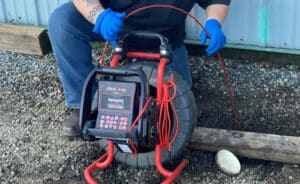 A standard home inspection does not include the sewer lateral. In Tacoma and Pierce County, the property owner is responsible for the private side sewer from the building to the city main. A camera inspection before closing reveals cracks, root intrusion, bellied sections, or joint failures that could cost thousands after you sign.
Most real estate transactions in Pierce County move fast, and buyers often skip the sewer scope to save a few hundred dollars. That gamble does not make sense on a home built before 1980, where the lateral is likely clay or concrete. The City of Tacoma Environmental Services notes that property owners should investigate the side sewer condition before any construction or purchase, especially when the sewer is more than 25 years old or lacks PVC pipe from the building to the main.
A camera inspection before closing gives you leverage. If the footage shows root intrusion or a cracked section, you can negotiate a price adjustment or request repairs before taking ownership. Without that footage, you inherit whatever is underground.
Pierce County real estate agents increasingly recommend sewer scopes as a standard part of due diligence on older homes. For Hilltop bungalows built in the 1920s or North End Craftsmans from the 1940s, the original clay lateral has been in the ground for 80 to 100 years. Knowing its condition before you buy is straightforward planning.
The City of Tacoma recommends that property owners investigate their side sewer if the pipe is more than 25 years old or is not PVC. If your home was built before 2000 and you have never scoped the line, a baseline camera inspection identifies problems before they turn into emergencies.
Homes built between the 1940s and 1970s in Tacoma neighborhoods like the North End and South Tacoma commonly have clay or concrete laterals. Cast iron was also used for interior drain lines during that era. These materials degrade over decades. Clay joints separate, allowing soil and roots in. Cast iron corrodes from the inside, narrowing the pipe diameter and creating rough surfaces that catch grease and debris.
A baseline inspection gives you a reference point. If the camera shows the pipe is in good shape, you can plan your next inspection in three to five years. If it shows early-stage root intrusion or minor joint separation, you can address it with hydro jetting or spot repairs rather than waiting for a full backup.
We recommend this inspection even if you have not experienced any symptoms. Clay pipe can function for years with a hairline crack before roots find the opening and accelerate the damage. By the time symptoms show up in the house, the problem underground may already be significant.
When more than one fixture drains slowly or backs up at the same time, the problem is usually downstream of where individual drain lines meet. In Tacoma homes with aging sewer laterals, this pattern often points to a partial blockage, bellied section, or root mass in the main sewer line rather than a single clogged branch.
A single slow drain is often a localized clog you can address with a plunger or hand snake. When the kitchen sink, bathtub, and basement floor drain all slow down together, that points to the shared sewer lateral. Pouring chemical drain cleaner down multiple fixtures will not fix a cracked clay joint 20 feet underground.
A camera inspection pinpoints the exact location and cause. The plumber can see whether roots have entered through a joint, whether the pipe has bellied (sagged) and created a low spot that collects debris, or whether a section has collapsed entirely. Each of those scenarios requires a different repair approach, and the camera footage determines which one.
In Pierce County, where the average annual rainfall is 38 inches, saturated soil puts additional pressure on aging sewer pipes. Ground movement from wet and dry cycles can shift joints out of alignment over time, particularly in the clay soils common across South Tacoma and Hilltop.
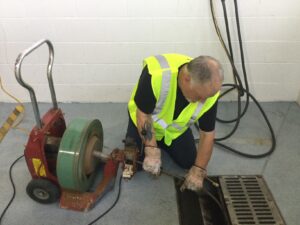 Sewer gas escaping into your home means there is a breach somewhere in the drain or vent system. In older Tacoma homes with cast iron or clay pipes, this often indicates a cracked pipe, failed joint, or dry trap. A camera inspection locates the exact source so repairs target the right section.
Sewer gas contains hydrogen sulfide, which produces that distinct rotten-egg smell. A functioning plumbing system keeps those gases contained through water-filled traps and proper venting. When you smell it inside the house, especially near floor drains, basement fixtures, or crawl space access points, something has broken down.
In homes built before 1960, corroded cast-iron vent stacks and cracked clay drain lines are common culprits. The camera inspection follows the pipe from the cleanout to the city main, documenting every crack, offset joint, and intrusion point along the way. This footage also serves as documentation if you need to file an insurance claim or apply for the City of Tacoma’s Sewer Conservation Loan Program for repair assistance.
Do not ignore the smell and hope it goes away. Sewer gas is unpleasant, and persistent exposure is something most homeowners want to resolve quickly. Locating the breach with a camera is faster and less expensive than exploratory digging.
A patch of grass that stays greener and taller than the rest of the yard, especially along the path of the sewer lateral, can indicate a leaking pipe below. In Tacoma’s rainy climate, it is easy to dismiss wet spots as normal drainage. A camera inspection confirms whether the lateral is intact or leaking.
Sewer leaks underground act as fertilizer for the grass directly above the break. You may also notice soft or sunken ground along the lateral path. In Pierce County, where 38 inches of annual rain keep yards damp for months, homeowners sometimes attribute these signs to poor yard drainage rather than a sewer problem.
The lateral typically runs from the house to the street or alley in a relatively straight line. If the wet or green area follows that path, a camera inspection is the logical next step. The plumber can confirm a leak, identify its location, and recommend the appropriate repair, whether that is a spot fix, pipe lining, or a full replacement.
We use the camera footage to mark the exact location of the problem, which minimizes the amount of excavation needed if a physical repair is required. On properties in older Tacoma neighborhoods where landscaping and driveways sit above the lateral path, knowing the precise failure point saves both time and disruption.
Tree roots are the most common cause of sewer line blockages in Tacoma and Pierce County. Roots seek out moisture and nutrients, and even a hairline crack in a clay joint gives them access. If mature trees sit within 25 feet of your lateral, periodic camera inspections catch root intrusion before it causes a full blockage.
Tacoma’s tree canopy is one of its defining features. Douglas firs, bigleaf maples, and Western red cedars are common across every neighborhood. Their root systems can extend well beyond the tree’s canopy, and they are drawn to the moisture escaping from aging sewer joints.
We frequently see root intrusion in South Tacoma and North End properties where large street trees or backyard conifers sit directly over the sewer lateral. The roots enter through cracked joints, then expand inside the pipe, catching debris and eventually creating a full blockage. Hydro jetting clears the roots, but without repairing the entry point, they grow back within a year or two.
A camera inspection after hydro jetting shows the condition of the pipe itself. If the joints are still structurally sound and the roots entered through a small crack, a trenchless pipe liner can seal the entry points without excavation. If the pipe has collapsed or multiple sections are compromised, replacement is the more practical long-term fix. Either way, the camera footage drives the decision.
Under Pierce County Code 13.04.060, any construction, repair, or connection to the public sewer system must be performed by a contractor with a valid Certificate of Registration from Washington State Labor and Industries. While Pierce County does not mandate routine inspections, the City of Tacoma strongly recommends a camera inspection before any construction project that may affect the side sewer.
WAC 51-56 (Washington State Plumbing Code) governs plumbing installations statewide, and Pierce County enforces additional local requirements through Title 13 of the county code. If you are planning a remodel, addition, or accessory dwelling unit (ADU) on your Tacoma property, verifying the condition and capacity of your existing sewer lateral before construction avoids problems during the permit process.
The City of Tacoma’s Environmental Services division maintains records on side sewer permits and can provide historical information about your lateral’s material and installation date. If records show a clay or concrete pipe with no recent inspection, a camera scope is the fastest way to determine whether the existing lateral can handle the additional load from a remodel or addition.
Homeowners who discover lateral problems during a camera inspection may qualify for low-interest loans through the City of Tacoma’s Sewer Conservation Loan Program. This program helps offset the cost of replacing failing side sewers, and the camera footage serves as the documentation needed to apply.
Not every slow drain requires a camera inspection. A single clogged sink or shower drain usually responds to a plunger or hand snake.
If none of those apply, your plumbing is probably doing its job. But if one or more of those situations match your home, a camera inspection is the most direct way to find out what is happening underground.
A sewer camera inspection takes about an hour and provides footage you can review with the plumber on the spot. There is no digging, no disruption, and no guesswork. For older Tacoma homes, it is one of the most straightforward ways to understand what is happening beneath your property and plan accordingly.
Spartan Plumbing Inc. has inspected sewer lines across Pierce County since 1958. We provide flat-rate upfront pricing with a written estimate before any work begins, and our technicians are licensed, insured, and background-checked. Senior and military customers receive a 5% discount. Call 253-260-3745 to schedule your inspection.
For homes built before 1980 with clay or cast iron laterals, every three to five years is a reasonable schedule. Homes with mature trees near the sewer line or a history of backups should be inspected more frequently, roughly every one to two years. Newer homes with PVC pipe and no tree exposure can go five years or more between inspections.
No. A standard home inspection covers the visible structure, roof, HVAC, electrical, and interior plumbing fixtures. The sewer lateral is underground and requires a separate camera scope. In Pierce County, the buyer typically arranges and pays for the sewer scope as an add-on during the inspection period.
The most common findings in pre-1980 Tacoma homes are root intrusion through clay pipe joints, joint separation or offset, pipe belly (sagging), interior corrosion in cast iron sections, and partial or full blockages. The camera also identifies the pipe material and documents the overall condition for repair planning.
Costs vary by provider and the length of the lateral, but most residential sewer camera inspections in the Tacoma area range from $150 to $500. The inspection typically includes real-time video footage and a written report of findings. Contact individual plumbing companies for current pricing.
PVC pipe is more resistant to root intrusion than clay or concrete because the joints are solvent-welded rather than mortared. However, roots can still penetrate PVC joints that were improperly glued or have shifted over time. If you have mature trees near a PVC lateral, periodic inspections are still a reasonable precaution.
Tacoma does not currently mandate a sewer inspection before a home sale. However, the City of Tacoma requires sellers to disclose known side sewer defects. Many Pierce County real estate agents recommend a sewer scope before listing to avoid surprises during the buyer’s inspection period.
A camera inspection is diagnostic. It sends a camera through the pipe to identify problems. Hydro jetting is a cleaning method that uses high-pressure water to clear roots, grease, and debris from the inside of the pipe. The two services are often paired: the camera identifies the blockage, hydro jetting clears it, and a follow-up camera pass confirms the pipe’s condition after cleaning.
In Tacoma, the property owner is responsible for the entire private side sewer from the building to the connection at the city sewer main. The City of Tacoma maintains the public sewer main in the street or alley. If your lateral fails, the repair cost falls on you. The City’s Sewer Conservation Loan Program may offer low-interest financing for qualifying repairs.
 Book Now!