Emergency Plumbing in Tacoma & Pierce County 24/7 Live Answer Free Second Opinion Quality Plumbing Services
Emergency Plumbing in Tacoma & Pierce County 24/7 Live Answer Free Second Opinion Quality Plumbing Services
Emergency Plumbing in Tacoma & Pierce County 24/7 Live Answer Free Second Opinion Quality Plumbing Services
Emergency Plumbing in Tacoma & Pierce County 24/7 Live Answer Free Second Opinion Quality Plumbing Services
Text Us: 253-231-7015
Call Us: 253-231-7015
Trenchless sewer lining creates a brand-new, jointless pipe inside your existing damaged pipe, preventing root intrusion and leaks. The six most effective methods for long-lasting repair include CIPP, Pull-in-Place, Pipe Bursting, Spray Lining, Slip-lining, and Fold-and-Form.
Sewer lining is a method that fixes damaged underground pipes without digging large trenches. A resin or special material is placed inside the old pipe to create a new, strong pipe within it. This method saves yards, driveways, and streets from destruction. The process of sewer lining uses advanced tools to renew pipes from the inside.
A liner soaked in resin is inserted into the pipe and then hardened with heat, steam, or light. This forms a smooth and durable surface that restores flow. The process avoids full pipe replacement and limits waste. It also reduces repair time, which lowers disruption for homes and businesses.
The goal of sewer lining is to extend pipe life and protect the environment. Restored pipes last for decades and prevent leaks that pollute soil or water. Sewer lining reduces landfill waste since old pipes stay underground.
Future innovations in sewer lining include stronger resins, faster curing systems, and robotic tools for complex pipe shapes. Spartan Plumbing Inc. provides trusted sewer lining services to homes and businesses in Tacoma and the surrounding areas.
For expert assistance or to schedule an inspection, contact us today.
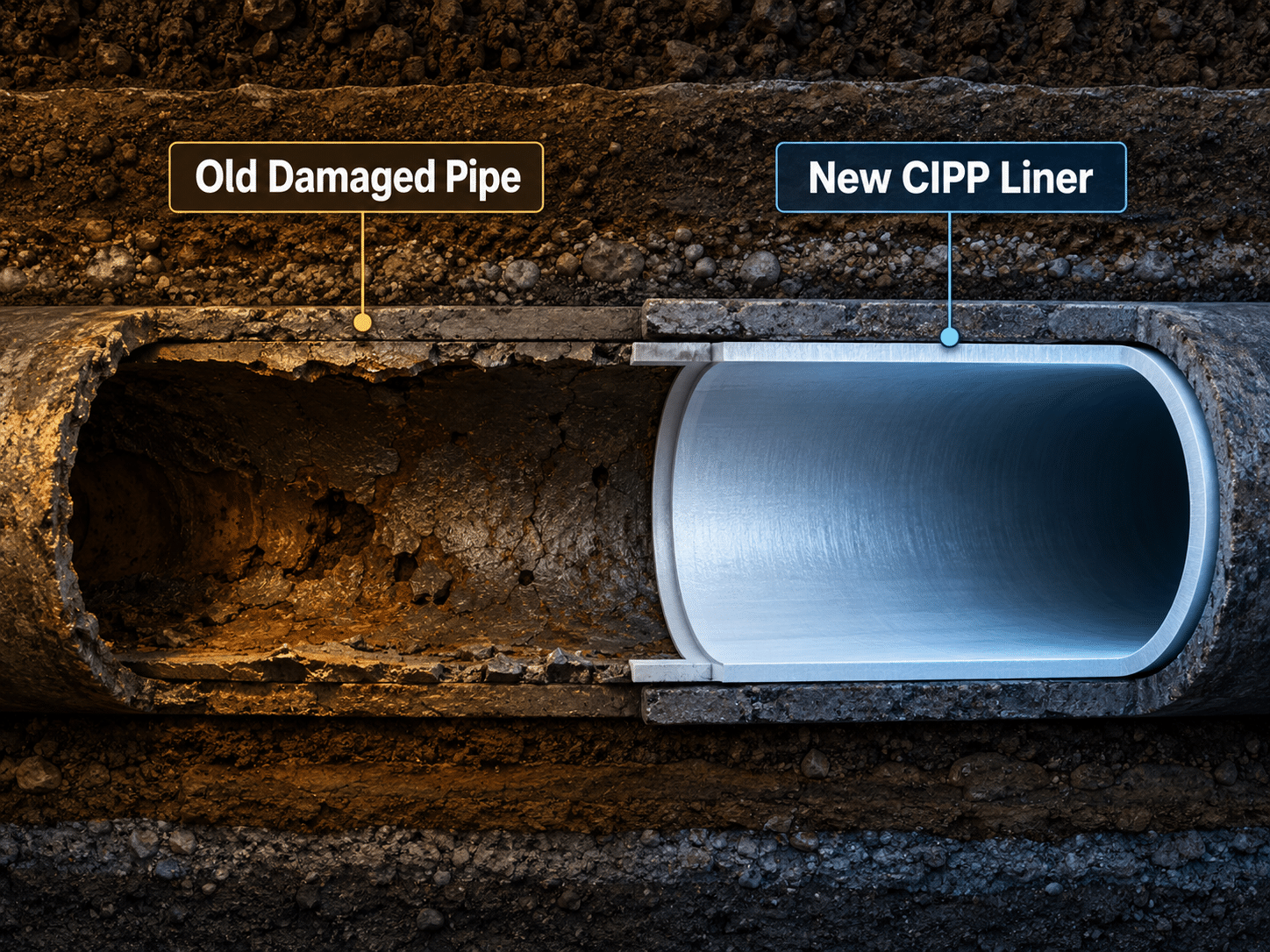 Cured-in-Place Pipe (CIPP) creates a new pipe inside the old one using a resin-soaked liner. The liner is pushed or pulled into the damaged pipe, then inflated to press against the inner wall. Heat, steam, or ultraviolet light hardens the resin, forming a smooth and durable surface.
The installation needs access points, inversion equipment, air compressors, and curing systems. Materials include flexible liners, epoxy resins, and sealing tools.
The main advantage is trenchless repair with minimal surface damage, while the drawback is high setup cost and complex curing needs.
CIPP works best for long pipe runs with cracks, leaks, or corrosion. Spartan Plumbing Inc. applies CIPP to extend pipe life by decades while protecting property surfaces.
Pipe bursting with lining replaces old pipes by breaking them apart and pulling a new liner through the same path. A bursting head breaks the old pipe outward into the soil while dragging in the new liner or pipe behind it. The installation requires hydraulic bursting equipment, pulling rods, and replacement liners.
The ground must allow pipe expansion without blocking. The advantage is full replacement of damaged pipes without large trenches, but the drawback is a higher disruption risk if nearby utilities exist.
This method is most effective for pipes that have collapsed or lost full capacity. Spartan Plumbing Inc. uses pipe bursting to renew old sewer lines while maintaining proper flow and structural strength.
Spiral Wound Lining forms a new pipe by winding a continuous PVC strip into the damaged pipe. The strip coils inside the pipe with a locking mechanism to create a tight spiral structure.
Installation uses winding machines that insert the strip while rotating, often from existing manholes. Materials include PVC strips, winding equipment, and sealing tools. The benefits are fast installation and minimal excavation, but drawbacks include lower strength compared to CIPP.
Spiral wound liners work best for large diameter pipes, storm drains, or where curing resins are not suitable. Spartan Plumbing Inc. offers spiral wound lining for sewer systems needing quick restoration with minimal surface damage.
Spray lining and brush coating cover the inner surface of pipes with protective liquid coatings. A sprayer or brush applies epoxy, polyurethane, or polymer materials directly to the pipe wall.
The coating hardens to create a smooth, leak-proof surface. Installation requires spray pumps, brushes, and access points. Materials include chemical coatings and sealing primers. The main benefit is cost-effectiveness for smaller pipes, but the drawback is a shorter lifespan compared to structural liners.
This method is most effective for pipes with corrosion or leaks that do not need structural reinforcement. Spartan Plumbing Inc. applies spray and brush coatings to renew pipe surfaces and restore smooth flow in Tacoma homes and businesses.
Fold-and-Form Liners are installed by folding a thermoplastic liner, inserting it into the pipe, and then heating it to expand against the wall. The liner is folded into a “C” or “U” shape, pulled into the pipe, and then expanded using steam or hot water.
Installation requires pulling machines, heat sources, and pressurization units. Materials include thermoplastic liners and sealing tools. The benefit is a tight fit that restores flow, but drawbacks include limited flexibility for bends and joints.
This method is most effective for straight pipe runs with cracks or corrosion. Spartan Plumbing Inc. uses fold-and-form liners to extend sewer pipe life while keeping surface areas intact.
Pull-In-Place (PIP) Lining positions a resin-soaked liner inside the damaged pipe by pulling it into place. Workers use winches or ropes to guide the liner through access points. Once in place, air pressure or steam inflates the liner and cures the resin.
Installation needs pulling equipment, resin liners, curing systems, and access pits. Materials include felt or fiberglass liners with epoxy resins. The advantage is precise placement for targeted repairs, but the drawback is higher labor needs.
This method is most effective for shorter pipe sections or areas with bends that need extra control. Spartan Plumbing Inc. applies PIP lining in Tacoma for repairs that demand accuracy and long-lasting results.
Materials used in different types of sewer lining techniques primarily include epoxy resin, polyester resin, polyurethane liners, and fiberglass reinforced pipe liners. These materials form the base of modern trenchless repair methods. Each material offers unique strength, flexibility, and resistance levels.
Materials used in different types of sewer lining techniques are:
Epoxy resin is widely used for cured-in-place pipe methods. It cures when exposed to heat, steam, or ultraviolet light, forming a hard and smooth inner surface. Epoxy resists corrosion, chemicals, and leaks. It offers long-term durability with lifespans reaching 50 years or more. Epoxy resin is best suited for residential and commercial sewer lines where strength and long life are required.
Polyester resin provides a cost-effective option for lining projects. It cures through chemical reaction, hardening into a durable shell inside the pipe. Polyester resin delivers strong performance but at a lower cost compared to epoxy. It offers resistance against water damage and common pipe wear. Polyester resin is best suited for large-scale projects or long pipe runs in municipal and industrial systems.
Polyurethane liners are flexible coatings applied by spray or brush. They bond tightly to pipe walls and cure quickly into a protective layer. PU liners provide strong resistance to abrasion, moisture, and mild chemicals. They extend flow capacity by creating smooth internal surfaces. Polyurethane liners are best suited for smaller residential pipes or spot repairs where structural reinforcement is not needed.
Fiberglass-reinforced pipe liners have a combination of resin and fiberglass strands. The curing process fixes together the resin and glass fibers to create a hard and durable wall of a pipe. FRP liners are highly resistant to heat, pressure, and chemical attack. They provide sustainability in the challenging conditions. FRP liners are best suited for industrial applications, high-temperature pipes, and systems exposed to harsh chemicals.
The choice of material depends on pipe condition, location, and service needs. Spartan Plumbing Inc. applies the right material to match each project, ensuring long-lasting repairs.
Picking the right sewer lining type is crucial for repairs, as it ensures the repair lasts, protects property, and supports safe wastewater flow. Each method has different materials, processes, and strengths. Choosing the wrong type creates weak spots, higher costs, and future failures.
Picking the right sewer lining type offers the following benefits:
Pipe compatibility means the liner fits the size, shape, and material of the existing pipe. A correct match creates a tight seal and smooth surface. If compatibility is ignored, the liner fails to bond or collapses. The right choice ensures the pipe works as designed and protects property from repeated blockages.
Durability refers to how long the new liner survives inside the pipe. A strong match of liner and pipe condition increases lifespan, often to 30–50 years. Using the wrong type leads to cracks or leaks within a short time. The correct type extends the service life and reduces replacement costs.
Future leaks appear when a liner does not seal every weak point. The choice of the appropriate liner prevents water infiltration and keeps the soil stable. This process prevents sinkholes, foundation damage, and pollution of groundwater. A proper decision safeguards property as well as the environment.
Pipes face stress from heavy flow, soil pressure, and temperature changes. The right liner strengthens pipe walls to handle these stresses. Incorrect choices leave weak spots that collapse during peak loads. A strong liner supports smooth flow and prevents service interruptions.
Installation efficiency is time-saving, cost-saving, and labor-saving. Proper type matches the available site conditions, minimizing excavation and curing time. Poor selection results in expensive rework. Effective installations save time for households and companies. Spartan Plumbing Inc. ensures proper selection, providing Tacoma homeowners with long-lasting and cost-effective results.
To choose the best type of sewer lining for your project, observe the pipe condition, size, material, and service needs. Each factor influences which method delivers the strongest, longest-lasting result.
To choose the best type of sewer lining for your project, observe these factors:
 The nature of damage is either cracks, corrosion, blockage, or complete collapse. Small cracks are adapted to coating or liner, but large collapses require bursting or reinforced liners. Properly aligning the technique with the damage will inhibit early breakdown. The type of damage determines whether the repair is able to restore flow or construct a new structure.
Pipe diameter and length affect liner design and curing. Narrow pipes use coatings or short liners, while long or large pipes need CIPP or spiral wound methods. The size controls how much material and equipment are required. Wrong sizing creates gaps or weak seals that reduce pipe life.
The material of the pipes is clay, cast iron, PVC, or concrete. Each has a varying reactivity with liners and resins. For instance, epoxy is strong with concrete and cast iron, whereas spiral wound is effective with clay or PVC. Pairing the liner with the base material produces more adhesion and service.
Pipe geometry comprises bends, joints, and manholes. Entry points determine the way equipment gets into and out of the line. Simple bends are suitable with straight runs, and more complicated bends are well served by pull-in-place lining. Good access reduces excavation requirements and accelerates the installation process.
Budget and lifespan guide material selection. Polyester is cheaper and has a shorter life cycle, whereas epoxy and fiberglass are more expensive and last for decades. The cost savings or durability will be dependent on the project goals. A correct balance protects both money and infrastructure.
Time limits affect which curing system is used. Spray finishes are dry in hours, and UV-cured liners require more time to dry. Quick solutions save time for businesses and homes. Extended curing produces tougher bonds but slows down service recovery.
Structural integrity means how much load or pressure the pipe can handle. FRP and CIPP provide high strength for heavy traffic areas, while coatings work for low-load residential lines. Selecting the proper structural support avoids collapse and service loss. Spartan Plumbing Inc. uses these factors to deliver safe and lasting sewer lining projects across Tacoma and nearby communities.
New technologies are shaping sewer lining methods by changing how pipes are repaired, how long they last, and how much disruption happens during the process. Old repairs relied on digging and heavy labor, but new systems use light robotics and data to finish jobs faster and with more accuracy.
Spartan Plumbing Inc. applies these methods to protect homes, businesses, and city systems from costly failures. Modern tools improve safety, boost efficiency, and create pipe linings that stand strong for decades.
The new technologies that are shaping the sewer lining methods are:
UV light cures resin liners inside pipes in minutes. The liner hardens uniformly, making the pipes stronger and minimizing the time taken to repair them. It has a reduced amount of digging, less downtime, and a decades-long-lasting pipe.
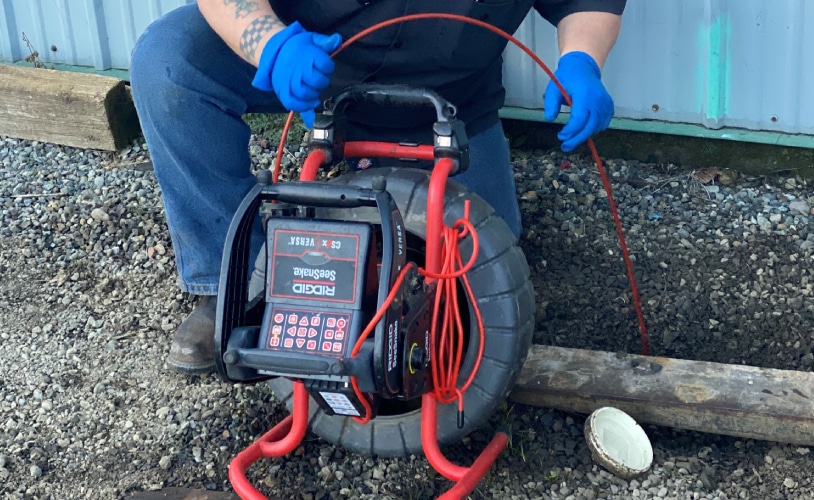 Camera-equipped robots crawl inside pipes and install liners precisely. AI processes data and identifies the cracks or leaks before the failure. This reduces human error, decreases costs, and makes repairs safer.
SPR uses a machine to wind a PVC strip inside the pipe. The strip locks in place to form a new lining without digging. It works well for large pipes in cities and extends pipe life while cutting traffic disruptions.
Sensors track flow, pressure, and cracks in real time. This data helps plan repairs at the right time instead of waiting for failure. It saves money and extends the life of entire sewer systems.
3D scanners map pipes with exact detail. This shows bends, blockages, and weak spots before lining begins. It improves liner fit, reduces mistakes, and makes each project more efficient.
New epoxy blends resist chemicals, roots, and high pressure. Stronger resins extend lifespan by over 50 years. They give extra protection in industrial areas or soil with high corrosion.
A professional plumber helps with various sewer line types by inspecting the condition of pipes and identifying the exact damage. The inspection begins with video camera equipment that moves within the line.
The process reveals cracks, obstructions, corrosion, and collapsed sections in real time. The plumber takes the diameter, length, and geometry of the pipe to determine which lining technique best suits it. This measure is taken to ensure accuracy since every kind of damage calls for a particular solution to fully restore the pipe.
A plumber also prescribes the best lining technique according to pipe material, diameter, and position. CIPP, for instance, is apt for long underground lines, while pull-in-place liners are more appropriate for shorter lines with localized faults. Fiberglass liners provide strength in industrial networks that carry high-pressure loads, whereas epoxy resin can be used for residential use, where flexibility and corrosion resistance are of prime importance. Equating conditions and material to method prevents premature failure, maximizes life, and reduces repair costs.
An experienced plumber then carries out skilled installation and assists with long-term upkeep. The installation involves the use of specialized equipment to set the liner, inflate it, and heat cure it with hot water, steam, or UV light. After installation, the plumber inspects the fit and ensures restored flow.
Upkeep hints consist of normal flushing, camera examination, and early patching when tiny problems emerge. Spartan Plumbing Inc. delivers this complete process with proven methods, advanced equipment, and consistent results that extend the service life of sewer systems by decades.
For dependable trenchless support and maintenance, call us today to schedule your service.
The most cost-effective sewer lining option is cured-in-place pipe (CIPP). This involves applying epoxy resin liners to the interior of the old pipe to harden without the need for excavation. Compared to replacing a pipe, CIPP costs less in labor and equipment. It also saves time and reduces the risk of property damage. The technique applies to residential and commercial systems. Spartan Plumbing Inc. uses CIPP as a cost-effective sewer lining solution in Washington, where full replacement is not required.
To calculate the cost of a sewer lining project, measure the total length and diameter of the damaged pipe. Add the cost of materials like epoxy or fiberglass, plus equipment and labor charges. Site conditions, access points, and the depth of the line increase or decrease the total expense. Residential projects average lower costs per foot than commercial projects. An accurate video inspection gives exact estimates. Spartan Plumbing Inc. provides precise project pricing based on inspection data.
The soil conditions affect the choice of sewer lining. To determine the state of soil, test acidity, moisture, and load pressure surrounding the pipe. The wet or acidic soil conditions will require liners that have good corrosion resistance, such as epoxy resin. Shifting soils or clay that is heavy in nature demand high structural integrity liners like fiberglass. The soil is loose and contains a lot of water, and thus, approaches can be made that stabilize the geometry of the pipes. Correct soil analysis ensures the liner performs without failure. Spartan Plumbing Inc. evaluates soil before selecting the method.
Pipe bursting should be used instead of CIPP when the old pipe is fully collapsed or undersized. The method breaks the old pipe while pulling a new one in place. This process is stronger than CIPP, which needs the old pipe as a host. Pipe bursting suits larger replacements where flow capacity must increase. It is effective in long, deep sections with severe breakage. Spartan Plumbing Inc. applies pipe bursting when the old line cannot hold a liner.
To know how long a sewer lining project lasts, check the method used. CIPP liners last 50 years, while fiberglass-reinforced liners extend up to 70 years. Spray coatings average 10–20 years, depending on thickness and curing. Pull-in-place liners last about 30–40 years. Correct material choice, soil stability, and professional installation extend service life. Spartan Plumbing Inc. delivers lined systems designed for multi-decade use.
To assess sewer pipe damage, a sewer line camera inspection is done. The camera travels through the full line and records cracks, leaks, corrosion, or collapse. Plumbers also measure diameter, length, and pipe bends during the process. The data reveals which parts need relining or full replacement. Soil load and water flow also help decide the method. Spartan Plumbing Inc. performs detailed inspections before repairs.
The sewer pipe materials that can be relined are clay, concrete, cast iron, PVC, and Orangeburg pipes, all of which support modern liners. Epoxy or fiberglass liners adapt to different host materials. Relining works on residential, municipal, and industrial systems. Severe pipe collapse is the only exception, which requires pipe bursting instead. Spartan Plumbing Inc. handles relining across all standard pipe types.
The time the pipe relining process typically takes depends on the length and diameter. A short residential line often takes one day. Larger commercial lines take 2–3 days with curing. CIPP curing with hot water or steam may take 6–12 hours, while UV curing finishes faster. Cleaning and inspection add to the total time. Spartan Plumbing Inc. completes projects with efficient scheduling to minimize downtime.
The best-suited sewer line for heavy commercial plumbing use is fiberglass-reinforced pipe (FRP) liners. FRP offers high strength, pressure resistance, and durability under constant heavy loads. It withstands chemicals, hot wastewater, and frequent stress cycles. Large commercial and industrial systems benefit from its extended lifespan. FRP reduces the need for repeated repairs. Spartan Plumbing Inc. provides commercial plumbing services in Washington to provide customers with the best sewer line.
The lifespan of different sewer lining methods varies by material. CIPP liners have a lifetime of 50 years, FRP liners 60-70 years, and fold-and-form liners approximately 40 years. Spray finishes have a life of up to 10-20 years, depending on the curing process and thickness. Liners of spiral wound will usually last 50 years in stable soil. Well-installed and assessed soil increases longevity. Spartan Plumbing Inc. maintains that each of the methods gives its maximum design life.
 Book Now!